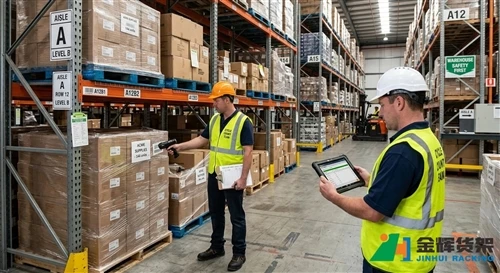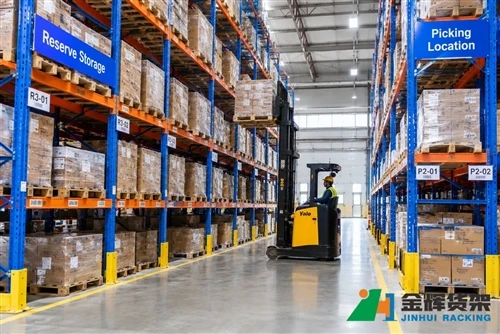
Warehouse returns are a normal part of many supply chains, but returned products require different handling procedures from regular inventory. Without a clear return storage process, returned pallets can mix with available stock, create inventory confusion, and occupy valuable warehouse space.
A well-organized reverse logistics process allows warehouses to receive returned goods, inspect product conditions, separate different inventory statuses, and decide whether products should be restocked, repaired, or removed from inventory.
This guide explains how to manage warehouse returns using pallet racking systems, including return receiving areas, inspection zones, quarantine storage, returned pallet organization, and methods to prevent returned goods from affecting normal warehouse operations.
What Is Reverse Logistics in a Warehouse?
Reverse logistics refers to the process of moving products backward through the supply chain after they have been delivered to customers or distribution points.
Unlike normal warehouse operations where products move from receiving to storage and then shipping, reverse logistics involves goods returning to the warehouse for evaluation and further handling.
A typical return process includes:
- Returned goods receiving
- Product identification
- Quality inspection
- Inventory status classification
- Temporary storage
- Restocking or disposal decisions
Because returned goods may have different conditions, they should not immediately enter normal pallet rack locations before inspection.
Why Do Returned Goods Need Separate Storage Areas?
Returned products often have unknown conditions when they arrive at the warehouse. Some items may be suitable for resale, while others may require repair, repackaging, or disposal.
A dedicated return storage process helps warehouses:
- Prevent returned products from mixing with available inventory
- Avoid shipping unverified products to customers
- Improve inventory visibility
- Reduce unnecessary handling
- Create clearer product status control
Using separate pallet rack locations for returned goods allows warehouse teams to control product movement before making inventory decisions.
How Does a Warehouse Return Process Work?
A controlled return process normally follows several stages.
| Stage | Main Activity |
|---|---|
| Return Receiving | Receive returned pallets and record incoming products |
| Inspection | Check product condition, packaging, and quantity |
| Classification | Separate products according to their condition |
| Storage | Place products into suitable rack locations |
| Final Decision | Restock, repair, return to supplier, or dispose |
The purpose of this process is to prevent uncertainty from entering normal inventory operations.
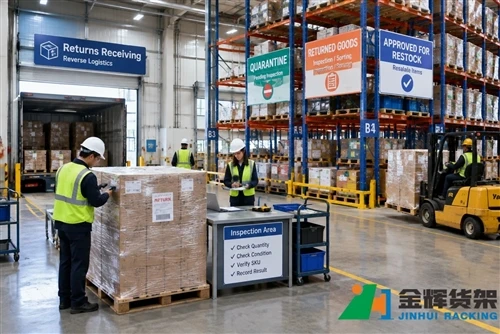
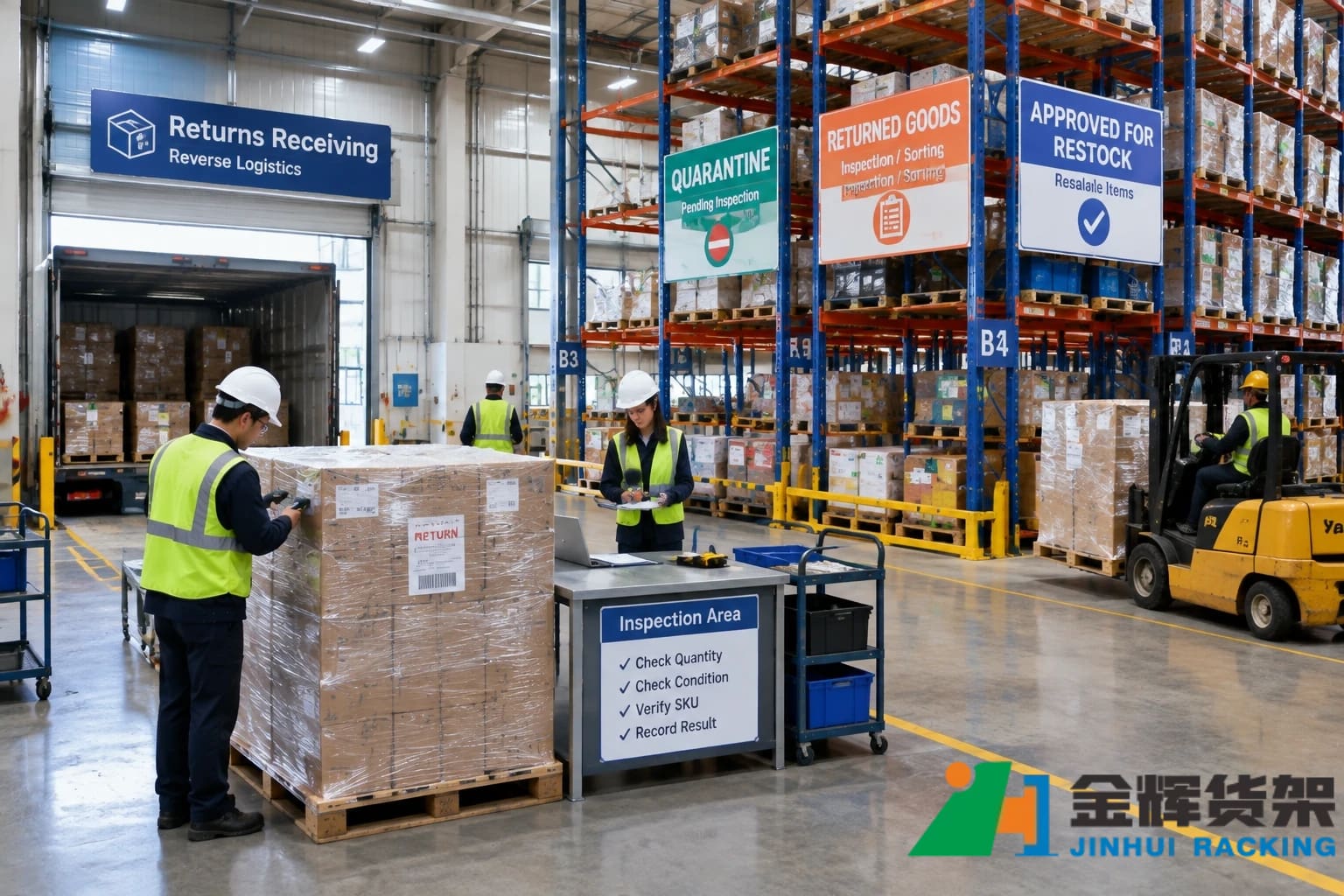
How to Organize a Return Receiving Area
The return receiving area is the first location where returned goods enter the warehouse.
A practical return receiving area should include:
- Space for unloading returned pallets
- Inspection space
- Temporary pallet positions
- Product identification area
- Access for forklifts and warehouse workers
Returned pallets should remain in this controlled area until their condition and inventory status have been confirmed.
How to Use Pallet Racking for Returned Goods
Pallet racking can support reverse logistics operations by providing organized storage locations for different return categories.
Common returned goods rack areas include:
- Pending inspection storage
- Approved return inventory
- Repair required storage
- Damaged product storage
- Temporary overflow storage
Selective pallet racking is often suitable for returned goods because each pallet position can be accessed individually, allowing warehouse teams to inspect and move specific returned pallets when required.
Jinhui Rack provides customized pallet racking solutions designed around warehouse requirements, pallet dimensions, handling equipment, and operational processes.
How to Separate Different Returned Inventory Categories
Returned products should be classified before being placed into regular inventory storage.
| Return Category | Recommended Storage Area |
|---|---|
| Approved for Resale | Normal inventory rack locations |
| Pending Inspection | Quarantine storage area |
| Repair Required | Repair or maintenance area |
| Damaged Products | Controlled disposal or damaged inventory area |
This separation prevents warehouse employees from accidentally picking products that have not been approved for normal use.
How to Create a Quarantine Storage Area
A quarantine area is used for products that require inspection or approval before entering normal inventory.
A good quarantine storage system should include:
- Clearly defined rack locations
- Restricted movement control
- Return identification records
- Product status tracking
- Easy access for inspection
Using pallet rack positions specifically assigned for quarantine inventory helps prevent returned products from being mixed with sellable stock.
How to Manage Returned Pallets Before Restocking
Before returned pallets are moved back into normal storage, warehouse employees should confirm:
- Product condition
- Packaging condition
- Quantity accuracy
- Product identification
- Inventory status approval
Only approved products should return to available inventory locations.
How to Handle Partial Return Pallets
Partial return pallets require additional attention because the original pallet quantity may no longer be accurate.
Warehouse teams should verify:
- Actual quantity remaining
- Product condition
- Packaging status
- New pallet identification
- Correct storage location
Partial returns should not automatically be treated as full pallets because the physical condition may differ from the original shipment.
How to Prevent Returned Goods From Mixing With Normal Inventory
One of the biggest challenges in reverse logistics is preventing returned products from entering normal inventory before approval.
Warehouses can reduce this risk by:
- Creating dedicated return rack locations
- Using different inventory status categories
- Separating return receiving areas
- Training warehouse employees
- Recording every return movement
Physical separation and inventory status control should work together to prevent mistakes.
How Reverse Logistics Affects Warehouse Space Planning
Returned goods require additional warehouse space because they cannot always immediately return to normal inventory flow.
Space planning should consider:
- Expected return volume
- Inspection time
- Average storage duration
- Seasonal return peaks
- Product categories
Warehouses with high return volumes may need dedicated pallet rack zones for reverse logistics activities.
Common Warehouse Return Storage Mistakes
1. Putting Returns Directly Into Available Inventory
Returned products should be inspected before becoming available stock.
2. No Dedicated Return Area
Without a defined area, returned pallets may block aisles or become mixed with normal inventory.
3. Poor Product Status Control
Employees may accidentally use returned goods when inventory status is unclear.
4. Ignoring Partial Returns
Partial return pallets require separate verification because quantities and conditions may change.
5. Using Temporary Storage Without Management
Temporary return locations should still follow warehouse location control procedures.
Reverse Logistics Pallet Rack Checklist
| Check Item | Requirement |
|---|---|
| Return Receiving Area | Dedicated unloading and inspection space |
| Quarantine Storage | Separate location for pending approval products |
| Rack Locations | Clearly assigned return storage positions |
| Product Status | Return condition recorded correctly |
| Partial Returns | Quantity and condition verified |
| Inventory Movement | Every transfer recorded |
Frequently Asked Questions About Warehouse Returns
Should returned products go directly back to pallet racks?
No. Returned products should normally be inspected and classified before entering normal storage locations.
Why use pallet racks for returned goods?
Pallet racks provide organized storage locations that help separate returned products by status and improve warehouse control.
What is quarantine storage?
Quarantine storage is a controlled area where products remain until their condition and inventory status have been confirmed.
Can returned goods share storage locations with normal inventory?
They can only be stored together after the returned products have been approved and classified as available inventory.
Final Thoughts
Warehouse returns management requires a structured process because returned products do not always follow the same path as normal inventory.
By creating dedicated return areas, using pallet racking for organized storage, separating inventory statuses, and controlling product movement, warehouses can improve reverse logistics efficiency while protecting normal inventory operations.
A well-planned pallet racking system supports not only outbound storage needs but also the growing requirements of modern reverse logistics operations.
If you need help designing pallet racking solutions for warehouse returns, storage zones, or reverse logistics applications, Jinhui Rack can provide customized warehouse storage solutions based on your operational requirements.
Contact Jinhui Rack for your warehouse pallet racking project:
- WhatsApp: +86 185 0252 7163
- Email: info@jhrack.com
- Website: https://www.jinhui-rack.com/