Choosing Between Rack-Supported and Structural Steel Mezzanine Systems
Mezzanine systems are used in warehouses and industrial facilities where businesses need additional elevated storage or working areas. However, not all mezzanine structures are built in the same way. Two common configurations are rack-supported mezzanines and structural steel mezzanines.
Although both systems create an elevated platform, their structural arrangements, load-support methods, and application requirements are different. Understanding these differences is important when selecting a mezzanine solution for a new warehouse project or an existing facility upgrade.
This guide compares the two configurations, explains their typical applications, and outlines the main factors to consider before choosing a system.

1. What Is a Rack-Supported Mezzanine?
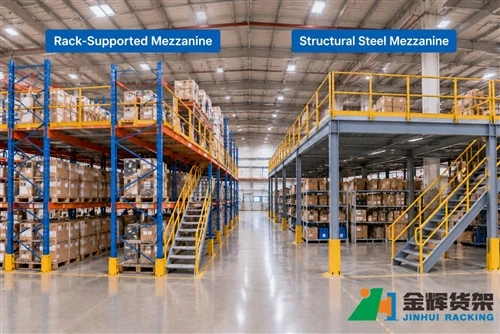
A rack-supported mezzanine is an elevated platform integrated with a storage racking structure. In this configuration, the engineered rack framework provides support for the platform, allowing storage and working areas to be arranged across different levels.
Depending on the project design, the structure may combine pallet racking, shelving, platform beams, decking, stairs, and safety railings. The upper level can be configured for suitable storage or manual picking activities, while the lower level may be used for additional storage or other warehouse operations.
Typical Characteristics of Rack-Supported Mezzanines
- Integrated storage structure: The supporting framework is designed in coordination with the storage rack arrangement.
- Combined storage and platform functions: The system can accommodate suitable racking and elevated working areas within one coordinated installation.
- Flexible storage configurations: Depending on the design, the upper and lower levels may use different storage arrangements.
- Project-specific engineering: Rack frames, platform beams, connections, bracing, and floor conditions must be evaluated as part of the complete structural system.
Rack-supported mezzanines may be suitable for warehouses that want to combine elevated picking areas with organized storage locations. They are particularly relevant when the storage rack arrangement is a major part of the project design.
2. What Is a Structural Steel Mezzanine?
A structural steel mezzanine is an elevated platform supported by an independent steel framework. Its main load-bearing components generally include steel columns, primary beams, secondary beams, bracing, and floor decking.
Unlike a rack-supported configuration, the platform is not primarily supported by the storage rack frames. Storage racks, shelving, workstations, or other equipment can be installed on or beneath the platform when the structure and floor loading have been designed for those requirements.
Typical Characteristics of Structural Steel Mezzanines
- Independent supporting framework: Columns and beams form the primary platform support structure.
- Adaptable platform arrangement: The elevated floor can be planned for storage, work areas, light assembly, or other suitable operations.
- Separate storage equipment: Pallet racks or shelving can be arranged on the platform when the structural design allows for the imposed loads.
- Clear structural planning: Column positions, beam spans, access points, and platform openings can be coordinated with the building and operating layout.
Structural steel mezzanines are often considered when a facility needs a dedicated elevated working or storage platform that is not dependent on the layout of its storage racks.
3. Rack-Supported Mezzanine vs. Structural Steel Mezzanine: Main Differences
The most important difference between these systems is how the elevated platform is supported. This affects structural coordination, storage equipment arrangement, and the way the project should be engineered.
| Comparison Item | Rack-Supported Mezzanine | Structural Steel Mezzanine |
|---|---|---|
| Primary support | Engineered storage rack framework | Independent steel columns and beams |
| Storage integration | Storage and platform structures are coordinated as an integrated system | Storage equipment can be arranged separately, subject to platform design |
| Platform arrangement | Related closely to rack layout and structural configuration | Planned around the independent column and beam arrangement |
| Typical applications | Integrated storage and picking operations | Dedicated storage platforms, work areas, and industrial operations |
| Design considerations | Rack stability, platform loads, connections, and storage requirements | Column locations, beam spans, platform loads, and foundation conditions |
Neither configuration is automatically better for every warehouse. The appropriate choice depends on the intended use, building conditions, storage arrangement, load requirements, and operating processes.
4. When Should You Choose a Rack-Supported Mezzanine?
A rack-supported mezzanine may be worth considering when the warehouse project requires storage equipment and an elevated platform to function as one coordinated system.
Warehouses with Integrated Storage and Picking Requirements
Some distribution facilities need pallet storage at one level and accessible picking locations at another. A rack-supported design can coordinate the supporting rack structure with suitable platform areas, shelving, and access arrangements.
Facilities with Defined Rack Layouts
When the storage rack arrangement has already been established as a key part of the project, a rack-supported mezzanine may provide a suitable structural approach. The rack configuration and platform design must be developed together rather than treating the platform as an independent addition.
Operations Using Multiple Storage Levels
Warehouses handling cartons, components, packaged products, and other suitable inventory may use different storage arrangements on different levels. The design should account for the actual inventory, handling methods, platform loading, and access requirements.
It is important to confirm that the supporting rack structure is specifically engineered for the mezzanine application. A conventional pallet rack should not be assumed to support an elevated floor simply because it can carry pallet loads.
5. When Is a Structural Steel Mezzanine More Suitable?
A structural steel mezzanine may be a better option when the project requires an independent elevated platform with its own column and beam arrangement.
Dedicated Work or Assembly Areas
Manufacturing and industrial facilities may need additional floor space for inspection, light assembly, packaging, or other activities. An independent platform can be planned around the equipment, workstations, access routes, and operational requirements of the facility.
Platforms with Independent Column Arrangements
Some warehouses need to position an elevated platform without relying on the geometry of a storage rack layout. A structural steel design allows the engineering team to assess column locations, beam spans, and platform openings according to the building and the intended use.
Projects with Separate Storage and Platform Requirements
If storage racks and the elevated platform serve different operational purposes, an independent structural system may make coordination more straightforward. Any storage equipment placed on the platform must still be included in the structural load calculations.
6. Important Engineering Factors for Both Systems
Regardless of the selected configuration, mezzanine systems require careful engineering. The platform must be designed for its intended loads and operating conditions, not selected only by appearance or nominal dimensions.
Platform Load Requirements
Determine the expected uniformly distributed loads and concentrated loads. These may include stored products, shelving, palletized goods where applicable, personnel, equipment, and other operational loads.
Loads should be evaluated according to their actual distribution and the intended use of the platform. A platform designed for manual carton picking may have different requirements from one intended for heavier storage or industrial equipment.
Column Positions and Beam Spans
Column placement affects usable floor areas, access routes, and the arrangement of storage or workstations. Beam spans and structural connections must be checked through appropriate engineering calculations.
Floor and Foundation Conditions
The existing concrete slab and supporting ground conditions must be assessed for the loads transferred through the mezzanine columns or rack-supported structure. Additional foundations or floor reinforcement may be necessary depending on the site conditions and engineering results.
Stairs, Guardrails, and Access Points
Access and fall protection should be incorporated into the initial design. Stair locations, handrails, edge protection, loading gates, and material transfer openings should be coordinated with the warehouse workflow.
Fire Protection and Building Services
Before installation, review the relationship between the proposed platform and existing sprinklers, lighting, ventilation, electrical systems, and emergency access routes. Local building and fire-safety requirements should be confirmed for the specific project.
7. Can Rack-Supported and Structural Steel Mezzanines Be Combined?
Some warehouse projects may require more than one type of elevated structure. For example, a facility may use a rack-supported platform in an area dedicated to integrated storage and picking, while an independent structural steel platform serves a separate work or storage area.
Such combinations should be evaluated as a complete engineering project. The structural systems must have clearly defined load paths, suitable connections where required, and appropriate separation or coordination between different components.
It is not advisable to combine different structures on site without an approved design. Changes to column positions, beam connections, platform openings, or storage arrangements can affect structural performance and must be reviewed by the responsible engineering team.
8. How to Select the Right Mezzanine System for Your Warehouse
Before requesting a quotation or finalizing a design, prepare the information needed to evaluate the project accurately.
- Intended use: Clarify whether the platform will support storage, order picking, workstations, assembly, or a combination of activities.
- Building dimensions: Provide the usable warehouse length, width, clear height, and any existing structural obstructions.
- Load information: Specify the expected platform loads, stored product weights, equipment loads, and loading patterns.
- Storage configuration: Identify whether pallet racking, shelving, or other storage equipment will be installed on or beneath the platform.
- Handling requirements: Explain how people and materials will move between levels, including any requirements for lifts, conveyors, or loading gates.
- Site conditions: Provide available information about the floor slab, foundations, building structure, and existing services.
- Local requirements: Confirm applicable building codes, fire protection provisions, and occupational safety requirements.
With this information, the design team can evaluate whether a rack-supported mezzanine, an independent structural steel platform, or a coordinated combination is appropriate for the project.
Conclusion
Rack-supported mezzanines and structural steel mezzanines both provide elevated platform solutions, but they use different structural arrangements and serve different project requirements.
A rack-supported mezzanine is designed around an integrated storage rack and platform structure, while a structural steel mezzanine uses an independent column-and-beam framework. The right choice depends on the intended operation, storage configuration, structural loads, building conditions, and access requirements.
Careful project evaluation and engineering coordination are essential to ensure that the selected system is suitable for the facility. By defining the application and structural requirements early, warehouse operators can make a more informed decision about their mezzanine project.
JINHUI RACK provides mezzanine rack and steel platform solutions for warehouse and industrial storage applications. Contact our team to discuss your project requirements and explore a suitable configuration.
Contact JINHUI RACK
Planning a warehouse mezzanine project? Contact our team to discuss your storage and platform requirements.
Email: info@jhrack.com
WhatsApp: +86 185 0252 7163
Product: Mezzanine Rack & Steel Platform
Website: JINHUI RACK