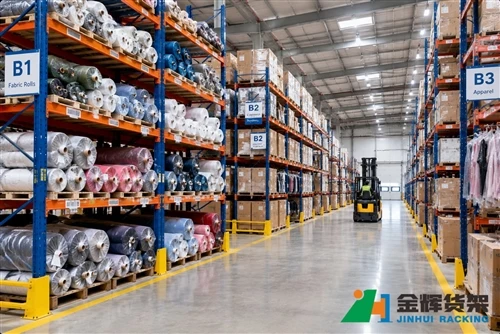
Warehouse Racking for Pharmaceutical Distribution Centers: Managing Batch Traceability, FEFO, and Secure Storage
Pharmaceutical distribution centers handle products that require careful inventory control, accurate identification, and appropriate storage conditions. Unlike general merchandise warehouses, they must manage batch numbers, expiry dates, product status, and storage requirements while maintaining reliable picking and replenishment operations.
A well-planned warehouse racking system can help pharmaceutical distributors organize palletized inventory, separate different product categories, improve access to individual batches, and make better use of available storage space. However, racking alone does not guarantee product quality or regulatory compliance. Storage conditions, warehouse management procedures, monitoring equipment, and inventory controls must work together.

This guide explains how to plan warehouse racking for pharmaceutical distribution centers, with particular attention to batch traceability, FEFO inventory rotation, storage zoning, and efficient material handling.
1. Why Pharmaceutical Distribution Warehouses Need Specialized Storage Planning
Pharmaceutical warehouses may store a wide range of products, including packaged medicines, medical consumables, healthcare products, and temperature-sensitive inventory. These products do not necessarily share the same storage conditions or inventory management requirements.
Several operational factors make warehouse organization especially important:
- Batch identification: Products from different manufacturing batches must remain identifiable throughout receiving, storage, replenishment, and dispatch.
- Expiry date management: Inventory teams need reliable information about product expiry dates to prioritize appropriate stock for picking.
- Storage condition control: Some products require defined temperature, humidity, or other environmental conditions.
- Product status separation: Released, quarantined, returned, damaged, and recalled products may need separate, clearly controlled locations.
- Picking accuracy: Similar packaging, product names, or specifications can increase the risk of selecting the wrong item or batch.
- Inventory traceability: Warehouse records should connect each product batch with its storage location and relevant movements.
Rack layout should therefore be developed around the warehouse's inventory profile and operating procedures, rather than simply maximizing the number of pallet positions.
2. Divide the Warehouse into Clear Pharmaceutical Storage Zones
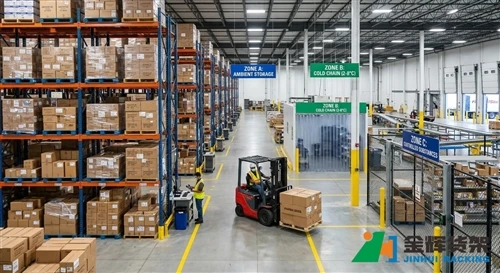
Storage zoning is one of the most practical ways to improve organization in a pharmaceutical distribution center. Different product categories and inventory statuses should have clearly defined locations, with physical separation or access controls where required by the site's procedures.
| Storage Zone | Typical Inventory | Planning Considerations |
|---|---|---|
| Receiving and Inspection | Newly received pharmaceutical products | Provide temporary staging space for quantity checks, label verification, and receiving records. |
| Quarantine Area | Products awaiting inspection, release, or further assessment | Use clearly identified locations and controlled access according to warehouse procedures. |
| Released Inventory | Products approved for normal distribution | Arrange rack locations for accurate identification, batch control, and efficient picking. |
| Temperature-Controlled Storage | Products requiring specified environmental conditions | Plan racking around the required temperature range, monitoring equipment, airflow, and handling procedures. |
| Returns and Damaged Goods | Returned, damaged, or potentially compromised products | Keep these products separate from available inventory until their status is determined. |
| Picking and Dispatch | Orders prepared for shipment | Provide accessible staging locations and organized outbound handling areas. |
The exact zoning arrangement depends on the product portfolio, warehouse procedures, facility design, and applicable requirements. Physical barriers, restricted-access areas, and environmental controls should be incorporated where the operation requires them.
3. Use Selective Pallet Racking for Batch-Level Accessibility
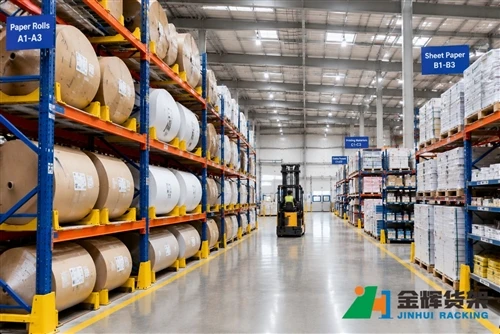
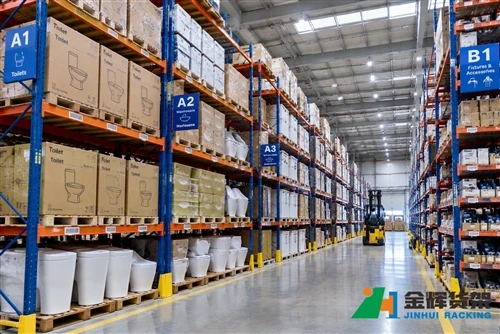
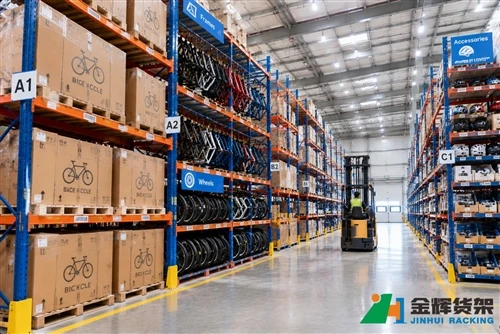
Selective pallet racking is often a practical option for pharmaceutical distribution warehouses that handle many SKUs and require direct access to individual pallet positions.
Each pallet can be assigned a defined rack location, allowing warehouse staff to identify and retrieve inventory without moving other pallets in the same bay. This is useful when products have different batch numbers, expiry dates, or stock statuses.
How Selective Racking Supports Pharmaceutical Inventory
- Direct pallet access: Operators can retrieve a selected pallet without first moving another pallet stored in front of it.
- Flexible SKU organization: Different product categories and batches can be assigned separate storage locations.
- Location identification: Rack bay, level, and position references can be connected to warehouse inventory records.
- Adaptable configuration: Beam levels and bay arrangements can be planned around pallet dimensions, load weights, and handling equipment.
For facilities with a large number of product codes and relatively small quantities per batch, direct access can be more important than achieving the highest possible storage density.
JINHUI's Selective Pallet Racking Systems can be configured according to warehouse dimensions, pallet specifications, load requirements, and forklift operations.
4. Organize Inventory Around FEFO and Batch Traceability
FEFO means First Expired, First Out. Under a FEFO procedure, inventory with the earliest applicable expiry date is prioritized for dispatch, subject to product status, customer requirements, and the warehouse's operating rules.
It is important to distinguish FEFO from a physical rack arrangement. A conventional pallet rack does not automatically identify the earliest-expiring batch or enforce the correct picking sequence. Reliable FEFO operation requires accurate inventory data, batch identification, location records, and warehouse management procedures.
Practical Ways to Support FEFO Picking
- Record batch information at receiving. Capture the product code, batch or lot number, expiry date, quantity, and other required identification data.
- Assign traceable storage locations. Connect each pallet or handling unit with a specific warehouse location in the inventory system.
- Separate batches when necessary. Avoid mixing different batches in ways that make identification or picking verification difficult.
- Prioritize picking by expiry date. Use the warehouse management system or an established inventory procedure to identify the appropriate batch for each order.
- Verify the selected product before dispatch. Check product identity, batch information, expiry date, and stock status against the order requirements.
Rack labels can display location codes, while barcode or other identification systems can connect physical stock with digital inventory records. The specific identification method should match the warehouse's traceability process.
5. Consider VNA Racking When Floor Space Is Limited
Some pharmaceutical distribution centers need to accommodate a growing number of pallet positions without expanding their building footprint. In suitable facilities, Very Narrow Aisle (VNA) racking can help increase storage density by reducing conventional forklift aisle widths.
VNA systems require specialized narrow-aisle handling equipment and careful coordination between rack design, floor conditions, aisle dimensions, and operating procedures.
Before selecting this configuration, warehouse planners should evaluate:
- Available building height and usable storage volume.
- Required pallet positions and inventory turnover.
- Forklift or VNA truck specifications and turning requirements.
- Floor flatness and the suitability of the operating surface.
- Emergency access, pedestrian safety, and maintenance arrangements.
- Whether the narrower aisle arrangement supports the required picking and replenishment workflow.
VNA racking may be appropriate when vertical storage utilization is a priority and the facility can support specialized handling equipment. It should not be selected based on storage density alone.
Learn more about JINHUI's VNA Pallet Racking System and its layout and equipment planning considerations.
6. Evaluate ASRS for High-Volume Pharmaceutical Distribution
For larger distribution operations with high pallet throughput, automated storage and retrieval systems (ASRS) may offer another approach to inventory handling.
An ASRS installation can combine high-rise racking, stacker cranes, conveyors, identification equipment, and warehouse control software. Depending on the system design and software integration, automated equipment can support more consistent storage and retrieval processes while reducing routine forklift movement within storage aisles.
Potential Benefits of ASRS
- Automated storage and retrieval of palletized goods.
- More structured inventory location management.
- Reduced manual travel within designated storage areas.
- Integration opportunities with warehouse management systems.
- Better utilization of available vertical warehouse space.
Automation does not remove the need for accurate batch and expiry data. Product identification, inventory status, FEFO rules, exception handling, and system validation must be addressed in the overall project design.
ASRS is generally more suitable for operations with sufficient throughput, investment capacity, and standardized handling units. Smaller distribution centers may find conventional selective pallet racking more practical.
Explore JINHUI's ASRS Racking Solution for automated pallet storage and retrieval applications.
7. Plan Temperature-Controlled Storage Around Product Requirements
Not all pharmaceutical products require the same storage environment. Some can be stored under controlled room-temperature conditions, while others may require refrigerated or otherwise controlled environments. The product's approved storage requirements and the facility's quality procedures should determine the environmental conditions.
Rack planning in temperature-controlled areas should consider more than the number of pallet positions.
- Air circulation: Rack arrangement and stored loads should not obstruct the airflow required by the facility's refrigeration or environmental control design.
- Monitoring access: Temperature sensors and other monitoring equipment should remain accessible and positioned according to the facility's monitoring plan.
- Handling time: Receiving, picking, and dispatch processes should be coordinated to avoid unnecessary exposure outside designated conditions.
- Material suitability: Rack materials and surface treatments should be evaluated for the actual temperature, humidity, cleaning, and operating environment.
- Maintenance access: The layout should allow inspection and maintenance of both storage equipment and environmental control systems.
Storage racks do not provide temperature control by themselves. The refrigeration system, monitoring arrangements, building envelope, operating procedures, and rack layout must be considered as one coordinated facility plan.
8. Keep Quarantined, Returned, and Recalled Products Separate
Pharmaceutical inventory may change status during its time in the warehouse. A product can be awaiting inspection, released for distribution, returned by a customer, damaged during handling, or subject to a recall.
These status changes should be reflected in both physical storage organization and inventory records. Products that are not authorized for normal distribution should not be confused with available stock.
Useful planning practices include:
- Designating clearly identified locations for quarantine and returned inventory.
- Using controlled access where required by the site's quality procedures.
- Applying visible status labels that are consistent with inventory system records.
- Recording product movements between storage zones.
- Preventing unauthorized picking of blocked or recalled inventory through system controls and operational checks.
The rack layout should make these distinctions easy for warehouse personnel to understand. However, physical labels and storage locations should support-not replace-formal product status controls and documented procedures.
9. Design Rack Layouts Around Picking, Replenishment, and Forklift Movement
A pharmaceutical warehouse must coordinate storage with daily material handling. A layout that offers many pallet positions may still create operational problems if receiving, picking, replenishment, and dispatch activities interfere with one another.
When planning the rack arrangement, consider the following:
| Planning Factor | What to Evaluate |
|---|---|
| Receiving Space | Provide enough staging capacity for incoming pallets, inspection, and identification procedures. |
| Picking Frequency | Consider placing frequently picked products in accessible locations when compatible with product status and storage requirements. |
| Replenishment | Plan replenishment routes and timing to reduce interference with order picking. |
| Forklift Aisles | Set aisle widths according to the actual handling equipment, pallet dimensions, turning needs, and safety requirements. |
| Pedestrian Routes | Separate pedestrian movement from vehicle routes wherever practical and provide suitable safety controls. |
| Dispatch Staging | Allow sufficient space for order checking, consolidation, and outbound loading. |
| Emergency Access | Maintain required access to exits, fire protection equipment, and building services. |
Fast-moving products may be positioned closer to picking or dispatch areas when this arrangement supports the warehouse's inventory rules. However, product storage conditions, batch separation, and security requirements must take priority over convenience alone.
10. Information to Prepare Before Selecting Pharmaceutical Warehouse Racking
Choosing a suitable rack system requires accurate project information. Pharmaceutical distributors should prepare both physical storage data and operational requirements before requesting a warehouse layout proposal.
- Warehouse dimensions: Building length, width, clear height, column positions, doors, and other structural constraints.
- Pallet specifications: Pallet length, width, height, construction, and maximum loaded weight.
- Inventory profile: Number of SKUs, average and peak stock levels, batch quantities, and inventory turnover.
- Expiry management: FEFO requirements, expiry-date recording, and batch separation procedures.
- Storage conditions: Required temperature ranges, humidity considerations, and any special environmental controls.
- Handling equipment: Forklift type, lifting height, turning radius, and operating aisle requirements.
- Operational targets: Required pallet positions, inbound and outbound throughput, picking frequency, and replenishment volume.
- Traceability systems: Barcode, RFID, WMS, ERP, or other inventory identification and control requirements.
These details help the rack supplier assess the appropriate rack type, bay dimensions, beam levels, load capacity, aisle arrangement, and possible automation options.
Conclusion
Pharmaceutical distribution warehouse planning requires a coordinated approach to storage, inventory identification, environmental management, and material handling. Selective pallet racking can provide direct access to different SKUs and batches, while VNA and ASRS solutions may be considered when storage density or throughput requirements justify a more specialized system.
The most suitable solution depends on the actual product portfolio, pallet specifications, batch management procedures, expiry-date controls, storage conditions, and warehouse operating requirements. A properly engineered rack layout can support organized inventory locations and efficient handling, but product quality and regulatory compliance must also be maintained through appropriate facility controls and documented procedures.
Plan Your Pharmaceutical Warehouse Storage System with JINHUI RACK
JINHUI RACK provides warehouse storage solutions including selective pallet racking, VNA racking, and automated storage systems. For pharmaceutical distribution projects, rack selection and layout planning should be based on actual pallet loads, inventory characteristics, storage conditions, handling equipment, and warehouse workflow.
Share your warehouse dimensions, pallet specifications, maximum load, required storage capacity, and operating requirements with our team to discuss a suitable storage configuration.
Email: info@jhrack.com
WhatsApp: +86 185 0252 7163
Website: www.jinhui-rack.com