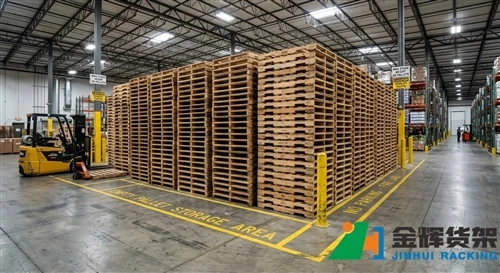
Pallet rack inventory cycle counting is a practical method for checking whether physical warehouse inventory matches the quantities and locations recorded in the inventory management system. Instead of waiting for a full warehouse inventory count, cycle counting allows selected pallet rack locations, SKUs, or inventory groups to be checked on a regular schedule.
For warehouses with hundreds or thousands of pallet positions, regular cycle counting can help identify quantity differences, misplaced pallets, incorrect locations, and inventory record errors before they affect order fulfillment.
This guide explains how to organize pallet rack inventory cycle counting, including how to select locations, determine counting frequency, verify physical pallets, investigate discrepancies, and create a repeatable warehouse counting procedure.
What Is Pallet Rack Inventory Cycle Counting?
Inventory cycle counting is a recurring process in which a warehouse counts selected inventory instead of counting every item at the same time.
For pallet rack storage, a cycle count may focus on a specific rack row, bay, level, SKU group, warehouse zone, or selected pallet positions.
The basic process is:
- Select the inventory or rack locations to be counted.
- Compare the physical pallet quantity with the system record.
- Verify the SKU, pallet quantity, and storage location.
- Record any difference.
- Investigate the reason for the discrepancy.
- Correct the inventory record when the physical count has been verified.
The purpose is not simply to count pallets. The objective is to maintain an accurate connection between physical inventory and the warehouse inventory system.
Why Is Cycle Counting Important for Pallet Rack Warehouses?
Inventory discrepancies can occur during receiving, put-away, replenishment, picking, transfers, returns, or manual inventory adjustments.
A warehouse may physically contain the correct products while the system shows a different quantity or location.
Regular cycle counting helps warehouse teams identify problems such as:
- Incorrect pallet quantities
- Pallets stored in the wrong rack location
- Incorrect SKU records
- Unrecorded inventory movements
- Picking transactions that were not completed correctly
- Receiving quantity differences
- Damaged inventory that was not properly recorded
- Duplicate or missing inventory records
For pallet rack operations, location accuracy is particularly important because inventory availability depends not only on the quantity recorded in the system but also on whether employees can physically locate the pallet.
How Does Pallet Rack Cycle Counting Work?
A practical pallet rack cycle counting process can be organized into six steps.
1. Select the Counting Scope
Determine which rack locations, SKUs, or inventory groups will be counted.
2. Prepare the Count List
Generate a list of the selected locations and inventory records from the warehouse management or inventory system.
3. Perform the Physical Count
Warehouse personnel inspect the actual pallet positions and verify the SKU, quantity, and physical location.
4. Compare Physical and System Records
Compare the physical result with the recorded quantity and location.
5. Investigate Differences
If a discrepancy is found, review recent receiving, picking, replenishment, transfer, or adjustment transactions.
6. Confirm the Adjustment
Once the physical inventory has been verified, the authorized employee can update the inventory record according to the warehouse's control procedure.
This process creates a repeatable method rather than relying on occasional full-warehouse inventory counts.
Which Pallet Rack Locations Should Be Counted First?
Not every rack location has the same inventory risk. A warehouse can prioritize locations based on inventory movement, product value, transaction frequency, or previous discrepancies.
Common priority groups include:
- High-value inventory
- Fast-moving SKUs
- Locations with frequent replenishment
- Locations with frequent picking activity
- Inventory with previous discrepancies
- Recently received products
- Recently relocated pallets
- Locations with frequent manual adjustments
High-activity locations normally provide more opportunities for inventory movements, so they may require more frequent verification than stable, slow-moving locations.
How Often Should Pallet Rack Inventory Be Counted?
There is no single cycle counting frequency that fits every warehouse. The appropriate schedule depends on SKU characteristics, transaction volume, inventory value, warehouse size, and historical accuracy.
| Inventory Type | Possible Counting Frequency | Reason |
|---|---|---|
| High-value / high-activity SKU | Frequent | Higher operational and financial impact from discrepancies |
| Fast-moving SKU | Frequent | Many inventory movements can increase error opportunities |
| Medium-moving SKU | Regular | Requires ongoing accuracy control |
| Slow-moving SKU | Periodic | Fewer transactions normally require less frequent checking |
| Low-risk inventory | Scheduled | Can be included in a longer counting cycle |
The schedule should be reviewed using actual warehouse discrepancy data rather than applying the same frequency to every SKU.
How to Count Pallets in a Rack Location
Physical counting should follow a consistent procedure so that different employees produce comparable results.
When checking a pallet rack location, verify:
- Rack row
- Rack bay
- Storage level
- SKU or product code
- Number of pallets
- Quantity represented by each pallet
- Pallet condition
- Any partial or mixed pallet quantity
For example, a rack location may contain two full pallets and one partial pallet. Simply recording three pallets without checking the actual unit quantity can produce an inaccurate inventory result.
The counting method should therefore match how the warehouse stores and records inventory.
How to Handle Mixed Pallets During Cycle Counting
Mixed pallets require additional attention because one physical pallet may contain multiple SKUs or different quantities.
When a mixed pallet is encountered, the counting procedure should identify:
- Each SKU stored on the pallet
- The quantity of each SKU
- The pallet or container identification
- The assigned rack location
- Any damaged or unusable units
Mixed pallets should not automatically be treated as one inventory item simply because they occupy one physical rack position.
The counting method should follow the warehouse's inventory unit of measure and system configuration.
How to Verify Rack Location Accuracy
Inventory accuracy includes both quantity accuracy and location accuracy.
A system may show that a pallet exists, but if the pallet has been moved from rack position A-05-03 to B-08-02 without updating the system, the inventory may be technically present but operationally difficult to find.
During cycle counting, employees should therefore verify:
- Does the pallet physically exist?
- Is it the correct SKU?
- Is the quantity correct?
- Is it stored in the recorded rack position?
- Is the pallet assigned to the correct inventory status?
This approach helps identify location discrepancies that a simple quantity count may miss.
How to Manage Inventory Discrepancies
When the physical count does not match the system record, the difference should be investigated before making an adjustment.
A practical investigation can review:
- Recent receiving transactions
- Recent put-away activity
- Picking transactions
- Replenishment movements
- Internal transfers
- Returns
- Damaged inventory records
- Manual inventory adjustments
- Recent location changes
For example, if the system shows four pallets but only three are found in the recorded rack location, the missing pallet may have been moved to another rack location rather than physically removed from the warehouse.
Searching for the pallet movement history before making an inventory adjustment can help prevent unnecessary corrections.
Common Causes of Pallet Rack Inventory Discrepancies
| Cause | Typical Problem | What to Check |
|---|---|---|
| Receiving Error | Physical quantity differs from recorded quantity | Receiving documents and transaction records |
| Put-Away Error | Pallet stored in a different location | Assigned and actual rack positions |
| Picking Error | Inventory removed without correct transaction | Picking records and order history |
| Replenishment Error | Reserve and picking locations do not match records | Recent replenishment movements |
| Transfer Error | Inventory moved without location update | Internal transfer records |
| Damage | Unusable stock remains in inventory records | Damage and disposal records |
| Manual Adjustment | Inventory changed without sufficient documentation | Adjustment history |
Understanding the cause is important because repeatedly correcting the same discrepancy without addressing its source will not improve long-term inventory accuracy.
How to Organize Cycle Counting by Rack Zone
For larger warehouses, dividing the pallet rack system into counting zones can make the process easier to manage.
A warehouse may divide its storage area by:
- Rack row
- Rack block
- Warehouse zone
- Product category
- SKU group
- Inventory value
- Storage temperature zone
For example, a warehouse with 20 rack rows could assign several rows to each weekly counting cycle.
This approach makes it easier to create a predictable counting calendar while allowing warehouse operations to continue normally.
Cycle Counting Without Disrupting Warehouse Operations
Inventory counting should not unnecessarily interfere with receiving, picking, replenishment, or shipping.
Several practices can help reduce operational disruption:
- Schedule counting during lower-activity periods when possible.
- Count selected locations instead of stopping an entire warehouse.
- Coordinate counting with forklift operators.
- Avoid blocking active aisles for extended periods.
- Prioritize locations that can be safely accessed during the counting period.
- Use handheld devices or prepared count sheets according to the warehouse system.
For high-traffic warehouse areas, the counting schedule should be coordinated with normal material movement.
The objective is to improve inventory accuracy without creating unnecessary congestion around the pallet rack system.
Using Rack Location Data During Cycle Counting
A consistent rack location structure can make cycle counting more efficient because the counting list can be organized according to the physical warehouse sequence.
For example, a count list could follow:
Zone A → Row 01 → Bay 01 → Level 01
then continue sequentially through the rack row.
This can reduce unnecessary movement between unrelated locations and make it easier for the counting employee to confirm that all selected positions have been checked.
For warehouses using selective pallet racking, direct access to individual pallet positions can also make location-based counting straightforward. JINHUI's selective pallet racking systems are designed for direct access to each pallet position and can be configured according to pallet dimensions, warehouse layout, and forklift requirements. Learn more about selective pallet racking systems.

How Technology Can Support Pallet Rack Cycle Counting
Technology can reduce manual recording and help connect physical rack locations with digital inventory records.
Depending on warehouse size and operating requirements, cycle counting may use:
- Warehouse management systems
- Barcode scanners
- Handheld terminals
- QR codes
- Mobile inventory applications
- RFID systems
- Electronic count lists
The technology should support the counting process rather than replace basic physical verification.
Even when a WMS provides accurate transaction records, warehouse employees still need to verify the actual pallet, quantity, SKU, and physical location.
How to Create a Pallet Rack Cycle Counting Procedure
A written procedure helps ensure that every cycle count follows the same basic steps.
A practical procedure can include:
- Define the inventory counting scope.
- Determine the rack locations or SKUs to be counted.
- Prepare the system count list.
- Assign trained personnel to perform the physical count.
- Verify the rack location and product identification.
- Count the physical inventory.
- Compare the result with the system record.
- Investigate discrepancies.
- Approve inventory adjustments according to company procedures.
- Record the discrepancy cause.
- Review recurring discrepancies and corrective actions.
The procedure should clearly define who is responsible for counting, who verifies discrepancies, and who is authorized to make inventory adjustments.
How to Improve Cycle Counting Accuracy
Accurate cycle counting depends on both the counting process and the condition of the warehouse operation.
Several practices can improve results:
- Use consistent counting procedures.
- Train employees to identify pallet and SKU information correctly.
- Keep rack locations clearly organized.
- Record inventory movements promptly.
- Investigate discrepancies instead of simply correcting them.
- Track recurring discrepancy causes.
- Review high-risk locations more frequently.
- Separate damaged inventory from available inventory.
- Keep temporary storage locations controlled.
Cycle counting should be treated as an ongoing inventory control process rather than a one-time warehouse cleanup activity.
What Should Be Measured in a Cycle Counting Program?
Warehouse managers can monitor several indicators to understand whether the cycle counting process is improving inventory control.
| Metric | Purpose |
|---|---|
| Inventory Accuracy | Measures how closely physical inventory matches system records |
| Location Accuracy | Measures whether pallets are stored in their recorded locations |
| Discrepancy Frequency | Shows how often counting differences occur |
| Adjustment Value | Helps identify the financial impact of inventory differences |
| Recurring Discrepancy Causes | Identifies process problems requiring corrective action |
| Count Completion Rate | Shows whether the planned counting schedule is being completed |
These measurements can help warehouse managers move from simply finding discrepancies to understanding why they occur.
Common Pallet Rack Cycle Counting Mistakes
1. Counting Only When There Is a Problem
Waiting until a picking problem occurs can allow small discrepancies to accumulate. Cycle counting should follow a planned schedule.
2. Counting Quantity but Not Location
A pallet may physically exist but be stored in the wrong rack position. Location accuracy should therefore be included in the count.
3. Correcting the System Without Investigating the Cause
Immediate adjustments may make the system match the physical count temporarily, but repeated discrepancies can continue if the underlying process problem is not identified.
4. Ignoring Partial Pallets
Partial pallets can contain quantities that differ from standard full-pallet quantities. The actual inventory unit should be verified.
5. Counting During Heavy Traffic
Performing detailed inventory checks in a busy forklift aisle can create unnecessary operational conflicts. Counting should be coordinated with warehouse traffic.
6. Using the Same Frequency for Every SKU
High-value and high-activity inventory may require more frequent verification than low-risk, slow-moving inventory.
When Should a Warehouse Review Its Pallet Rack Inventory Process?
A cycle counting process should be reviewed when inventory discrepancies remain frequent or when warehouse operations change significantly.
Reviewing the process may be appropriate when:
- The number of SKUs has increased significantly.
- Warehouse storage capacity has expanded.
- New rack rows or storage zones have been added.
- Picking volume has increased.
- Replenishment activity has increased.
- The warehouse has introduced a new WMS.
- Inventory discrepancies are repeatedly found in the same locations.
- Temporary storage areas are being used more frequently.
- New products have different pallet or packaging characteristics.
When the warehouse operation changes, the inventory counting strategy should be reviewed rather than assuming that the original procedure will continue to work effectively.
Pallet Rack Inventory Cycle Counting Checklist
| Check Item | What to Verify |
|---|---|
| Rack Location | Row, bay, level, and position match the system record |
| SKU | Physical product matches the recorded SKU |
| Pallet Quantity | Physical quantity matches the inventory record |
| Partial Pallets | Actual unit quantity is verified |
| Inventory Status | Available, damaged, held, or other status is correct |
| Recent Movements | Receiving, picking, replenishment, and transfer records are checked when needed |
| Discrepancies | Differences are investigated before adjustment |
| Count Record | Results are documented according to the warehouse procedure |
Frequently Asked Questions About Pallet Rack Cycle Counting
What is pallet rack inventory cycle counting?
It is a scheduled process for physically checking selected pallet rack inventory and comparing the results with warehouse inventory records.
How often should pallet rack locations be counted?
The frequency depends on SKU value, transaction volume, inventory movement, previous discrepancy history, and warehouse operating requirements. High-activity inventory generally requires more frequent checking.
Should cycle counting include rack locations?
Yes. A useful pallet rack cycle count should verify not only the physical quantity but also whether the pallet is stored in the correct recorded location.
What should I do if the physical pallet count does not match the system?
Investigate recent receiving, picking, replenishment, transfer, return, damage, and adjustment transactions before making an inventory correction.
Can cycle counting replace a full physical inventory count?
Cycle counting can reduce the need for disruptive full-warehouse counts in some operations, but the appropriate inventory control method depends on the company's accounting, operational, and regulatory requirements.
Does pallet rack design affect inventory counting?
Yes. Rack accessibility, location identification, storage density, and the ability to reach individual pallet positions can all affect how easily inventory can be physically verified.
Final Thoughts
Pallet rack inventory cycle counting is an important part of maintaining accurate warehouse inventory. A successful program does more than compare a physical pallet quantity with a computer record. It also verifies SKU identity, rack location, inventory status, and the movement history behind any discrepancy.
Start by dividing the warehouse into manageable counting zones, prioritizing high-activity or high-value inventory, establishing appropriate counting frequencies, and creating a standard procedure for investigating discrepancies.
When the physical pallet rack layout, inventory records, and warehouse operating procedures are designed to work together, cycle counting becomes a continuous inventory control process rather than an emergency response to missing stock.
If you are planning a new pallet racking project or need to improve the storage and inventory management structure of an existing warehouse, Jinhui Rack can help with pallet rack selection, layout planning, storage capacity, and customized warehouse racking solutions.
Contact Jinhui Rack for your warehouse pallet racking project:
- WhatsApp: +86 185 0252 7163
- Email: info@jhrack.com
- Website: https://www.jinhui-rack.com/