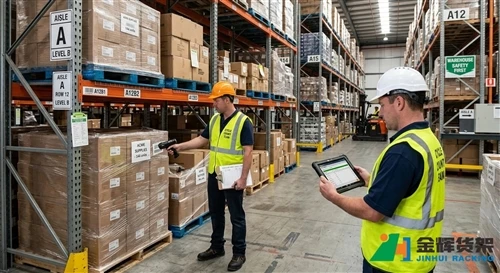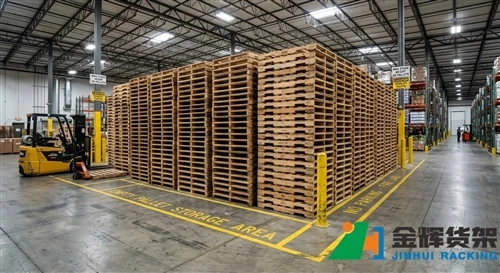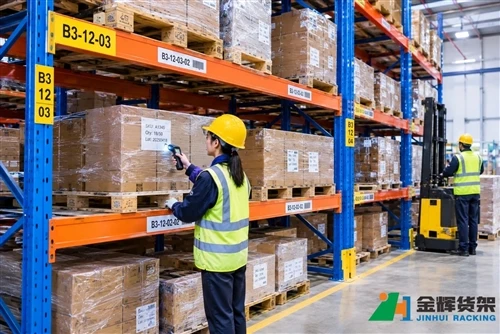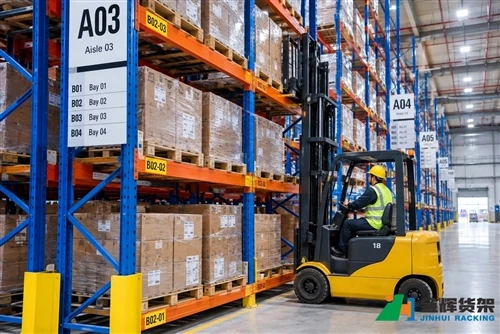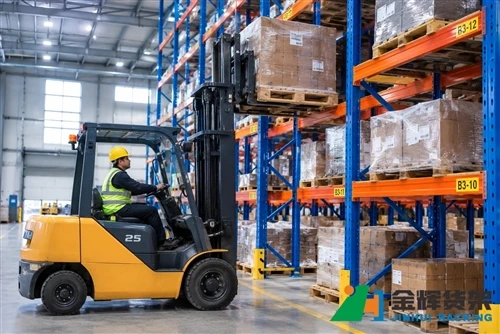
Pallet rack replenishment is the process of moving inventory from reserve storage to picking or active storage locations before stock at the picking location runs out. In warehouses with pallet racking, a well-planned replenishment process helps maintain product availability, reduce picking interruptions, and control unnecessary forklift travel.
Effective replenishment is not simply about moving pallets from one rack location to another. It requires the right balance between reserve pallet storage, picking locations, inventory demand, forklift access, rack layout, and replenishment timing.
This guide explains how to manage pallet rack replenishment in a practical warehouse environment, including how to define replenishment triggers, organize reserve and picking locations, prioritize replenishment tasks, and reduce interference with daily picking operations.
What Is Pallet Rack Replenishment?
Pallet rack replenishment is the movement of inventory from a reserve storage position to a forward picking location when the available stock at the picking location reaches a predefined level.
For example, a warehouse may store several pallets of the same SKU in a selective pallet racking system. One pallet is positioned in an active picking location, while additional pallets remain in reserve rack positions. When the active location becomes low, a forklift operator moves another pallet from reserve storage to the picking position.
A typical replenishment cycle includes:
- Monitoring inventory at the picking location
- Identifying when replenishment is required
- Creating or assigning a replenishment task
- Retrieving a pallet from reserve storage
- Moving the pallet through the warehouse
- Placing the pallet into the correct picking location
- Confirming the inventory movement in the warehouse management system
The objective is to make sure picking locations have sufficient stock without creating excessive reserve inventory movements.
Why Is Pallet Rack Replenishment Important?
Poor replenishment management can create problems even when the warehouse has enough total inventory.
A warehouse may have several pallets of a product in reserve storage, but if the forward picking location becomes empty and replenishment is delayed, order picking may still be interrupted.
Effective replenishment helps warehouses:
- Maintain stock availability at picking locations
- Reduce picking interruptions caused by empty locations
- Use reserve pallet storage more effectively
- Reduce emergency forklift movements
- Improve order fulfillment consistency
- Control unnecessary travel between rack areas
- Reduce conflicts between replenishment and picking activities
For warehouses handling many SKUs, replenishment becomes particularly important because different products may have very different demand frequencies and pallet requirements.
How Does Pallet Rack Replenishment Work?
A basic pallet rack replenishment process can be divided into five stages.
- Monitor the picking location: Determine the current quantity or number of pallets available at the active location.
- Identify the replenishment trigger: Define the inventory level at which another pallet should be moved from reserve storage.
- Locate reserve inventory: Identify the correct reserve pallet and its rack position.
- Move the pallet: Use the appropriate material-handling equipment to transport the pallet to the picking location.
- Confirm the movement: Update the inventory record so the warehouse management system reflects the new pallet location.
The process should be predictable rather than dependent on warehouse workers discovering empty locations during picking.
Reserve Storage vs. Picking Locations
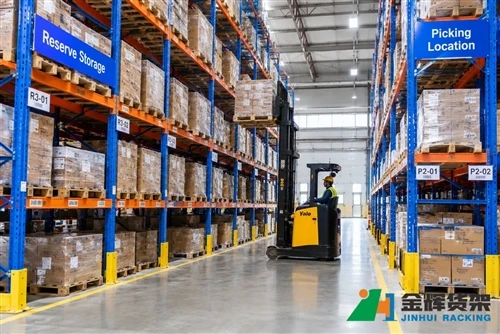
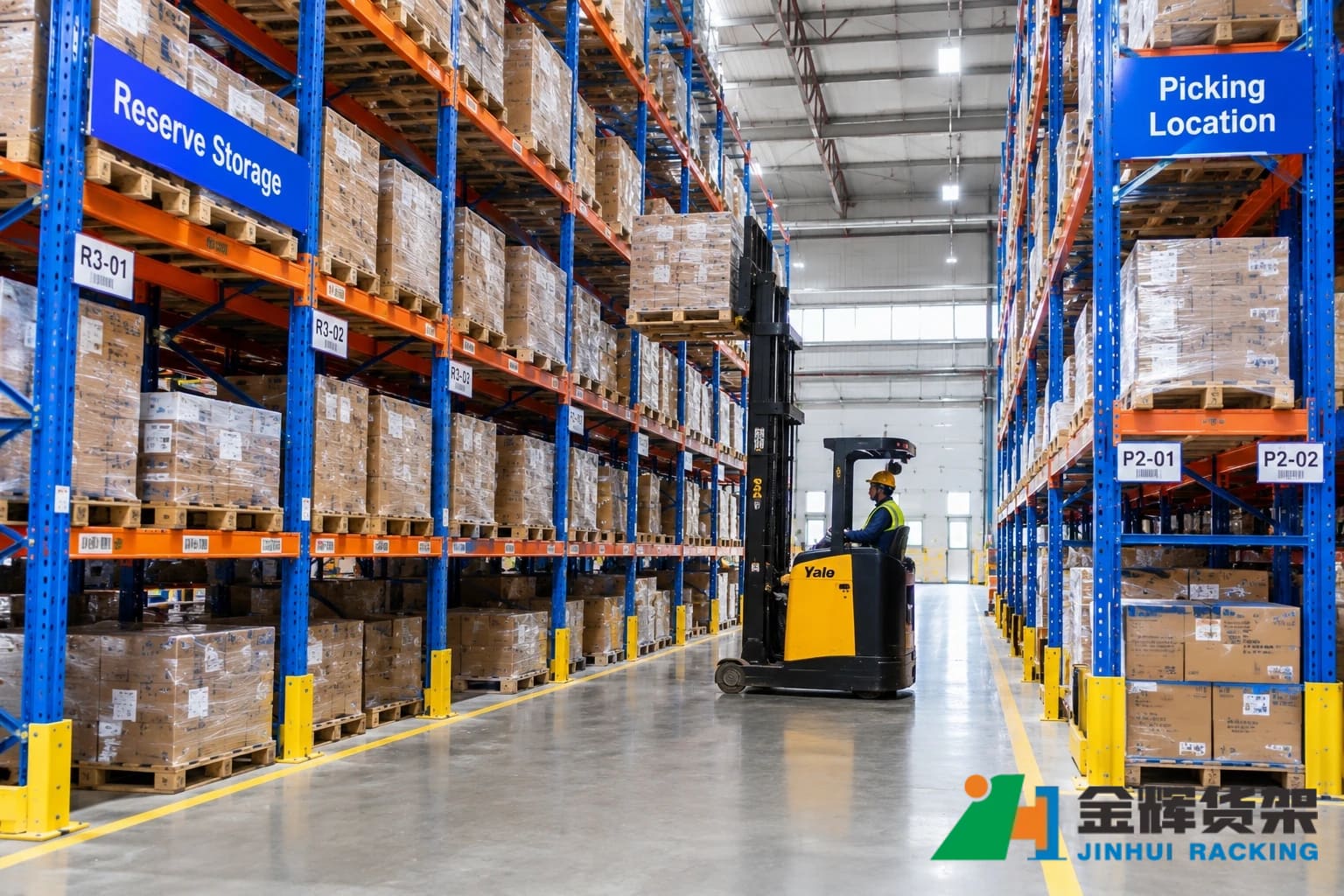
One of the most important concepts in pallet rack replenishment is the separation between reserve storage and picking locations.
Reserve storage holds additional inventory that is not normally picked directly. It provides the stock required to replenish active locations.
Picking locations are positioned for frequent access because warehouse operators use the inventory stored there to fulfill customer orders or production requirements.
| Storage Type | Main Purpose | Typical Activity |
|---|---|---|
| Reserve Storage | Hold additional inventory | Less frequent pallet movement |
| Picking Location | Support order picking | Frequent inventory access |
| Temporary Staging | Support short-term pallet movement | Short-duration storage and transfer |
Clearly defining these areas helps prevent reserve pallets from being mixed with active picking inventory.
For warehouses that require flexible access to individual pallets, selective pallet racking systems can provide direct access to both reserve and picking inventory positions.
When Should a Picking Location Be Replenished?
A replenishment trigger should be established before the picking location becomes empty.
The exact trigger depends on order demand, pallet quantity, replenishment lead time, product characteristics, and the operating schedule of the warehouse.
Common replenishment triggers include:
- Inventory falls below a minimum quantity
- Only one pallet remains at the picking location
- Projected demand exceeds the remaining picking stock
- A large customer order is scheduled
- Peak demand is approaching
- The next picking shift requires additional inventory
For example, if a product normally requires two pallets during a picking shift and replenishment requires significant forklift travel, the warehouse may replenish the location before the first pallet is completely consumed.
The objective is to create enough safety margin to avoid emergency replenishment while avoiding excessive and unnecessary pallet movements.
How to Set Replenishment Priorities
Not every replenishment task has the same urgency. A warehouse can improve efficiency by prioritizing replenishment according to inventory demand and picking requirements.
A practical priority structure can consider:
- Picking location inventory level
- Expected order demand
- SKU turnover rate
- Time required to retrieve reserve inventory
- Distance between reserve and picking locations
- Customer order deadlines
- Upcoming peak periods
| Replenishment Condition | Suggested Priority | Reason |
|---|---|---|
| Picking location empty | Immediate | Picking may be interrupted |
| Picking stock below minimum | High | Stockout risk is increasing |
| Large order scheduled | High | Additional inventory may be required soon |
| Normal stock reduction | Routine | Can be handled during planned replenishment cycles |
| Low-demand SKU | Lower | Less frequent replenishment is normally required |
This approach prevents forklift operators from treating every replenishment request as equally urgent.
How to Reduce Forklift Travel During Replenishment
Forklift travel can become a major part of replenishment activity, especially when reserve pallets are stored far away from their corresponding picking locations.
Several practical measures can reduce unnecessary travel:
- Store frequently replenished SKUs in accessible reserve positions.
- Keep reserve and picking locations logically connected.
- Avoid placing high-demand SKUs at the far end of long rack blocks without a clear operational reason.
- Group related inventory where practical.
- Use consistent rack location identification.
- Combine replenishment tasks when operationally appropriate.
- Schedule replenishment during periods with lower forklift traffic.
However, minimizing travel distance should not be the only objective. Rack capacity, forklift access, storage density, SKU characteristics, and warehouse safety must also be considered.
For a broader understanding of forklift movement around rack systems, see How to Reduce Forklift Travel Distance in a Pallet Racking Warehouse.
How Rack Location Design Affects Replenishment
The physical arrangement of pallet rack locations can have a direct effect on replenishment efficiency.
Important factors include:
- Distance between reserve and picking locations
- Rack row length
- Aisle configuration
- Cross-aisle availability
- Forklift turning requirements
- SKU demand frequency
- Pallet dimensions
- Warehouse receiving and shipping locations
For example, if a high-frequency SKU requires repeated replenishment but its reserve stock is located in a remote rack block, forklifts may spend significant time traveling between the two locations.
On the other hand, placing every reserve pallet close to picking areas may reduce available space for other operational activities.
A balanced rack layout should therefore consider both storage density and replenishment frequency.
How to Organize Reserve Pallet Storage
Reserve storage should be organized so that warehouse operators can quickly identify and retrieve the correct pallet.
A practical reserve storage strategy may include:
- Assigning fixed rack locations to frequently replenished SKUs
- Using consistent location codes
- Separating different SKUs clearly
- Maintaining accurate pallet quantity records
- Keeping damaged or blocked pallets out of active reserve locations
- Using suitable rack levels for the required pallet loads
- Reviewing reserve locations when SKU demand changes significantly
For warehouses with many SKUs, location management becomes increasingly important because a forklift operator should be able to identify the correct reserve pallet without searching multiple rack bays.
The reserve storage strategy should also be compatible with the selected pallet racking system. High-density systems may offer different replenishment characteristics from selective rack layouts.
How to Prevent Replenishment From Disrupting Picking
Replenishment and picking can compete for the same warehouse aisles, particularly during busy operating periods.
If forklifts are replenishing pallet positions while order pickers are working in the same area, congestion and waiting time may increase.
To reduce interference, warehouses can consider:
- Scheduling routine replenishment before or after major picking periods
- Prioritizing urgent replenishment tasks separately from routine tasks
- Separating reserve storage routes from active picking areas where the layout allows
- Using clear rack location identification
- Keeping temporary pallets out of active picking aisles
- Reviewing replenishment traffic during peak operating periods
The correct approach depends on the warehouse operating schedule. A warehouse running continuous picking operations may require a different replenishment strategy from a facility with defined picking shifts.
Replenishment for Fast-Moving and Slow-Moving SKUs
SKU turnover should influence how replenishment is managed.
Fast-moving products may require frequent replenishment and should normally have sufficient reserve stock available to support expected demand.
Slow-moving products may require much less frequent replenishment. Keeping excessive reserve stock close to their picking locations can consume valuable storage space without providing a meaningful operational benefit.
| SKU Type | Replenishment Characteristic | Storage Consideration |
|---|---|---|
| Fast-Moving SKU | Frequent replenishment | Prioritize accessibility and sufficient reserve stock |
| Medium-Moving SKU | Regular replenishment | Balance access and storage density |
| Slow-Moving SKU | Infrequent replenishment | Storage density may receive greater emphasis |
| Seasonal SKU | Demand changes significantly | Adjust reserve stock before peak demand |
SKU classification should be reviewed periodically because demand patterns can change over time.
How to Manage Replenishment During Peak Demand
Peak periods can significantly increase replenishment requirements.
Before a seasonal or promotional peak, warehouse managers should review:
- Expected order volume
- Current picking location capacity
- Reserve pallet availability
- Forklift availability
- Replenishment routes
- Required safety stock
- Potential congestion points
Pre-replenishment can sometimes reduce pressure during peak picking periods. Instead of waiting until active locations become nearly empty, selected high-demand SKUs can be replenished in advance based on expected order volume.
However, pre-replenishment should be controlled. Moving too much inventory into picking locations can reduce available space and create unnecessary handling.
Common Pallet Rack Replenishment Mistakes
Several replenishment problems occur because the process is managed reactively rather than systematically.
1. Waiting Until the Picking Location Is Empty
If replenishment begins only after the active location is empty, the forklift may need to perform an emergency movement while an order is waiting. Establishing minimum stock levels can reduce this problem.
2. Storing Reserve Stock Without a Clear Location Strategy
Reserve pallets that are difficult to locate can increase search time and forklift travel. Each reserve pallet should have a clear and traceable location.
3. Replenishing Without Considering Demand
Moving pallets simply because space is available can create unnecessary handling. Replenishment should be connected to actual or expected demand.
4. Mixing Replenishment With Heavy Picking Traffic
Large numbers of replenishment movements during peak picking periods can increase traffic conflicts. Scheduling routine replenishment during lower-traffic periods can help.
5. Ignoring Seasonal Demand
Historical average demand may not be sufficient when a warehouse is approaching a seasonal peak. Replenishment planning should account for expected demand changes.
6. Failing to Update Inventory Records
A physical pallet movement that is not correctly recorded can create inventory discrepancies. The warehouse management system should reflect the actual rack location after replenishment.
How to Create a Pallet Rack Replenishment Procedure
A written replenishment procedure helps ensure that different warehouse operators follow the same process.
A practical procedure can include the following steps:
- Define all active picking locations.
- Identify corresponding reserve rack locations.
- Set minimum and target inventory levels.
- Define replenishment triggers for different SKU categories.
- Establish replenishment priorities.
- Define standard forklift routes.
- Set rules for replenishment during peak picking periods.
- Confirm pallet and rack load requirements.
- Require inventory confirmation after each movement.
- Review replenishment performance regularly.
The procedure should be simple enough for warehouse operators to follow consistently and detailed enough to prevent ambiguity.
What Should Be Measured in a Replenishment Program?
Warehouse managers can use several indicators to determine whether the replenishment process is working effectively.
| Metric | What It Helps Evaluate |
|---|---|
| Picking Location Stockouts | Whether replenishment is occurring early enough |
| Replenishment Response Time | How quickly replenishment tasks are completed |
| Forklift Travel Distance | Whether reserve locations are logically positioned |
| Emergency Replenishment Tasks | Whether normal replenishment planning is sufficient |
| Replenishment Frequency by SKU | Whether storage locations match demand patterns |
| Inventory Accuracy | Whether physical and system locations remain consistent |
These measurements can help identify whether the problem is caused by replenishment timing, rack layout, inventory planning, or SKU location strategy.
When Should You Review the Pallet Rack Layout?
If replenishment remains inefficient after improving procedures, the physical rack layout may need to be reviewed.
A layout review can be useful when:
- Forklifts travel long distances for frequent replenishment tasks.
- Reserve and picking locations are poorly connected.
- Picking aisles become congested during replenishment.
- High-frequency SKUs are difficult to access.
- Current storage demand has changed significantly.
- New forklifts or handling equipment have been introduced.
- The warehouse is adding new product categories.
- Peak demand regularly exceeds the original operating plan.
In these situations, the warehouse should be evaluated as a complete storage and material-flow system rather than changing individual rack positions without considering the surrounding operation.
Choosing a Pallet Racking System for Replenishment Requirements
The pallet racking system can influence how reserve inventory is accessed and replenished.
For operations requiring direct access to individual pallets, selective pallet racking provides straightforward access to reserve positions.
For warehouses where storage density is a major consideration and inventory characteristics support deeper storage, other pallet racking configurations may provide different operating patterns.
For example, radio shuttle pallet racking can support high-density pallet storage while reducing the need for forklifts to enter deep storage lanes.
The appropriate system depends on SKU characteristics, pallet quantities, required selectivity, warehouse throughput, available space, and replenishment requirements.
Pallet Rack Replenishment Checklist
| Item | Check |
|---|---|
| Picking Locations | Are active picking positions clearly defined? |
| Reserve Storage | Is reserve inventory assigned to identifiable rack locations? |
| Minimum Stock | Does each major SKU have an appropriate replenishment trigger? |
| Demand | Are replenishment levels based on actual inventory movement? |
| Forklift Routes | Can operators reach reserve pallets efficiently? |
| Peak Periods | Is replenishment planned around high-demand periods? |
| Picking Traffic | Can replenishment be performed without unnecessary interference? |
| Inventory Records | Are pallet movements accurately recorded? |
| Rack Capacity | Do reserve locations match the required pallet loads? |
Frequently Asked Questions About Pallet Rack Replenishment
What is pallet rack replenishment?
Pallet rack replenishment is the process of moving inventory from reserve rack locations to active picking locations when additional stock is required for order fulfillment or warehouse operations.
How often should pallet rack replenishment be performed?
There is no universal replenishment frequency. It should be based on SKU demand, picking volume, pallet quantity, reserve stock, replenishment travel time, and warehouse operating schedules.
What is the difference between reserve storage and picking storage?
Reserve storage holds additional inventory for future use, while picking storage contains inventory positioned for frequent access during order fulfillment.
How can I reduce forklift travel during replenishment?
Review the relationship between reserve and picking locations, place frequently replenished SKUs in accessible positions, improve location identification, and organize replenishment routes around actual warehouse traffic patterns.
Should replenishment be performed during picking?
It depends on the warehouse operation. Routine replenishment may be scheduled during lower-traffic periods when possible, while urgent replenishment may need to occur during active picking to prevent stockouts.
How does pallet racking affect replenishment efficiency?
Rack configuration affects reserve storage density, pallet accessibility, forklift travel, aisle movement, and the distance between reserve and active inventory. The rack system should therefore be selected according to both storage and operational requirements.
Final Thoughts
Effective pallet rack replenishment is a balance between inventory availability, reserve storage, picking requirements, forklift movement, and warehouse layout.
The goal is not simply to move pallets as quickly as possible. A good replenishment process ensures that the right inventory reaches the right picking location before it is needed, while minimizing unnecessary handling and interference with other warehouse activities.
Start by separating reserve storage from picking locations, defining replenishment triggers, prioritizing high-demand SKUs, improving rack location management, and reviewing forklift travel routes. Then use replenishment data to identify whether the current pallet rack layout still matches the warehouse's operating requirements.
If you are planning a new pallet racking project or want to improve the replenishment efficiency of an existing warehouse, Jinhui Rack can help evaluate rack configuration, pallet storage requirements, reserve locations, forklift access, and overall warehouse storage planning.
Contact Jinhui Rack for your warehouse pallet racking project:
- WhatsApp: +86 185 0252 7163
- Email: info@jhrack.com
- Website: https://www.jinhui-rack.com/