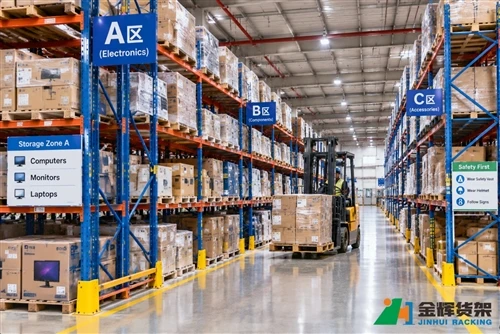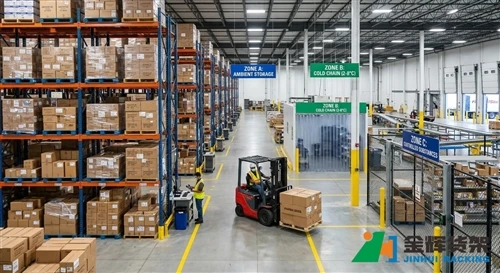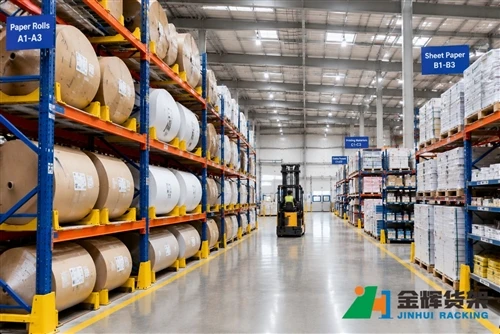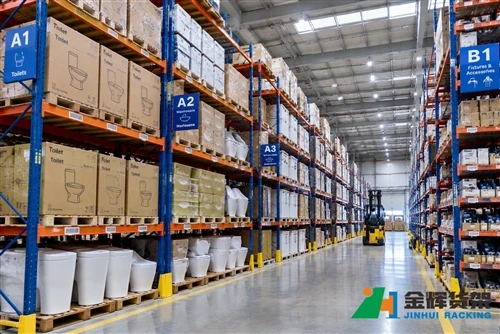
Loading pallets correctly is just as important as choosing and installing the right pallet racking system. A rack may be designed for a specific pallet weight and configuration, but incorrect pallet placement, uneven loads, poor clearance, or damaged pallets can create unnecessary risks during daily warehouse operations.
Proper pallet rack loading means placing each pallet in the intended storage position, keeping the load stable and within the rack's rated capacity, maintaining suitable clearance, and using the correct handling equipment for the rack configuration. This guide explains the practical steps warehouse teams can follow when loading pallet racks.
What Does Correct Pallet Rack Loading Mean?
Correct pallet rack loading means more than simply putting a pallet onto a rack beam. The pallet, load, rack configuration, and forklift operation all need to work together.
| Loading Factor | What to Check |
|---|---|
| Pallet condition | Check that the pallet is structurally sound and suitable for the load. |
| Load weight | Confirm that the pallet load does not exceed the permitted rack or pallet capacity. |
| Load stability | Make sure cartons, containers, or other goods are stacked securely. |
| Pallet position | Place the pallet correctly on the designed rack support members. |
| Clearance | Maintain enough space for safe forklift entry, positioning, and removal. |
| Rack configuration | Use the rack according to its original design and approved loading configuration. |
Check the Pallet Before Loading
The pallet is the first point of contact between the stored load and the racking system. Before placing it into a rack position, inspect it for broken boards, missing components, severe deformation, unstable construction, or other visible conditions that could affect its ability to support the load.
Wooden, plastic, and other pallet types may have different dimensions and structural characteristics. A pallet that works well in one storage application may not be suitable for another rack configuration.
Warehouse operators should also confirm that the pallet is compatible with the rack's beam arrangement, pallet supports, guides, or other supporting components where applicable.
Position the Pallet Correctly on the Rack
Once the pallet has been checked, it should be positioned according to the rack manufacturer's intended configuration. The pallet must sit securely on the designated supporting members rather than resting on unintended rack components.
For conventional selective pallet racking, the forklift operator should approach the storage position squarely and place the pallet at a controlled speed. The pallet should remain stable after the forks are withdrawn.
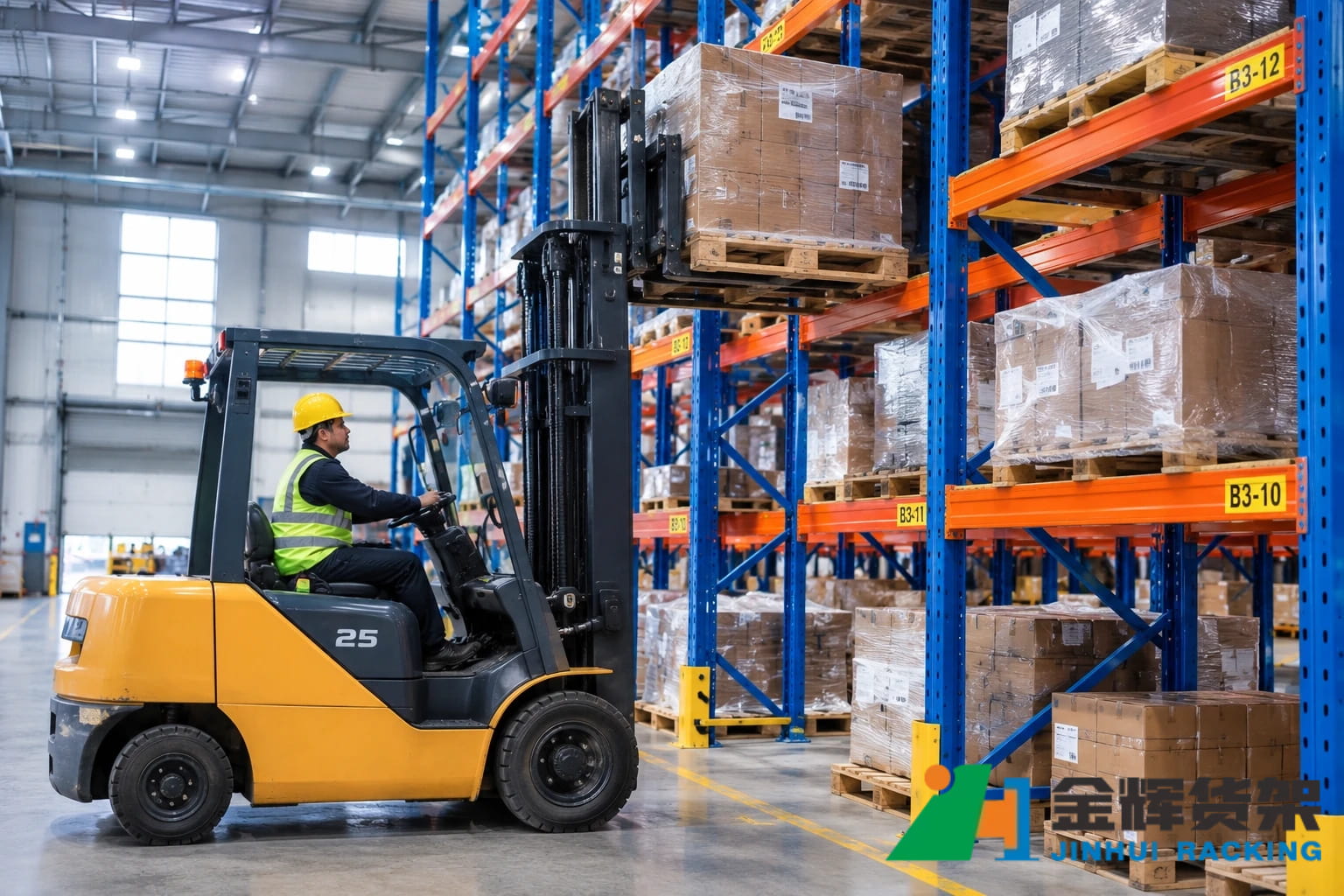
The exact pallet position depends on the rack design, pallet dimensions, beam arrangement, and any installed pallet support components. If a project uses pallet supports, the pallet should be positioned so that the intended load-bearing areas are properly supported.
Maintain Proper Clearance Around the Pallet
Clearance is important because forklifts need sufficient space to enter, position, place, and remove pallets without contacting the rack or nearby loads.
Do not assume that a pallet can be safely stored simply because it physically fits into a rack bay. The available clearance should also account for the forklift being used, the pallet dimensions, load dimensions, and the operating method of the warehouse.
Check the following areas before loading:
- Clearance between the pallet and adjacent rack components.
- Clearance between neighboring pallets.
- Clearance between the load and overhead rack components.
- Forklift clearance during entry and withdrawal.
- Clearance from sprinklers, lights, doors, beams, and other overhead obstructions.
- Aisle space required for the specific forklift and handling operation.
Insufficient clearance can increase the possibility of pallet or rack contact during loading. The required clearance should therefore be established during warehouse layout and rack system planning rather than improvised during daily operations.
Distribute the Load Properly
Load distribution affects how a pallet behaves during handling and storage. A pallet should not be loaded with a concentrated weight in a position that makes the load unstable or unsuitable for the pallet and rack configuration.
For many palletized goods, heavier products are placed toward the lower portion of the load while lighter products can be positioned above them. The objective is to create a stable load that remains secure during forklift movement and storage.
| Load Condition | Recommended Practice |
|---|---|
| Heavy products | Keep the load stable and avoid creating an unnecessarily high or top-heavy pallet. |
| Mixed products | Distribute weight carefully and prevent unstable stacking. |
| Small cartons | Keep cartons aligned and prevent individual units from protruding excessively. |
| Irregular products | Use suitable packaging, restraints, or a different storage method where necessary. |
| Long or oversized products | Verify that the rack and pallet configuration is specifically suitable before storage. |
Consider Pallet Overhang and Load Protrusion
A pallet or its load should not extend beyond the intended storage envelope without confirming that the rack system was designed for that configuration.
Excessive overhang can affect the available clearance, forklift operation, neighboring pallet positions, and the stability of the stored goods. It can also make it more difficult for operators to position the pallet consistently from one storage location to another.
If a warehouse regularly handles pallets with unusual dimensions, the rack system should be designed around those pallet dimensions instead of treating them as exceptions during daily loading.
Load Different Pallet Types According to Their Design
Not every pallet should automatically be treated the same way. Two pallets may have similar external dimensions while having different construction, bottom-board arrangements, load capacities, or stiffness.
Before using a particular pallet type in a pallet rack, confirm that it is compatible with the supporting arrangement. This is especially important for applications where pallets span between front and rear beams or where additional pallet supports are installed.
For warehouses using pallet supports, you can review the pallet rack pallet supports available for different storage configurations.
Use the Correct Forklift Approach
Forklift operation has a direct effect on pallet rack loading quality. The operator should approach the rack in a controlled manner and confirm that the pallet is aligned with the intended storage position before placing it.
The forklift should also be suitable for the rack height, aisle configuration, pallet weight, and operating environment. Operators need to understand the equipment's rated capacity and the clearance requirements of the mast and forks.
When placing a pallet at height, avoid unnecessary contact between the forklift, pallet, load, and rack structure. Once the pallet has been placed securely, the forks should be withdrawn carefully before the forklift moves away.
Do Not Exceed the Rack's Rated Load
Every rack system should be loaded according to its engineered configuration and rated capacity. The permitted load may depend on factors such as upright height, beam size, beam length, beam elevation, bay configuration, pallet weight, and the number of storage levels.
Do not increase pallet weight simply because there appears to be unused space in the rack bay. Likewise, do not add additional pallets or change the rack configuration without confirming that the revised arrangement is suitable.
A load capacity sign or other project documentation should be used as a reference for the intended rack configuration. If the actual pallet weight or storage arrangement changes significantly, the rack configuration should be reviewed before the change is implemented.
For warehouses handling high-volume or heavy pallet loads, industrial heavy duty pallet racks can be designed around the required pallet weight, dimensions, and storage levels.
Common Pallet Rack Loading Mistakes
Many loading problems come from small operational deviations that become routine over time. Warehouse managers can reduce these problems by establishing simple loading standards and training operators to follow them consistently.
- Loading a pallet that is damaged or unstable.
- Exceeding the permitted rack load capacity.
- Placing a pallet outside the intended support area.
- Allowing goods to protrude into the aisle unnecessarily.
- Using pallets that are not suitable for the rack configuration.
- Ignoring clearance around the pallet or load.
- Using a forklift that is unsuitable for the aisle or storage height.
- Changing beam levels or rack configuration without proper review.
- Continuing to use a rack position after significant rack damage is discovered.
How Warehouse Managers Can Standardize Pallet Loading
A consistent loading procedure makes warehouse operations easier to control. Instead of relying only on individual operator experience, managers can establish a simple standard operating procedure for pallet storage.
A practical loading procedure can include:
- Confirm the pallet type and dimensions.
- Check the pallet and load condition.
- Confirm the pallet weight is within the approved limit.
- Verify the assigned rack location.
- Approach the rack with the correct forklift.
- Position the pallet squarely and securely.
- Confirm adequate clearance around the pallet.
- Withdraw the forks carefully.
- Check that the pallet and load remain stable after placement.
This procedure can be incorporated into forklift operator training, warehouse SOPs, and routine rack inspections.
What Should You Do If a Pallet Does Not Fit?
If a pallet cannot be positioned correctly without contacting the rack, neighboring pallet, or another obstruction, it should not simply be forced into the storage position.
First check whether the pallet dimensions, load dimensions, storage location, and rack configuration are correct. If the problem occurs repeatedly, the warehouse may need a different storage location, pallet configuration, or rack design.
Forcing an oversized or poorly positioned pallet into a rack bay can create unnecessary contact with the rack structure and make future pallet retrieval more difficult.
How to Load Pallet Racks More Efficiently
Safe loading and efficient loading should work together. A well-planned warehouse can reduce unnecessary forklift movements while maintaining consistent pallet placement.
Useful practices include assigning standard pallet types to specific rack areas, using clear location labels, maintaining consistent pallet orientation, and keeping aisles free from unnecessary materials.
For a conventional warehouse requiring direct access to individual pallets, selective pallet racking systems can provide a practical storage configuration for organized pallet loading and retrieval.
FAQ About Loading Pallet Racks
Can any pallet be stored on pallet racking?
No. The pallet should be compatible with the rack's supporting arrangement, dimensions, load requirements, and intended application. Pallet condition should also be checked before storage.
Should heavier pallets always go on the bottom?
Heavy loads are commonly positioned on lower or middle storage levels where appropriate, but the actual loading arrangement should follow the rack design, load capacity, warehouse operating method, and applicable safety requirements.
How much clearance should be left around a pallet?
There is no single clearance value suitable for every pallet rack system. The required clearance depends on the pallet size, load dimensions, rack configuration, forklift type, aisle arrangement, and other warehouse conditions. Clearance should be established during system design and operation planning.
What should I do if a pallet is damaged?
Do not place a visibly unsuitable pallet into a rack position. Remove it from the storage process and replace it with a pallet that is appropriate for the intended load and rack configuration.
Can the rack configuration be changed after installation?
Rack components should not be rearranged simply to create additional storage space. Any change to beam levels, pallet positions, or other structural components should be reviewed against the original rack design and load requirements.
Final Thoughts
Correct pallet rack loading depends on several factors working together: pallet condition, load stability, weight distribution, pallet position, clearance, rack capacity, and forklift operation.
A well-designed pallet racking system provides the foundation, but consistent loading practices are essential for maintaining safe and efficient warehouse operations. By standardizing how pallets are checked, positioned, loaded, and retrieved, warehouse teams can reduce avoidable handling problems and make better use of their storage system.
If you are planning a new pallet racking project or need to confirm the right rack configuration for your pallet sizes and loads, contact Jinhui Rack for a project-specific solution.
WhatsApp: +86 185 0252 7163
Email: info@jhrack.com
Website: https://www.jinhui-rack.com/