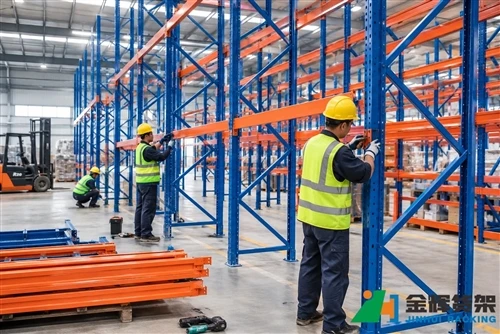
Partial pallets are common in warehouses where products are picked, replenished, returned, or shipped in quantities smaller than a full pallet. If these pallets are not managed consistently, they can occupy multiple rack locations, increase handling work, and make inventory more difficult to control.
A practical partial pallet management process should define where partial pallets are stored, when they should be consolidated, how they are labeled, and how their quantities are tracked. The goal is not simply to save rack space, but to keep inventory accessible, identifiable, and safe to handle.
What Is a Partial Pallet?
A partial pallet is a pallet that contains less than its normal full-load quantity. It may be created when warehouse operators pick individual cases from a pallet, receive an incomplete shipment, process customer returns, or move inventory between storage and picking areas.
For example, a pallet originally containing 50 cartons may have only 18 cartons remaining after several orders are picked. The pallet is still usable, but it now represents partial inventory rather than a full pallet load.
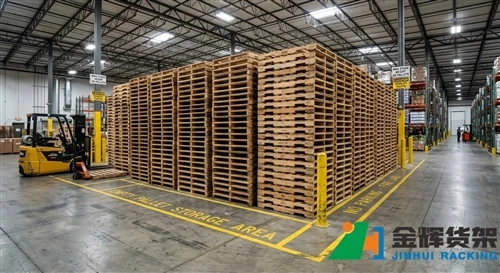
Partial pallets can be stored in pallet racking, floor locations, dedicated partial-pallet areas, or other suitable storage positions depending on the warehouse operation.
Why Are Partial Pallets Common in Warehouses?
Partial pallets are usually a normal result of warehouse operations rather than a sign of poor inventory control.
- Orders may require fewer cases than a full pallet quantity.
- Products may be picked from reserve pallets for daily orders.
- Customer orders may contain mixed quantities.
- Returns may arrive with incomplete pallets.
- Production or distribution processes may consume only part of a pallet.
- Seasonal demand can leave small quantities after peak periods.
The management challenge begins when many partial pallets accumulate across different rack locations without a consistent storage and tracking procedure.
Where Should Partial Pallets Be Stored?
The best storage location depends on how frequently the remaining inventory will be accessed.
For frequently picked products, partial pallets may need to remain in easily accessible locations close to the picking operation. For slower-moving inventory, they can often be placed in designated reserve positions where they do not interfere with normal pallet movements.
A warehouse can also create a dedicated partial-pallet zone. This makes smaller quantities easier to identify and reduces the chance that operators will leave partial pallets in unsuitable locations.
| Partial Pallet Condition | Potential Storage Location | Management Objective |
|---|---|---|
| Frequently picked | Accessible rack or forward-picking area | Fast retrieval |
| Slow-moving | Reserve rack location | Reduce unnecessary handling |
| Small remaining quantity | Dedicated partial-pallet area | Easy identification and consolidation |
| Awaiting shipment | Defined staging location | Prevent obstruction of rack aisles |
When Should Partial Pallets Be Consolidated?
Consolidation means combining compatible quantities of the same product into fewer pallet locations.
For example, if the same SKU is stored on three pallets containing 20, 15, and 10 cartons, the warehouse may be able to consolidate the inventory onto fewer pallets when the product, packaging, pallet condition, and handling requirements allow it.
Consolidation should normally be considered when:
- The pallets contain the same SKU.
- The product has compatible batch or lot requirements.
- Expiry-date rules allow the inventory to be combined.
- The resulting pallet remains stable and within its rated load conditions.
- The consolidation process does not create unnecessary handling.
Inventory control rules should always take priority. Pallets should not be combined simply to save space if doing so could create lot-tracking, expiry, quality-control, or customer-order problems.
How to Prevent Multiple Partial Pallets from Wasting Rack Space
One of the biggest problems with partial pallets is storage fragmentation. A single SKU may occupy several rack positions even though the total quantity could fit into fewer locations.
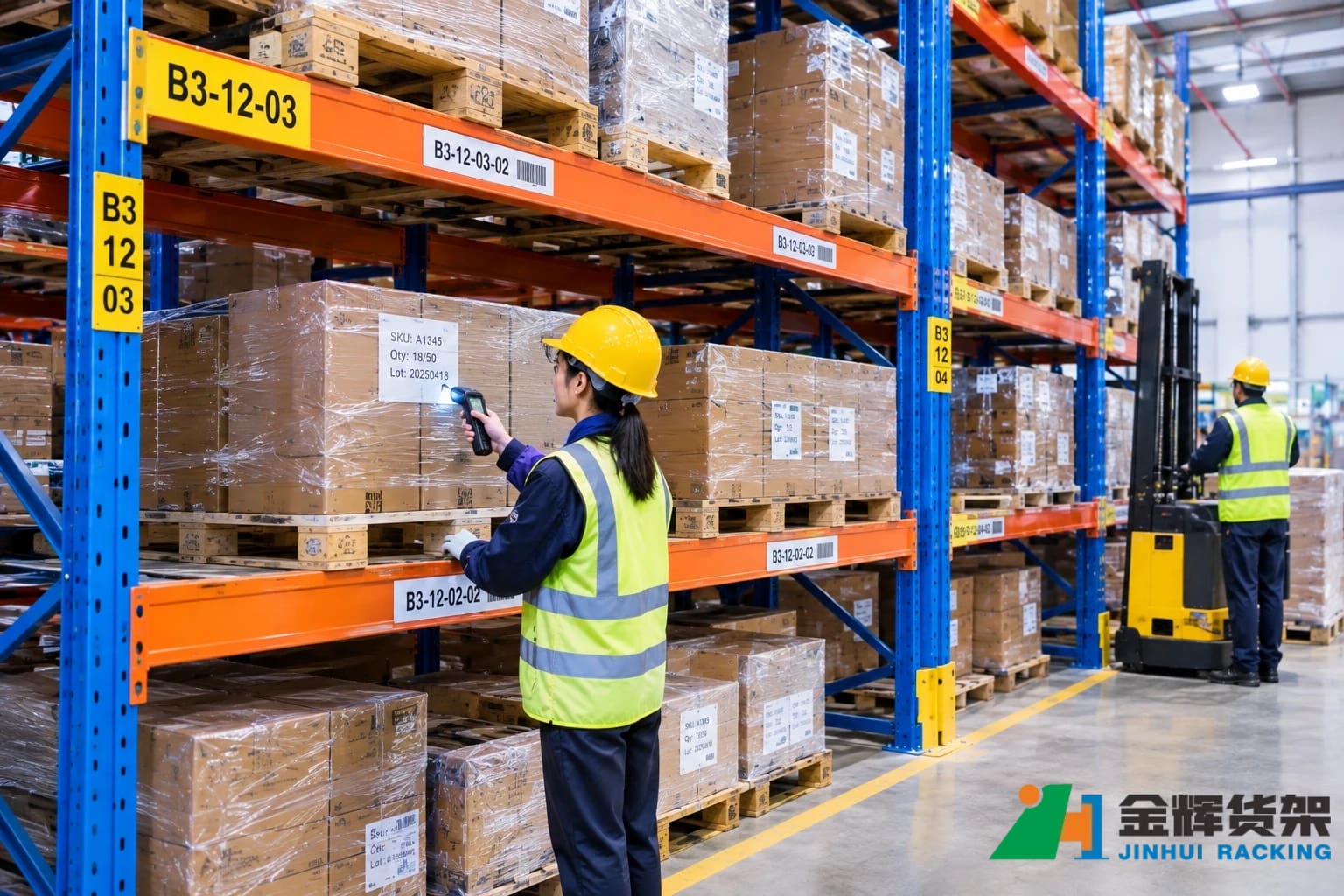
A practical control process can reduce this fragmentation:
- Identify SKUs that frequently create partial pallets.
- Track how many partial pallets exist for each SKU.
- Review whether compatible partial pallets can be consolidated.
- Assign appropriate locations based on picking frequency.
- Keep location records synchronized with the warehouse management system.
- Review recurring partial-pallet patterns and adjust replenishment rules when necessary.
The objective is not to eliminate every partial pallet. Instead, the warehouse should prevent unnecessary duplication of storage locations.
How to Label and Track Partial Pallets
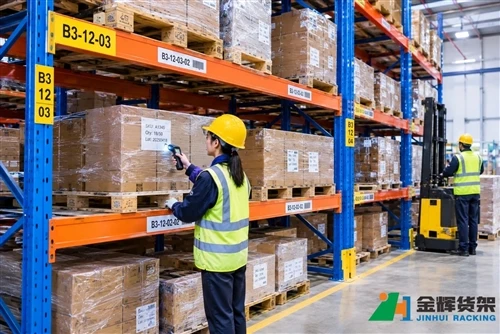
Every partial pallet should remain clearly identifiable after it is moved from its original full-pallet position.
A useful partial-pallet label may include:
- SKU or product code
- Product description
- Quantity remaining
- Unit of measure
- Batch or lot number when required
- Production or expiry information when applicable
- Storage location
- Date of pallet creation or last count when useful
The physical label and warehouse management system should show consistent information. If a partial pallet is moved without updating its location, operators may waste time searching for inventory even though the stock technically remains in the system.
Can Different SKUs Be Stored on One Pallet?
Mixed-SKU pallets can be useful in some warehouse operations, but they should only be used when the warehouse has a clear procedure for identification and inventory control.
Different products should not be combined merely because there is unused pallet space.
Before placing different SKUs on the same pallet, consider:
- Product compatibility
- Weight distribution
- Packaging stability
- Picking requirements
- SKU identification
- Lot and batch tracking
- Expiry-date control
- Customer-specific requirements
If mixed-SKU pallets are used, each product should be clearly separated and identified so that operators can count and pick inventory accurately.
How Partial Pallets Affect Warehouse Efficiency
Partial pallets can affect warehouse performance in several ways.
First, they can increase the number of occupied storage locations. Second, they may require additional forklift or pallet-handling movements. Third, scattered partial pallets can make inventory searches more difficult.
However, partial pallets can also support efficient order fulfillment when they are intentionally positioned in accessible picking locations.
For this reason, partial-pallet management should balance three factors:
- Storage efficiency: Avoid unnecessary rack locations.
- Accessibility: Keep frequently picked partial pallets easy to reach.
- Inventory accuracy: Maintain reliable quantity and location information.
The warehouse should therefore treat partial pallets as part of the overall storage strategy rather than simply as leftover inventory.
Common Partial Pallet Management Mistakes
Leaving Partial Pallets in Random Locations
Temporary storage can quickly become permanent if operators do not have a defined location for partial pallets. This makes inventory more difficult to locate and can interfere with normal warehouse traffic.
Creating Several Partial Pallets for the Same SKU
When operators repeatedly open new pallets without checking existing partial inventory, the same SKU may become fragmented across multiple locations.
Failing to Update Quantities
A pallet label showing an outdated quantity can cause picking errors, inaccurate inventory counts, and unnecessary replenishment.
Ignoring Lot or Expiry Requirements
Consolidating inventory without checking lot, batch, or expiry rules can create traceability problems. Inventory-control requirements should always be checked before consolidation.
Using Rack Positions Without Considering Load Conditions
A partial pallet still represents a rack load. The pallet, load stability, rack configuration, and handling method must remain suitable for the storage position.
How to Create a Partial Pallet Storage Procedure
A simple warehouse procedure can make partial-pallet management much more consistent.
- Identify the partial pallet: Record the SKU, quantity, and any required batch or expiry information.
- Assign a storage location: Move the pallet to an approved rack or designated partial-pallet location.
- Update the system: Record the quantity and physical location.
- Check for consolidation opportunities: Look for compatible partial pallets of the same SKU.
- Prioritize older inventory: Follow the warehouse's FIFO or FEFO rules where applicable.
- Review recurring patterns: Identify SKUs that frequently create partial pallets and adjust replenishment or picking practices when appropriate.
This process can be integrated into routine cycle counting and inventory-control activities.
How Pallet Racking Can Support Partial Pallet Management
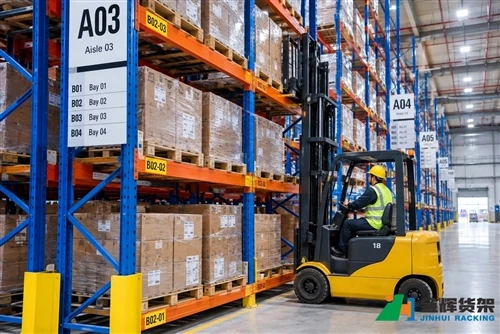
Rack configuration can influence how easily a warehouse manages partial pallets. Selective pallet racking provides direct access to individual storage positions, which can be useful when warehouses handle many SKUs and different pallet quantities.
For warehouses that require flexible access to different pallet quantities, selective pallet racking systems can provide a practical storage structure for organizing full and partial pallets.
For larger industrial operations, heavy duty pallet racking can be configured according to pallet dimensions, load requirements, rack height, and warehouse operating conditions.
The rack itself is only one part of the solution. Location assignment, inventory rules, pallet labeling, and operator procedures should work together with the physical storage system.
FAQ About Partial Pallets in Warehouse Racking
Should partial pallets be stored in pallet racking?
They can be stored in pallet racking when the pallet, load, rack configuration, and handling method are suitable. The warehouse should also assign a clear location and maintain accurate inventory records.
Should partial pallets be consolidated?
Consolidation can reduce the number of occupied locations when the pallets contain compatible inventory. However, lot, batch, expiry, quality, and customer requirements should be checked first.
Can a partial pallet be stored on an upper rack level?
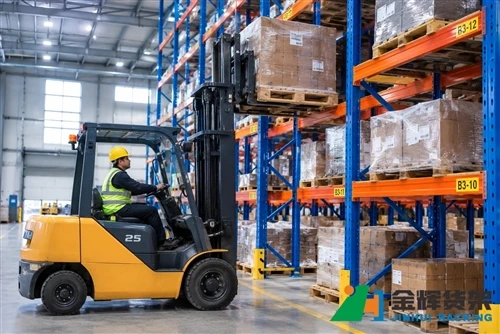
Yes, when the rack position, pallet condition, load stability, and handling equipment are appropriate. The fact that a pallet is only partially loaded does not remove the need for safe rack storage practices.
How can warehouses reduce the number of partial pallets?
Warehouses can reduce unnecessary partial pallets by improving picking and replenishment procedures, monitoring frequently fragmented SKUs, consolidating compatible inventory, and assigning clear storage rules.
Should partial pallets have separate storage locations?
A dedicated partial-pallet area can be useful when a warehouse handles large quantities of split cases or frequently creates partial pallets. The best arrangement depends on picking frequency, inventory characteristics, and available warehouse space.
Final Thoughts
Partial pallets are a normal part of many warehouse operations, but unmanaged partial inventory can create fragmented storage, extra handling, and inventory-control problems.
A practical approach is to define approved storage locations, label every partial pallet clearly, consolidate compatible inventory when appropriate, and keep physical locations synchronized with inventory records. When these practices are combined with a suitable pallet racking system, warehouses can maintain better accessibility without unnecessarily increasing the number of occupied storage positions.
If you are planning a pallet racking system for full pallets, partial pallets, or mixed inventory, Jinhui Rack can help evaluate pallet dimensions, load requirements, storage locations, and rack configuration for your warehouse.
WhatsApp: +86 185 0252 7163
Email: info@jhrack.com
Website: https://www.jinhui-rack.com/