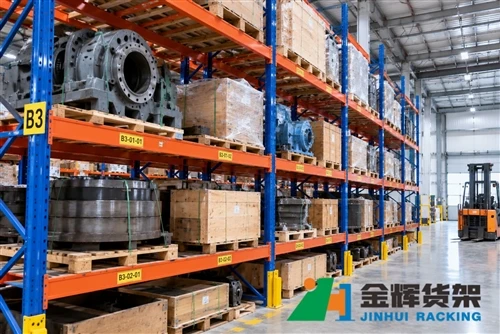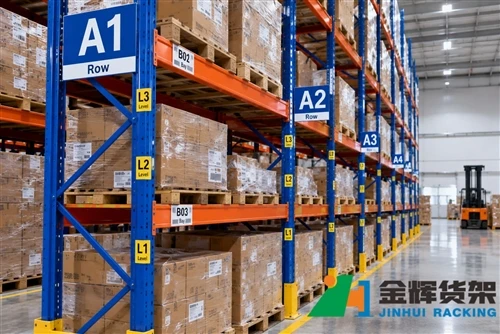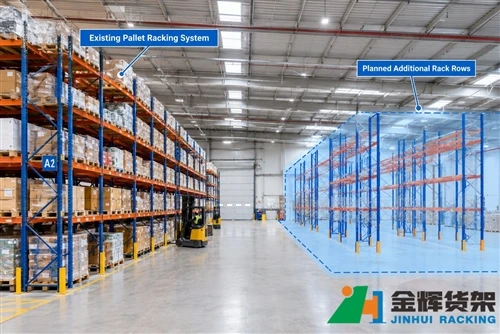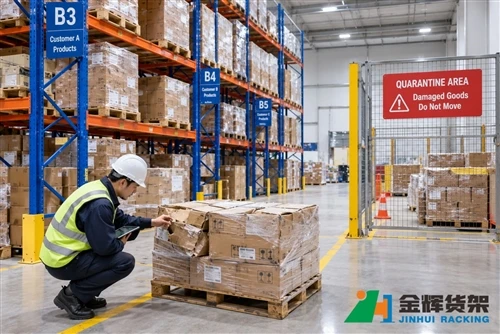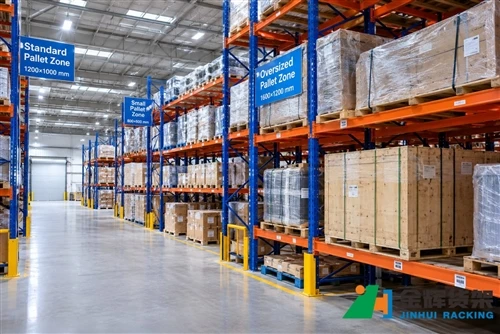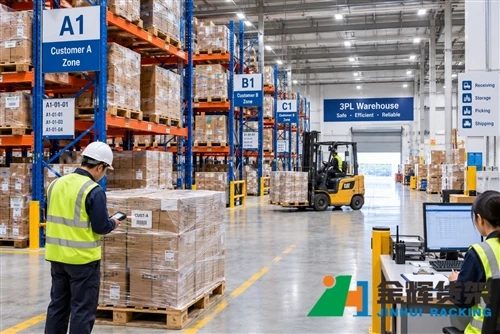
Industrial warehouses often need to store heavy machinery components, metal parts, dense materials, large assemblies, and products with unusual shapes. Unlike standard cartons or uniform pallet loads, these items may have uneven weight distribution, unusual dimensions, or limited supporting surfaces. Storing them in industrial pallet racking requires careful planning to ensure that the load, pallet, rack structure, and material-handling equipment work together safely.
Choosing a rack based only on the available warehouse space or the total weight of a product can lead to unsuitable storage arrangements. Warehouse managers should evaluate the complete load, confirm the approved rack configuration, and establish clear procedures for placing and inspecting heavy or irregular items.
1. Identify the Characteristics of Heavy and Irregular Loads
Before assigning a storage location, identify how the product differs from a standard palletized load. A heavy load may concentrate substantial weight within a relatively small area, while an irregular load may extend beyond the pallet edges or have an off-center center of gravity.
Common examples include:
- Heavy industrial components and metal assemblies.
- Machinery parts with uneven shapes or concentrated weight.
- Large products that extend beyond standard pallet dimensions.
- Long or bulky materials that require additional support.
- Products packaged in custom-built wooden or steel pallets.
- Loads with fragile, unstable, or unevenly stacked components.
Record the overall length, width, height, gross weight, base construction, and center-of-gravity characteristics of each load. Include packaging and pallet weight in the total. These details help determine whether the existing storage position is suitable or whether a different rack configuration is needed.
2. Verify Rack Capacity Before Storing Heavy Items
Industrial pallet racking must be designed for the actual loading conditions rather than selected simply because it is described as heavy-duty. The allowable load depends on the complete rack configuration, including beam span, upright frames, beam elevations, connections, anchoring, and the number and position of stored pallets.
Before placing a heavy load in a rack, warehouse teams should:
- Confirm the approved load capacity for the installed rack configuration.
- Check the permitted load per beam level and the applicable frame loading limits.
- Verify that the proposed pallet quantity and loading pattern match the approved design.
- Review whether changes in pallet weight or dimensions affect the original design assumptions.
- Check that capacity signs are visible, accurate, and applicable to the installed system.
Never assume that a rack can support a heavier item because the beam appears strong enough or because the load physically fits within the bay. The entire system must be assessed against the intended loading conditions.
For a more detailed explanation of load planning, read our guide on how to determine pallet rack load capacity for warehouse storage.
3. Evaluate Pallet Strength and Load Support
The pallet is the interface between the stored product and the rack beams. Even when the rack has sufficient rated capacity, a weak or incompatible pallet can create an unsafe storage condition.
Check the pallet's construction, support points, condition, and compatibility with the rack. Wooden pallets, plastic pallets, metal pallets, and custom industrial bases may behave differently under load. Some pallets rely on runners or blocks that must be positioned correctly to transfer weight to the supporting structure.
For heavy or irregular loads, pay particular attention to:
- Cracked boards, damaged runners, loose blocks, or deformed pallet components.
- The position of the pallet's supporting surfaces relative to the rack beams.
- Concentrated loads that may exceed the pallet's local strength.
- Products that protrude beyond the pallet and affect stability or clearance.
- Custom pallets that require specific support arrangements.
Do not use damaged pallets or improvise additional supports without approval. If the load cannot be supported as intended, keep it out of the rack until a suitable storage method has been confirmed.
4. Control the Center of Gravity and Load Stability
Uneven weight distribution can make a load unstable even when its total weight is within the rack's rated capacity. A heavy component positioned near one edge may shift the center of gravity and increase the risk of tilting during lifting, travel, or placement.
Where the product and packaging allow, distribute the weight as evenly as practical and secure loose components using an appropriate method. Heavy items should be positioned according to the approved handling and storage plan rather than placed wherever space is available.
Before moving a load into a rack, confirm that:
- The product is secured against sliding, rolling, or tipping.
- The pallet or base can support the product throughout handling and storage.
- The load is stable during lifting and transportation.
- The forklift or other handling equipment is suitable for the load's weight, dimensions, and center of gravity.
- The operator can place the load without striking rack beams, uprights, or adjacent products.
For more guidance on positioning pallets correctly, see pallet rack load distribution and correct pallet placement.
5. Choose a Rack Configuration That Matches the Load
The appropriate storage system depends on the product dimensions, weight, access frequency, pallet design, and material-handling method. Selective pallet racking may suit heavy palletized products that require direct access to individual loads. Other products may need specially designed supports or an alternative storage arrangement.
JINHUI industrial heavy-duty pallet racks can be configured according to project requirements, including pallet dimensions, maximum loaded pallet weight, warehouse height, beam levels, and forklift operations. The final design and allowable capacity must be confirmed for the specific installation.
The following table summarizes common planning considerations. These are general guidelines, not substitutes for an engineered rack design.
| Load Type | Main Concern | Planning Consideration |
|---|---|---|
| Heavy palletized components | Total weight and rack capacity | Verify the approved load rating and complete rack configuration. |
| Unevenly weighted products | Off-center load and instability | Evaluate the center of gravity, securing method, and handling procedure. |
| Oversized products | Overhang and clearance | Measure the complete load and confirm bay dimensions and equipment clearance. |
| Custom-pallet loads | Compatibility with beam support | Check pallet construction and the intended support points. |
| Long industrial materials | Insufficient or uneven support | Evaluate whether dedicated long-material storage is more suitable than standard pallet racking. |
| Fragile or unstable assemblies | Movement, tipping, or product damage | Use a suitable base, restraint method, and controlled handling procedure. |
6. Plan Rack Levels and Storage Locations Carefully
Storage location decisions should account for both load characteristics and operational requirements. Heavy or awkward loads may require more careful forklift positioning, additional clearance, or more frequent handling checks.
Assign storage positions according to the approved rack design and the capabilities of the handling equipment. Do not automatically place the heaviest products at the highest level or assume that the lowest level can accept any load. The permitted loading arrangement must be confirmed for the complete rack system.
When planning the layout, consider the following factors:
- Overall load dimensions and required handling clearance.
- Forklift capacity at the actual lifting height and load center.
- Visibility and access during pallet placement and retrieval.
- Potential interference with adjacent pallets, beams, and building structures.
- Floor condition and the suitability of the installed rack anchoring.
- Storage location identification and clear communication between shifts.
For warehouses that need to store a variety of palletized products, the broader JINHUI pallet racking systems range provides different configurations to evaluate against specific operational needs.

7. Establish Safe Loading and Unloading Procedures
Even a correctly designed rack can be exposed to unnecessary risks if warehouse procedures are inconsistent. Operators should follow a documented process for inspecting, transporting, positioning, and retrieving heavy or irregular loads.
A practical operating procedure should include:
- Check the load weight, dimensions, pallet condition, and stability before lifting.
- Confirm the assigned rack position and its approved loading requirements.
- Inspect the travel path and ensure that the storage area is clear.
- Use handling equipment suitable for the load and lifting conditions.
- Approach the rack carefully and align the load with the intended support position.
- Place the load smoothly without pushing it against rack components.
- Confirm that the pallet is stable and correctly supported before withdrawing the forks.
- Report any collision, unstable placement, or suspected structural damage.
Only trained and authorized personnel should perform these operations. If a load cannot be positioned safely using the planned method, stop and review the handling procedure rather than forcing the load into place.
8. Inspect Racks, Pallets, and Stored Loads Regularly
Heavy loads and irregular products can make damage or incorrect positioning more consequential. Regular inspections help warehouse teams identify problems such as deformed beams, damaged uprights, unstable pallets, missing safety components, or loads that have shifted from their intended positions.
Routine checks should cover the rack structure and the stored load together. Inspect the upright frames, beams, connectors, base plates, anchors, and any installed protection components. Also check for broken pallet elements, loose packaging, product overhang, and visible changes in load position.
If a rack component appears damaged or a load is unstable, follow the warehouse's safety procedure to isolate the affected area and arrange assessment by a qualified person. Do not continue loading the affected position until its safety has been confirmed.
For a more comprehensive checklist, read how to inspect pallet racking systems regularly to improve warehouse safety.
9. Common Mistakes When Storing Heavy and Irregular Loads
| Common Mistake | Why It Matters | Better Practice |
|---|---|---|
| Choosing a rack by appearance alone | Visual strength does not establish allowable capacity. | Verify the engineered configuration and rated loads. |
| Ignoring pallet condition | A damaged or unsuitable pallet may not support the load safely. | Inspect the pallet and confirm compatibility before storage. |
| Allowing uneven loading | An off-center load may become unstable during handling. | Evaluate the center of gravity and secure the load appropriately. |
| Storing oversized items without checking clearance | Protruding loads can interfere with adjacent positions and handling equipment. | Measure the complete load and confirm the storage arrangement. |
| Changing pallet weights without review | The new loading condition may differ from the rack's original design assumptions. | Review the rack capacity and obtain approval before changing the loading plan. |
| Ignoring damage after a forklift impact | Structural damage may remain unnoticed during normal operations. | Report the incident and assess the affected area before continued use. |
10. Information to Prepare When Requesting a Rack Solution
When planning new storage for heavy or irregular loads, providing accurate information helps a rack manufacturer evaluate the application and recommend an appropriate configuration.
Prepare the following information where available:
- Warehouse length, width, clear height, and building layout.
- Overall dimensions of the product, pallet, and packaging.
- Maximum gross weight per pallet or storage unit.
- Number of pallets or loads stored per beam level.
- Required storage levels and total storage positions.
- Pallet type, base construction, and support requirements.
- Forklift type, lifting height, and relevant handling specifications.
- Required access frequency and inventory turnover.
- Floor conditions and applicable project-specific requirements.
Photographs or drawings of unusual loads can also help clarify their shape, support points, and handling needs. Final rack dimensions, component selection, and allowable loads should be determined through project-specific design and verification.
Conclusion
Storing heavy and irregular loads in industrial pallet racking requires more than sufficient space. Warehouse teams must consider rack capacity, pallet strength, load stability, support conditions, handling equipment, and inspection procedures as parts of one storage plan.
By identifying load characteristics early, verifying the approved rack configuration, and following consistent loading procedures, warehouses can improve storage organization while reducing avoidable handling and equipment risks. For projects involving heavy industrial products, a customized pallet racking solution should be developed around the actual loads, warehouse layout, and operating requirements.
WhatsApp: +86 185 0252 7163
Email: info@jhrack.com