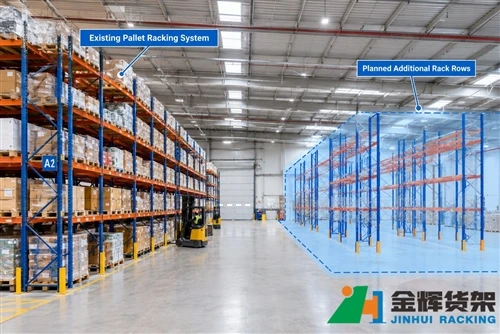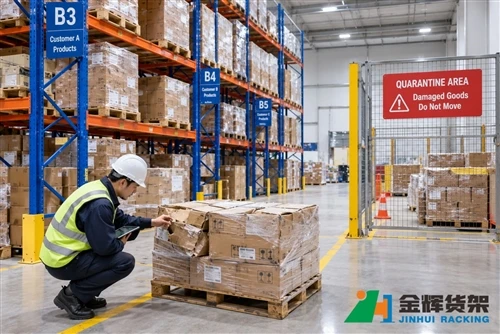
Third-party logistics (3PL) warehouses often handle inventory for multiple clients within the same facility. Each customer may have different product dimensions, pallet types, order volumes, turnover rates, labeling requirements, and fulfillment procedures. Without a well-planned storage system, these differences can create inventory confusion, inefficient picking, and unnecessary warehouse handling.
Warehouse racking plays an important role in organizing these operations. The right layout helps separate customer inventory, improve location accuracy, support different storage requirements, and make better use of available warehouse space.
This guide explains how 3PL operators can plan warehouse racking around customer requirements, inventory characteristics, stock control, and daily material handling operations.
Key Takeaways
- Organize warehouse storage around customer inventory profiles and operational requirements.
- Use clear physical zones and location codes to reduce inventory mixing.
- Select racking based on pallet dimensions, product turnover, and access requirements.
- Coordinate rack locations with warehouse management system (WMS) records.
- Plan for changing customer volumes without disrupting the entire warehouse.
1. Why 3PL Warehouses Need a Different Storage Strategy
Unlike a warehouse serving only one business, a 3PL facility may support several customers with different storage and order fulfillment needs. One customer may store full pallets of similar products, while another requires frequent case picking or handles many small stock-keeping units (SKUs).
A single storage arrangement may not be suitable for every customer. The warehouse needs a flexible approach that balances inventory separation, storage density, picking efficiency, and operational control.
Different Inventory Profiles
Each customer may have different product dimensions, packaging types, pallet heights, weights, and storage volumes. Some inventory moves quickly, while other products may remain in storage for extended periods.
These differences influence the appropriate rack configuration, storage location, picking method, and amount of accessible space required for each customer.
Customer-Specific Stock Control
Physical separation alone is not enough to maintain inventory accuracy. Each product must also be associated with the correct customer, SKU, lot or batch information where applicable, and warehouse location.
A well-designed storage plan should support both physical organization and digital inventory tracking.
Changing Storage Demand
3PL customers may experience seasonal peaks, promotional campaigns, business growth, or changes in product ranges. Storage allocations should therefore be reviewed periodically rather than treated as permanent.
2. Analyze Each Customer's Storage Requirements
Before assigning rack space, collect information about each customer's inventory and operating requirements. This gives the warehouse team a practical basis for allocating storage locations and selecting suitable rack configurations.
Important information includes:
- Inventory volume: Average and peak pallet quantities for each customer.
- Product dimensions: Pallet length, width, height, and packaging characteristics.
- Product weight: The weight of stored loads and the requirements for the planned rack configuration.
- Order frequency: How often products are received, picked, replenished, and dispatched.
- SKU variety: The number of different products and the amount of space each requires.
- Special handling needs: Any applicable requirements for fragile goods, batch tracking, temperature control, or restricted access.
- Service commitments: Receiving schedules, dispatch deadlines, order accuracy targets, and reporting requirements.
Use the collected information to create a customer inventory profile. This profile can help determine which products need the most accessible locations, which can be stored in reserve, and which require dedicated or controlled storage areas.
3. Divide the Warehouse into Clear Storage Zones
Customer zoning helps reduce the risk of inventory being placed in the wrong location. The appropriate zoning method depends on the warehouse size, inventory volume, order patterns, and the degree of separation required by each customer.
Common approaches include:
- Dedicated customer zones: Assign defined rack rows or storage areas to a particular customer when the inventory volume and operational requirements justify it.
- Shared rack areas with controlled locations: Store inventory for multiple customers within a broader area while maintaining distinct, validated location and stock records.
- Reserve storage zones: Keep slower-moving or replenishment inventory in designated locations away from the busiest picking areas.
- Picking and dispatch zones: Position staging areas to support order consolidation, checking, and outbound handling without blocking warehouse aisles.
- Special handling zones: Provide suitable designated areas for products that require specific handling or storage conditions.
Customer zones should be designed around actual operational needs rather than divided equally by default. A customer with a high inventory volume may need more space, while another may require fewer locations but more frequent picking access.
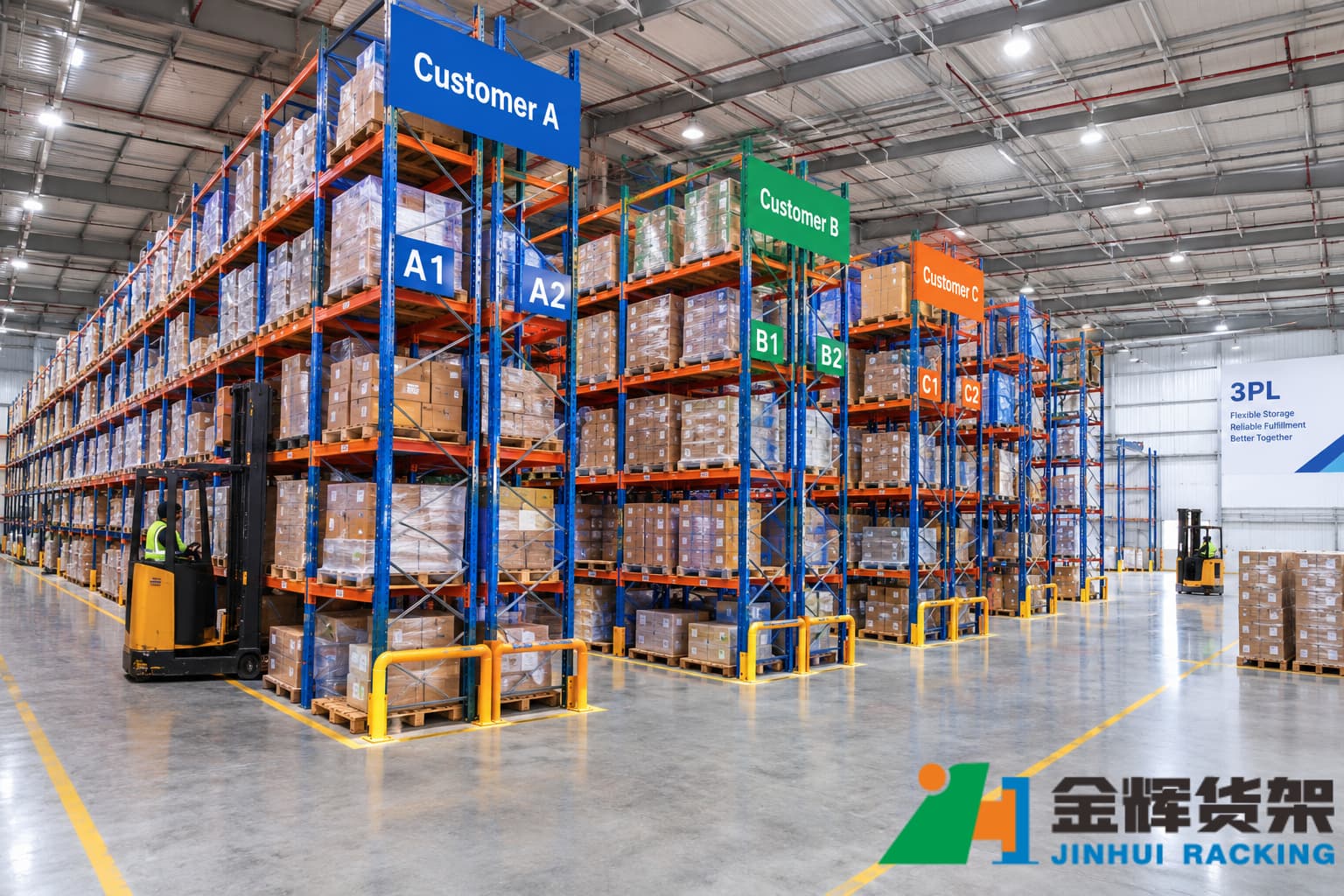
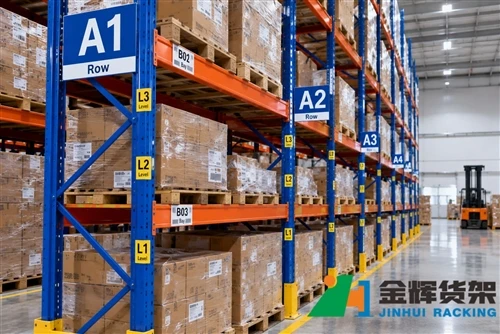
Clear storage zones help 3PL operators manage multiple customers and reduce inventory handling errors.
4. Choose Racking Based on Inventory and Picking Requirements
The best racking configuration depends on the relationship between storage density, product accessibility, inventory turnover, and handling equipment. A 3PL warehouse may need more than one storage system to serve different customers efficiently.
| Storage Requirement | Potential Solution | Planning Consideration |
|---|---|---|
| Many SKUs with frequent pallet access | Selective pallet racking | Provides direct access to individual pallet locations, subject to the approved layout. |
| Large quantities of similar products | A suitable high-density storage system | Evaluate storage density, selectivity, stock rotation, and handling equipment. |
| Small items and case picking | Suitable shelving or dedicated picking areas | Consider SKU count, picking frequency, replenishment, and ergonomic access. |
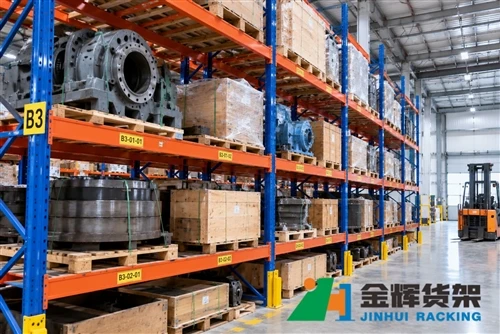
| Long or bulky products | A suitable cantilever or specialized storage system | Review product dimensions, load characteristics, handling methods, and available space. |
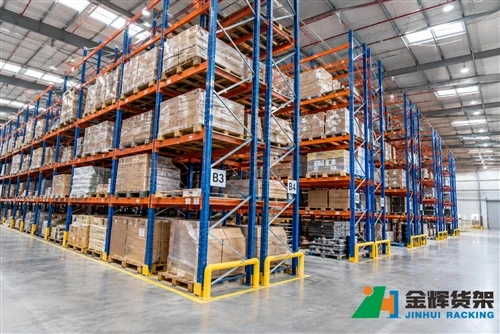
Selective pallet racking can be a useful option for 3PL operations that need access to many different palletized products. It is important, however, to verify the rack design, load requirements, aisle arrangement, and compatibility with the warehouse's handling equipment.
Explore selective pallet racking systems and heavy-duty industrial racking systems to review potential options for pallet storage.
5. Establish a Consistent Rack Location Coding System
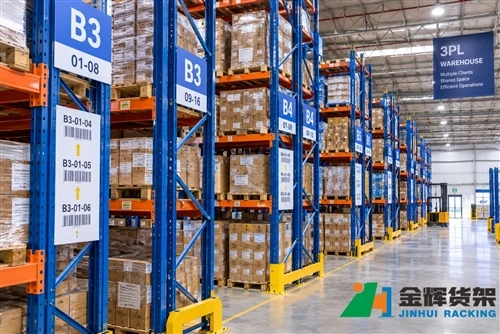
Accurate location identification is essential when several customers share a warehouse. Without consistent location codes, operators may put products in the wrong rack, pick inventory belonging to another customer, or struggle to locate stock during cycle counts.
A warehouse location code may include several elements:
- Zone: Identifies the customer area or operational section.
- Rack row: Identifies the specific rack row.
- Bay: Identifies the position along the rack row.
- Level: Identifies the vertical storage level.
- Position: Identifies a more specific storage position where needed.
For example, a code such as C02-R04-B06-L03 could represent customer zone C02, rack row R04, bay B06, and level L03. This is only an illustrative format; the actual coding structure should match the warehouse's existing systems and operating procedures.
Use readable rack labels and keep the physical labels consistent with the warehouse management system. When rack locations are added, removed, or changed, update the location records before the revised area returns to normal use.
For more detailed guidance, read our article on labeling pallet rack locations for accurate warehouse inventory tracking.
6. Integrate Rack Locations with the WMS
A warehouse management system helps coordinate inventory receipts, putaway, replenishment, picking, and dispatch. For a 3PL operator, the system must also associate each inventory record with the correct customer or account.
Physical rack organization and digital stock records should follow the same logic. If an operator moves a pallet but does not update the system, the recorded location may no longer match the actual location.
To improve consistency:
- Assign each storage location a unique identifier within the relevant warehouse system.
- Associate incoming inventory with the correct customer and product record.
- Record putaway and relocation activities according to the warehouse's procedures.
- Use barcode scanning or other validated identification methods where appropriate.
- Keep physical location labels synchronized with digital records.
- Investigate inventory discrepancies instead of repeatedly adjusting records without identifying the cause.
System permissions, customer-specific reporting, and inventory visibility should also be configured according to the service agreement and the operator's data-control procedures.
Learn more in our related article about integrating pallet racking with warehouse management systems.
7. Position Fast-Moving Inventory for Efficient Picking
Not all products need the same level of accessibility. Frequently ordered items may benefit from locations that reduce unnecessary travel, while slower-moving reserve stock can be stored in other suitable areas.
When planning product locations, consider:
- Order frequency and the number of picks generated by each SKU.
- Whether products are picked as full pallets, cases, or individual units.
- The need to replenish picking locations from reserve storage.
- Forklift travel routes and pedestrian movement.
- Congestion around picking, packing, and dispatch areas.
- Product handling characteristics and any applicable storage restrictions.
Review picking data periodically. If a customer's order profile changes, its most frequently accessed products may need different storage locations. Changes should be coordinated with the WMS and the warehouse's approved layout.
8. Plan for Seasonal Changes and New Customers
3PL storage requirements can change as customers grow, launch new products, or experience seasonal demand. A rigid storage allocation may leave some areas underused while other customers run short of space.
To improve flexibility:
- Review customer inventory forecasts and peak-season requirements.
- Identify storage areas that can be reassigned without compromising safety or inventory control.
- Set clear procedures for approving customer-zone changes.
- Update rack location records and WMS settings when inventory is relocated.
- Reserve appropriate staging capacity for receiving and dispatch peaks.
- Review whether existing rack configurations remain suitable as product profiles change.
Before adding storage locations or changing the rack arrangement, check the approved layout, load requirements, aisle access, building constraints, and handling equipment. Any structural changes should be reviewed and approved by the appropriate qualified parties.
9. Common Mistakes in 3PL Warehouse Racking Planning
Several avoidable problems can reduce storage efficiency and make multi-customer inventory more difficult to control.
- Allocating space only by customer size: Inventory turnover, SKU variety, picking patterns, and product dimensions also affect storage needs.
- Using unclear location codes: Inconsistent identifiers can lead to putaway errors, picking mistakes, and inventory discrepancies.
- Mixing stock without sufficient controls: Shared storage must have reliable customer identification and location records.
- Choosing racking only for storage density: Dense storage may reduce accessibility if it does not match the inventory profile and handling method.
- Ignoring WMS updates: Physical moves must be reflected in digital inventory records according to established procedures.
- Failing to review storage allocations: Customer requirements change, so storage plans should be reviewed regularly.
- Making unapproved rack modifications: Changes to rack configuration, loading, or anchoring must be properly assessed before implementation.
10. A Practical Checklist for 3PL Racking Planning
Use this checklist when setting up a new 3PL warehouse or reviewing an existing storage layout.
| Planning Area | Checklist |
|---|---|
| Customer requirements | Document inventory volumes, SKU profiles, handling needs, and service commitments. |
| Storage zones | Define customer areas, reserve storage, picking areas, and any special handling zones. |
| Racking selection | Match rack type and layout to product dimensions, loads, access needs, and handling equipment. |
| Location identification | Establish consistent location codes and readable rack labels. |
| WMS coordination | Verify customer ownership, stock records, location records, and movement procedures. |
| Operational review | Review picking travel, replenishment, staging space, and changing customer demand. |
| Safety and change control | Confirm the approved rack configuration and review proposed changes before implementation. |

Consistent rack labels and organized inventory locations support accurate stock tracking across multiple customer accounts.
Conclusion
Warehouse racking for 3PL operations should be planned around the different inventory profiles, service requirements, and stock-control needs of each customer. Clear storage zones, suitable rack configurations, consistent location codes, and accurate WMS records help create a more organized and manageable warehouse.
Rather than focusing only on the number of pallet positions, 3PL operators should consider how inventory is received, stored, picked, replenished, and dispatched. Regular reviews of customer demand and storage allocations can help the warehouse adapt as operations change.
JINHUI RACK offers warehouse storage solutions for different industrial and logistics applications. Contact our team to discuss your warehouse layout, inventory characteristics, and racking requirements.
Contact JINHUI RACK
Planning a new 3PL warehouse or improving an existing storage layout? Get in touch with our team to discuss your project.
Email: info@jhrack.com
WhatsApp: +86 185 0252 7163
Product information: Selective Pallet Racking Systems
Website: Contact JINHUI RACK