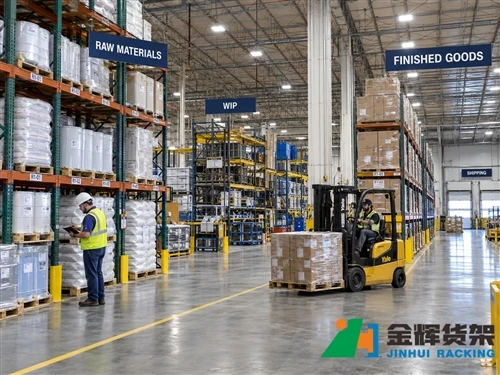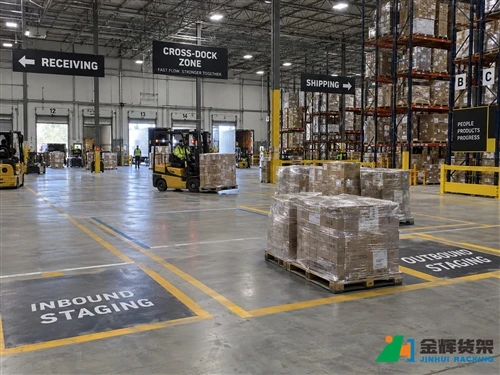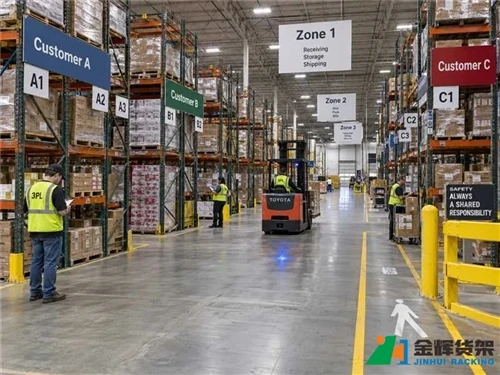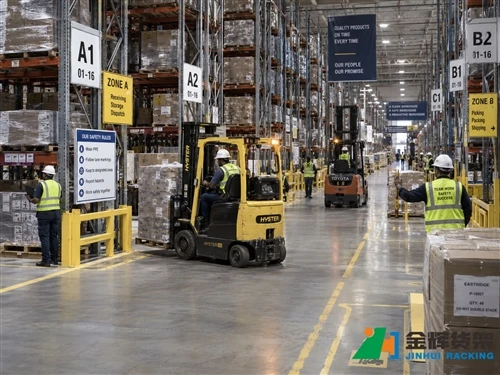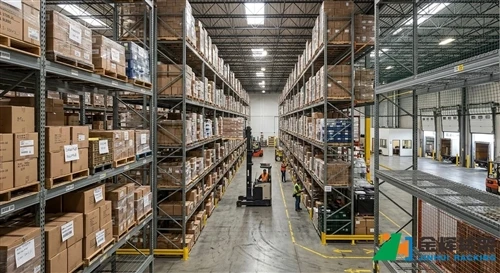
Automotive parts warehouses often handle a difficult mix of products. Engines, transmissions, brake components, body parts, tires, boxed spare parts, and small components can have very different weights, dimensions, packaging methods, and turnover rates.
Because of this variety, a single storage method may not work equally well for every product. A practical automotive parts warehouse racking plan should match the rack configuration to the physical characteristics and movement patterns of each product group.
This guide explains how pallet racking can be used for different automotive components and how warehouses can organize heavy, bulky, boxed, irregular, and fast-moving inventory more effectively.
What Makes Automotive Parts Warehouses Different?
Automotive parts storage is different from storing a uniform product because inventory can vary significantly in size, weight, packaging, and demand frequency.
For example, an engine may require a much higher load capacity than a carton of filters. Tires have a round shape that does not always fit naturally into standard pallet configurations, while small replacement components may require frequent picking from individual storage locations.
Automotive warehouses may also handle thousands of SKUs. This makes product identification, accessibility, and location organization just as important as storage density.
| Automotive Part Type | Typical Storage Consideration | Suitable Storage Approach |
|---|---|---|
| Engines and transmissions | High weight and concentrated loads | Heavy-duty pallet racking |
| Boxed components | Multiple SKUs and different carton sizes | Selective pallet racking |
| Tires | Round shape and variable dimensions | Palletized or dedicated tire storage |
| Body and oversized parts | Long or irregular dimensions | Customized storage configuration |
| Small replacement parts | High SKU variety and frequent picking | Accessible rack or bin-based storage |
How Automotive Parts Can Be Classified for Storage
Before installing racks, it is useful to divide automotive inventory into practical storage groups. Product weight alone is not enough to determine the storage method.
A useful classification can include four factors: product weight, product dimensions, packaging condition, and inventory turnover.
Heavy components should be placed in storage positions designed for their actual loads. Products with high SKU variety should normally have easy individual access. Large or irregular components may require more clearance than standard palletized cartons.
This classification approach helps prevent a common warehouse problem: forcing different types of automotive products into the same rack configuration even though their storage requirements are very different.
Pallet Racking for Heavy Automotive Components
Engines, transmissions, electric vehicle components, industrial batteries, and other heavy automotive assemblies can create significant point loads. The rack system must therefore be engineered according to the actual pallet weight, pallet dimensions, beam configuration, and storage level.
Jinhui's industrial heavy duty pallet racks are designed for high-capacity pallet storage and can be configured according to warehouse dimensions, pallet specifications, load requirements, and forklift operations.
For heavy automotive parts, the important consideration is not simply choosing a rack advertised as "heavy duty." The final rack capacity should be based on the complete configuration and the actual operating conditions of the warehouse.
Selective Pallet Racking for Boxed Automotive Parts
Many automotive parts are stored in cartons, plastic containers, or standardized pallets. Examples include filters, brake components, electrical parts, suspension components, belts, hoses, and packaged replacement parts.
When a warehouse handles many different SKUs, direct access becomes particularly useful. Workers can reach a specific pallet without moving other pallets stored behind it.
Selective pallet racking is well suited to this type of operation because each pallet position can be accessed independently and beam levels can be adjusted for different product heights. Jinhui specifically lists automotive parts warehouses among the applications for its selective pallet racking systems.
How to Store High-SKU Automotive Parts
Automotive parts warehouses can contain a large number of similar-looking products with different specifications. A well-organized rack layout should therefore make each storage location easy to identify.
One practical approach is to divide the warehouse into product families and then assign rack locations according to SKU characteristics. For example, brake components can be grouped separately from electrical components, while different vehicle models or product specifications can receive dedicated location ranges.
Fast-moving SKUs can be positioned in locations that reduce unnecessary travel, while slower-moving products can occupy less accessible areas.
The goal is not simply to place the maximum number of pallets into the building. The storage structure should also make the correct product easy to find and retrieve.
How to Store Tires and Irregularly Shaped Parts
Tires, exhaust components, body panels, bumpers, and other irregular automotive parts can be difficult to handle using a standard pallet configuration.
Tires may be stored vertically or horizontally depending on the product, packaging, handling equipment, and warehouse requirements. When tires are palletized, the pallet dimensions and resulting load must be considered when configuring rack beams and clearances.
Large body components may require dedicated locations with additional clearance to prevent contact with neighboring products or rack structures. In these cases, simply increasing rack depth is not always the best solution because deeper storage can also affect forklift access and picking efficiency.
A customized warehouse pallet rack solution can combine different rack configurations when the inventory mix requires more than one storage method. Jinhui provides warehouse pallet rack solutions for different industrial storage requirements.

How to Organize Fast-Moving and Slow-Moving Automotive Parts
Not every automotive part should occupy the same type of storage location. Inventory turnover can be used as another layer of warehouse organization.
Fast-moving components should generally be positioned where workers and material-handling equipment can access them efficiently. Frequently picked products may benefit from locations closer to picking or dispatch areas, provided that the layout remains safe and operationally practical.
Slow-moving parts can be assigned to less frequently accessed rack positions. This allows the warehouse to reserve the most convenient locations for products that generate more daily handling activity.
This approach can also help reduce unnecessary forklift movement. Instead of treating every SKU equally, the rack layout reflects how the inventory actually moves through the warehouse.
How Pallet Racking Supports Automotive Parts Picking
Automotive parts warehouses often need to pick individual components rather than complete pallets. This makes accessibility an important part of rack planning.
Where full-pallet storage and piece picking coexist, the warehouse should clearly define which rack locations are intended for pallet storage and which locations are used for order picking or replenishment.
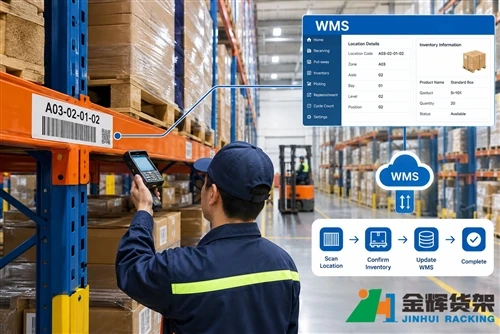
Clear labeling, logical SKU grouping, and consistent location numbering can reduce picking errors. Rack levels should also provide enough working clearance for the intended handling method.
For warehouses with a high number of individual orders, the rack system should be considered together with the picking process rather than as a standalone storage structure.
How to Reduce Damage to Automotive Components
Automotive parts can be expensive even when they are relatively small. Damage may occur when products are placed in unsuitable locations, pallets are overloaded, or forklifts have insufficient operating clearance.
Good storage practices include keeping loads within the engineered capacity of the rack, maintaining appropriate pallet condition, preventing unstable loads, and providing sufficient clearance around rack structures.
Heavy or fragile components should also be handled according to their specific packaging and handling requirements. A rack system should support the warehouse process rather than encourage workers to improvise storage locations.
Common Automotive Parts Warehouse Storage Mistakes
- Using the same rack configuration for products with very different weights.
- Ignoring product dimensions when determining rack clearances.
- Placing fast-moving parts in locations that require excessive travel.
- Mixing similar-looking SKUs without clear location identification.
- Using rack capacity figures without considering the actual rack configuration.
- Storing irregular automotive components without planning adequate clearance.
- Focusing only on storage density while overlooking picking accessibility.
Automotive Parts Warehouse Racking Checklist
Before finalizing an automotive parts storage project, review the following points:
- Identify the weight range of the automotive components.
- Measure pallet and product dimensions.
- Separate heavy, boxed, irregular, and small-part inventory groups.
- Identify high-turnover and low-turnover SKUs.
- Confirm forklift type and operating requirements.
- Determine required storage levels and clearances.
- Define pallet access and picking requirements.
- Check rack capacity according to the actual configuration.
- Plan product labeling and storage locations.
- Leave room for future inventory changes where practical.
Final Thoughts
Automotive parts warehouses need storage systems that can handle a wide range of products rather than a single standardized load type. Heavy components, boxed spare parts, tires, irregular products, and high-SKU inventory can each require different storage considerations.
The most practical approach is to classify the inventory first and then configure the pallet racking around product weight, dimensions, accessibility, turnover, and material-handling requirements.
Jinhui Rack provides customized pallet racking solutions for industrial warehouses, including heavy-duty and selective pallet racking configurations. For a project quotation, provide your warehouse dimensions, pallet or product dimensions, maximum load, required storage levels, and forklift information.
Contact Jinhui Rack for a customized automotive parts warehouse racking solution:
Website: https://www.jinhui-rack.com/
Email: info@jhrack.com
WhatsApp: +86 185 0252 7163