Furniture warehouses handle a wide variety of products, including flat-pack cabinets, boxed tables, sofas, chairs, wardrobes, bed frames, and furniture accessories. These products often differ significantly in size, weight, packaging strength, and handling requirements. Some can be stored efficiently on pallets, while others need additional support or dedicated storage areas to prevent damage.
Choosing the right warehouse racking for furniture helps businesses use available space more effectively, keep product models organized, reduce picking errors, and protect goods throughout storage and dispatch. The most suitable solution depends on the furniture packaging, load dimensions, inventory turnover, and material-handling equipment used in the warehouse.
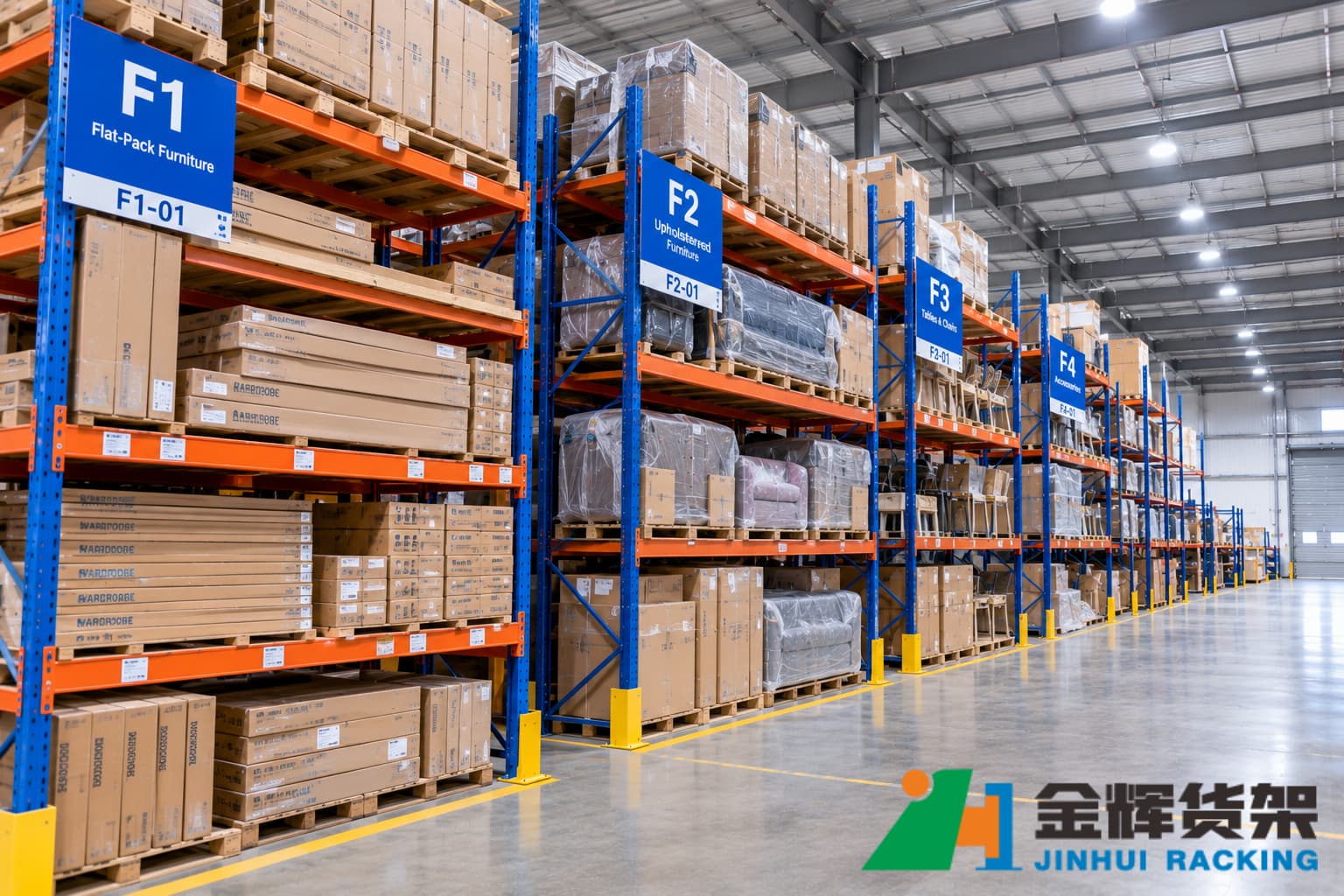
1. Understand the Different Types of Furniture Inventory
Before selecting a racking system, classify furniture inventory according to its physical characteristics and storage requirements. A warehouse that stores only standardized flat-pack cartons may need a different layout from one handling sofas, assembled furniture, and irregularly shaped products.
| Furniture Category | Storage Challenges | Potential Storage Method |
|---|---|---|
| Flat-pack furniture | Long cartons, multiple package sizes, and model variations | Selective pallet racking or suitable shelving, depending on package dimensions and load requirements |
| Sofas and upholstered furniture | Bulky packaging, compressible surfaces, and irregular shapes | Designated floor storage or engineered rack arrangements with suitable support and clearance |
| Tables, desks, and bed frames | Long or heavy packages and multiple components per product | Pallet racking or long-item storage designed for the actual load configuration |
| Cabinets and wardrobes | Large carton dimensions, fragile edges, and package stability | Pallet racking or designated storage positions with appropriate support |
| Furniture hardware and accessories | Many small SKUs, frequent picking, and similar-looking parts | Labeled shelving, bins, or small-parts storage systems |
These methods are starting points for warehouse planning, not universal rules. Always verify package dimensions, weight, permitted stacking orientation, load stability, and the manufacturer's handling instructions before deciding how an item should be stored.
2. Choose Racking That Matches Furniture Packaging
Selective Pallet Racking for Flat-Pack Furniture
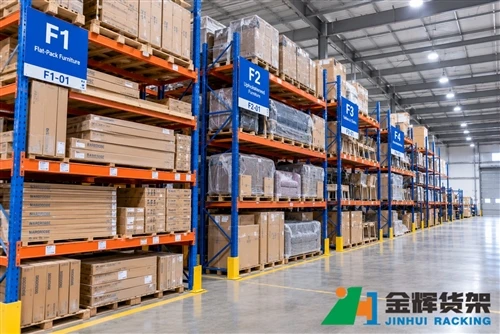
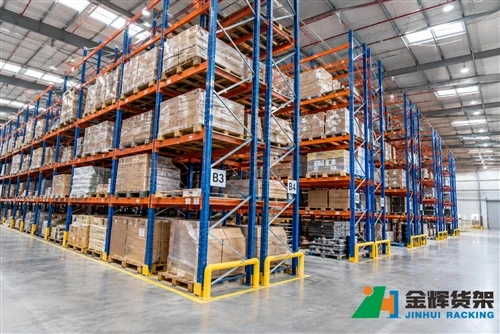
Selective pallet racking systems are worth considering when furniture cartons are palletized and warehouse operators need direct access to individual product loads.
This arrangement can be useful for warehouses carrying many furniture models, finishes, sizes, and product lines. Each pallet location can be associated with a specific SKU or inventory batch, making it easier to retrieve the required product without moving unrelated stock.
When planning selective pallet racking, check:
- The length, width, height, and weight of each loaded pallet.
- Whether cartons extend beyond the pallet and how the load is supported.
- The beam spacing and rack configuration required for the actual load.
- The forklift type, lifting height, turning radius, and aisle requirements.
- The permitted storage orientation and stacking limits of the packaged furniture.
Long flat-pack cartons should not be assumed to be safe on standard pallet supports simply because they fit within the overall rack bay. Their support requirements and potential deflection must be evaluated as part of the storage design.
Heavy-Duty Racking for Suitable Furniture Loads
Some furniture shipments involve heavy palletized cartons, dense wooden components, or large quantities of packaged products. In these cases, heavy-duty industrial racking systems may be appropriate when the selected configuration is designed for the actual loads.
Rack selection should consider both the weight and the distribution of each load. A heavy carton with a small contact area may require a different support arrangement from a uniformly loaded pallet. Confirm the rated capacity of the complete rack configuration, including the relevant beam levels, before loading.
Cantilever Racking for Long Furniture Components
Some warehouses store long table tops, bed rails, timber components, or other furniture materials that are difficult to accommodate in conventional pallet rack bays. Depending on their dimensions and packaging, a cantilever storage rack system may offer a more practical way to organize suitable long materials.
The design must account for material length, weight, load distribution, arm capacity, and the stability of bundles or packages. Finished furniture and fragile panels should not be placed on cantilever arms unless the support arrangement is suitable for the product and its packaging.
3. Organize the Warehouse Into Clear Storage Zones
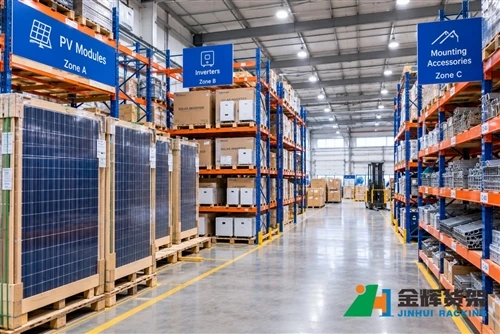
Dividing a furniture warehouse into functional zones helps employees locate goods and reduces unnecessary movement between receiving, storage, picking, and dispatch areas.
- Receiving and inspection: Check incoming quantities, packaging condition, product codes, and delivery documents before items enter available inventory.
- Flat-pack storage: Group cartons by furniture category, model, size, or SKU and assign clearly marked rack locations.
- Bulky-item storage: Allocate appropriate floor or rack positions for products that cannot be stored efficiently in standard pallet bays.
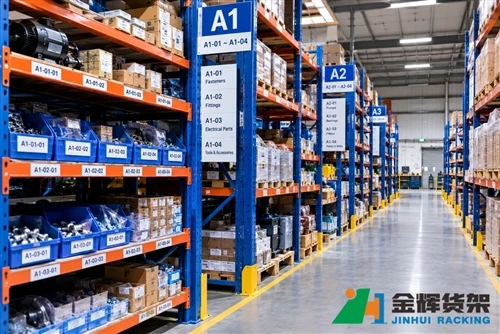
- Small-accessory storage: Keep screws, hinges, handles, brackets, and assembly kits in labeled bins or shelves.
- Order-picking area: Position frequently requested items where they can be accessed efficiently without obstructing major travel routes.
- Dispatch staging: Provide designated space to consolidate orders, verify quantities, and prepare goods for loading.
Products commonly ordered together can be positioned strategically to reduce travel, but related items should still have distinct inventory identities and locations. A cabinet and its hardware kit, for example, may be picked together while being stored in different zones.
Keep aisles, exits, fire protection equipment, and access routes clear. Staging areas should be large enough for normal order volumes without creating temporary obstructions in working aisles.
4. Protect Furniture Cartons From Damage
Furniture packaging can be vulnerable to crushing, punctures, moisture, abrasion, and impacts during handling. Damage to a carton may affect the product inside even when the outer packaging appears mostly intact.
To improve product protection:
- Inspect cartons for torn corners, crushed edges, water stains, and damaged seals at receiving.
- Follow the packaging instructions for orientation, stacking, and handling.
- Use suitable pallets and ensure that loads are stable before moving or placing them on racks.
- Avoid unsupported carton overhang and uneven loading that can cause packages to bend or shift.
- Keep furniture away from unsuitable environmental conditions and follow product-specific storage recommendations.
- Use appropriate rack protection in areas where forklift impact is a foreseeable risk.
- Move damaged or questionable goods to a designated inspection area and update their inventory status.
Do not stack cartons solely to maximize vertical space. The bottom packages must be capable of supporting the loads above them, and the overall arrangement must remain stable during storage and retrieval. If packaging strength or stacking limits are unknown, obtain confirmation before increasing stack height.
5. Manage Different Furniture Sizes and Model Variations
Furniture inventory often includes products with similar appearances but different dimensions, finishes, colors, or configurations. If these differences are not reflected in warehouse records and location labels, employees may select the wrong item or ship an incomplete order.
Use a consistent SKU and location management process:
- Assign unique product identifiers. Distinguish products that differ in dimensions, color, material, finish, or configuration.
- Define location codes. Use a consistent structure for zones, rack rows, bays, and levels.
- Label locations clearly. Place readable labels where employees can identify them during put-away and picking.
- Record package quantities accurately. Define whether inventory is tracked by carton, pallet, set, or individual component.
- Track bundled products. Where a product requires several cartons or components, define how the complete set is identified and picked.
- Reconcile inventory regularly. Use cycle counts and investigate discrepancies instead of making unverified adjustments.
For more information about location identification, see How to Label Pallet Rack Locations for Accurate Warehouse Inventory Tracking.
6. Improve Picking and Order Consolidation
Furniture orders may contain multiple cartons for a single item, several pieces of a matching set, or products from different warehouse zones. Picking procedures should make it easy to verify that the complete order has been collected before dispatch.
Consider the following practices:
- Arrange picking instructions in a practical sequence that minimizes unnecessary travel.
- Identify products by SKU and description rather than relying on carton appearance alone.
- Use barcode scanning or other verification controls where supported by the warehouse system.
- Track multi-carton products so that all required packages are collected.
- Provide enough staging space to separate customer orders and avoid mixing similar products.
- Check package condition and order quantities before loading.
High-demand products may benefit from locations closer to picking or dispatch areas, provided the storage position remains appropriate for their weight, size, and handling needs. Review actual order history before changing product locations.
7. Common Furniture Warehouse Storage Mistakes
| Common Mistake | Potential Impact | Recommended Improvement |
|---|---|---|
| Using the same storage method for every package size | Poor space utilization or unsuitable load support | Classify products by dimensions, weight, packaging, and handling needs |
| Stacking cartons without checking packaging limits | Crushed cartons, unstable stacks, and damaged furniture | Follow approved stacking instructions and verify package strength |
| Mixing similar models in poorly labeled locations | Picking errors and incorrect shipments | Use distinct SKUs, clear location labels, and picking verification |
| Storing long cartons without adequate support | Package deformation or load instability | Evaluate support spacing and the suitability of the rack configuration |
| Ignoring the dimensions of handling equipment | Congestion, difficult pallet retrieval, and increased impact risk | Plan rack spacing and aisle widths around actual equipment and operating conditions |
| Combining multi-carton products without clear tracking | Incomplete orders and extra handling | Link related cartons through inventory records and order-picking checks |
8. Plan a Furniture Warehouse Racking Project
Before purchasing or reconfiguring warehouse racking, prepare reliable information about the building, inventory, and handling process. A layout based on actual operating requirements is more useful than one designed only around maximum storage capacity.
- Measure the products: Collect carton dimensions, weights, pallet sizes, and information about irregular or oversized items.
- Review inventory levels: Identify the number of SKUs, typical stock quantities, peak inventory, and seasonal changes.
- Map the facility: Document building dimensions, columns, doors, obstructions, floor conditions, and required access routes.
- Confirm handling equipment: Review forklift capacities, lift heights, turning requirements, and operating clearances.
- Define storage priorities: Determine the balance between direct access, storage density, product protection, and picking efficiency.
- Verify rack requirements: Confirm load ratings, beam configurations, anchoring, installation requirements, and applicable local safety provisions.
- Allow for future changes: Consider whether product sizes, inventory quantities, or order patterns may change over time.
If an existing warehouse needs to be reorganized or moved, review How to Relocate Existing Pallet Racking to a New Warehouse for additional planning considerations.
Conclusion
Effective warehouse racking for furniture requires more than fitting as many cartons as possible into the available space. Flat-pack furniture, bulky upholstered products, long components, and small accessories each have different storage and handling needs.
By selecting suitable racking, creating clearly defined storage zones, protecting packages, and maintaining accurate SKU and location records, furniture warehouses can improve space utilization, reduce picking errors, and support more reliable order fulfillment. The final layout should reflect actual product dimensions, load characteristics, warehouse conditions, and material-handling equipment.
Contact JINHUI RACK
Planning a new furniture warehouse or upgrading an existing storage system? Contact JINHUI RACK to discuss your product dimensions, inventory profile, and warehouse layout requirements.
Email: info@jhrack.com
WhatsApp: +86 18502527163