Introduction: Why This Comparison Matters
When choosing a warehouse racking system, one of the most common questions is whether to use selective pallet racking or drive-in racking.
Both systems are widely used in industrial storage, but they serve very different purposes. Choosing the wrong one can lead to inefficient storage, higher costs, and operational challenges.
This guide will help you understand the key differences and choose the right system for your warehouse.
What Is Selective Pallet Racking?
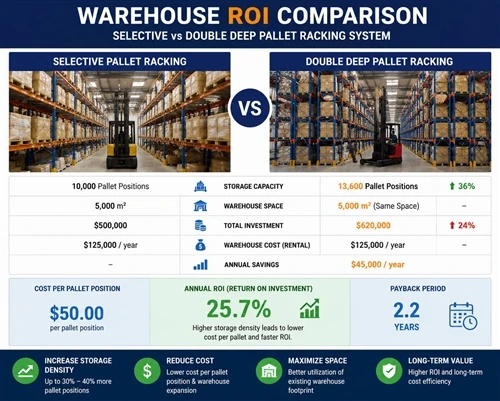
Selective pallet racking is the most commonly used storage system, designed to provide direct access to every pallet.
Key Features:
- 100% pallet accessibility
- Compatible with standard forklifts
- Easy installation and adjustment
- Ideal for high SKU environments
👉 Best for: warehouses with a wide variety of products and frequent picking operations

What Is Drive-In Racking?
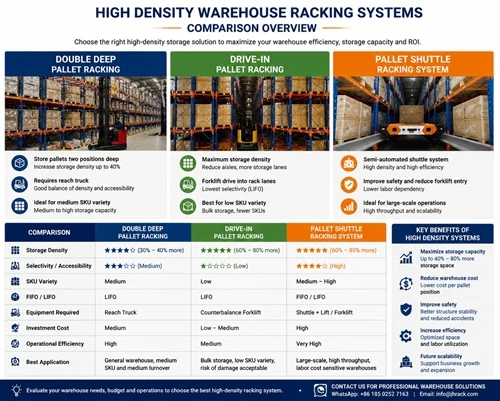
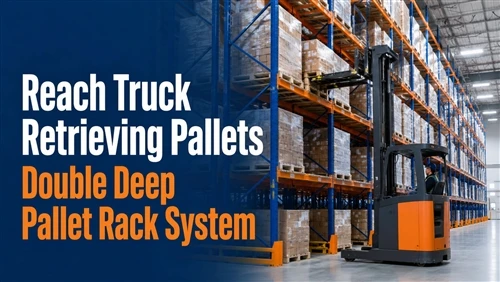
Drive-in racking is a high-density storage system where forklifts enter the rack structure to store and retrieve pallets.
Key Features:
- High storage density
- Fewer aisles required
- LIFO (Last In, First Out) storage method
- Ideal for bulk storage
👉 Best for: warehouses storing large quantities of similar products

What Is Selective Pallet Racking?
Selective pallet racking is the most commonly used storage system, designed to provide direct access to every pallet.
Key Features:
- 100% pallet accessibility
- Compatible with standard forklifts
- Easy installation and adjustment
- Ideal for high SKU environments
👉 Best for: warehouses with a wide variety of products and frequent picking operations
What Is Drive-In Racking?
Drive-in racking is a high-density storage system where forklifts enter the rack structure to store and retrieve pallets.
Key Features:
- High storage density
- Fewer aisles required
- LIFO (Last In, First Out) storage method
- Ideal for bulk storage
👉 Best for: warehouses storing large quantities of similar products
Key Differences Between Selective and Drive-In Racking
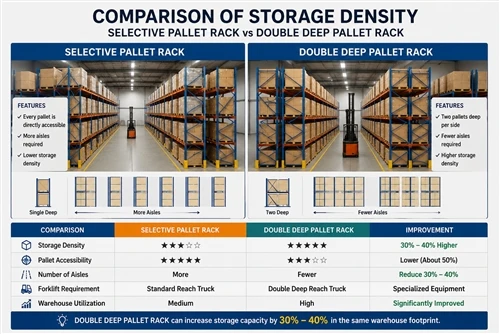
| Factor | Selective Racking | Drive-In Racking |
|---|---|---|
| Accessibility | High (100%) | Low |
| Storage Density | Medium | High |
| SKU Variety | High | Low |
| Inventory Method | FIFO possible | LIFO |
| Cost | Moderate | Lower per pallet space |
| Efficiency | High picking speed | High space utilization |

When Should You Choose Selective Racking?
Selective racking is the best choice if:
- You have a large variety of SKUs
- You need fast and frequent access to inventory
- You require flexible storage configuration
- Your warehouse prioritizes picking efficiency
👉 This system is widely used in electronics, retail, and e-commerce warehouses, where inventory turnover is high.
When Should You Choose Drive-In Racking?
Drive-in racking is ideal if:
- You store large volumes of similar products
- Space utilization is your top priority
- Inventory turnover is relatively low
- You can operate with LIFO inventory
👉 This system is commonly used in food, beverage, and cold storage warehouses.
Real-World Application
In real projects, many warehouses use a combination of both systems to achieve optimal performance.
For example, manufacturing and electronics facilities often use selective racking for fast-moving SKUs and drive-in racking for bulk storage.
This hybrid approach helps balance accessibility and storage density.
Cost Consideration
While drive-in racking offers higher storage density, it may require:
- Skilled forklift operation
- More careful handling
- Additional safety considerations
Selective racking, on the other hand, offers easier operation and lower risk, which can reduce long-term operational costs.
Common Mistakes to Avoid
- Choosing high-density storage without considering access needs
- Ignoring SKU variety
- Not planning forklift operation space
- Overlooking future scalability
Which One Is Better?
There is no one-size-fits-all answer.
- Choose selective racking if accessibility and flexibility are your priority
- Choose drive-in racking if maximizing storage space is your goal
In many cases, a combined solution provides the best results.
Conclusion
Understanding the differences between selective and drive-in racking is essential for designing an efficient warehouse.
By choosing the right system, you can:
- Improve storage efficiency
- Optimize warehouse space
- Reduce operational costs
- Enhance workflow productivity
At JIN HUI Rack, we provide customized warehouse racking solutions based on your storage needs, product types, and operational requirements.
Contact us today to get a professional layout design and quotation.