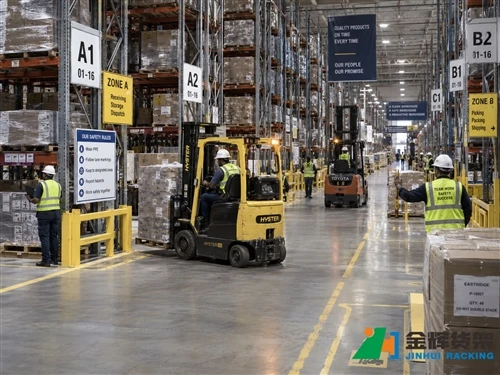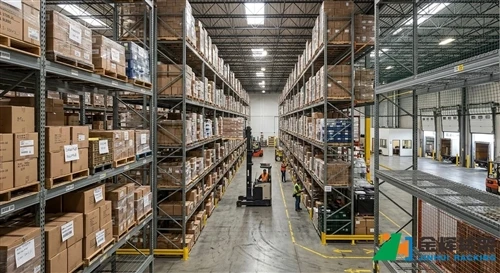
What Is an Automated Storage System?
An Automated Storage System (ASRS) is a computer-controlled warehouse solution designed to automatically store and retrieve pallets, cartons, or totes without manual forklift operations. The system combines storage racks, stacker cranes, conveyors, warehouse control software, and intelligent automation to maximize warehouse efficiency.
Compared with conventional warehouses, an automated warehouse can increase storage density by more than 50%, significantly reduce labor requirements, and improve inventory accuracy to nearly 100%.
Businesses handling high inventory volumes, multiple SKUs, or 24-hour operations increasingly rely on ASRS technology to improve productivity while lowering operating costs.

Main Components of an Automated Storage System
1. High-Density Storage Racking
Heavy-duty steel racks form the backbone of the automated warehouse. Rack height commonly reaches 20–40 meters, allowing warehouses to maximize vertical storage capacity while minimizing building footprint.
2. Stacker Crane
The stacker crane automatically travels through storage aisles, retrieving and storing pallets with exceptional positioning accuracy. It replaces traditional forklift operations and enables rapid pallet movement at high elevations.
3. Conveyor System
Conveyors automatically transport pallets between receiving stations, production lines, storage aisles, and shipping areas, eliminating unnecessary manual handling.
4. Shuttle System
For high-density storage applications, pallet shuttle technology moves inventory deep inside storage lanes, maximizing warehouse utilization while supporting FIFO and LIFO inventory management.
5. Warehouse Management Software (WMS/WCS)
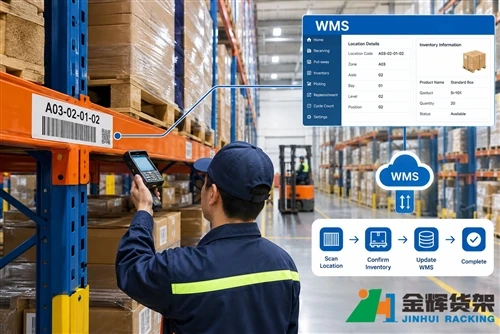
The software coordinates every warehouse movement, monitors inventory in real time, assigns storage locations automatically, and communicates with ERP systems for complete warehouse visibility.
How Does an Automated Storage System Work?
- Pallets arrive at receiving stations.
- Barcode or RFID scanners identify each load.
- The Warehouse Management System assigns the optimal storage location.
- Conveyors transport the pallet to the ASRS entrance.
- The stacker crane retrieves the pallet and places it into the assigned rack location.
- When required, the system automatically retrieves the pallet and transfers it to outbound conveyors.
The entire storage and retrieval process operates automatically with minimal human intervention.
Key Advantages of Automated Storage Systems
Maximum Storage Density
By utilizing vertical warehouse space, ASRS systems can increase storage capacity by 30%–80% compared with conventional pallet racking.
Lower Labor Costs
Automation significantly reduces forklift operators, manual transportation, and repetitive warehouse tasks.
Higher Inventory Accuracy
Automated identification and software management minimize human errors while providing real-time inventory tracking.
Improved Safety
Reduced forklift traffic lowers accident risks and protects both employees and warehouse equipment.
Faster Order Fulfillment
Automatic retrieval dramatically shortens picking times, enabling faster shipping and higher customer satisfaction.
Scalable Automation
ASRS solutions can be expanded with additional aisles, cranes, shuttle systems, or conveyor lines as warehouse requirements grow.
Industries That Benefit Most
- Third-party logistics (3PL)
- E-commerce fulfillment centers
- Food & beverage
- Cold storage warehouses
- Automotive manufacturing
- Pharmaceutical distribution
- Chemical warehouses
- Electronics manufacturing
- Paper and packaging industries
Automated Storage System vs Traditional Warehouse
| Feature | Traditional Warehouse | Automated Storage System |
|---|---|---|
| Storage Density | Medium | Very High |
| Labor Requirement | High | Low |
| Inventory Accuracy | 95–98% | 99.9% |
| Picking Speed | Manual | Automatic |
| Warehouse Height | 8–12 m | 20–40 m |
| Operational Cost | Higher | Lower Long-Term |
Choosing the Right Automated Storage System
Selecting the ideal ASRS depends on several factors:
- Warehouse dimensions
- Number of pallet positions
- Daily throughput requirements
- Product dimensions and weight
- Required automation level
- Inventory management strategy (FIFO/LIFO)
- Expansion plans
At Jinhui Rack, our engineering team analyzes warehouse layouts and operational requirements before designing customized automated storage solutions tailored to each customer's business.
Explore our complete Automated Storage System solutions to learn more about customized ASRS projects and intelligent warehouse automation.
Conclusion
An Automated Storage System is no longer reserved for the world's largest distribution centers. Advances in automation technology have made ASRS solutions more affordable, scalable, and adaptable for manufacturers, logistics companies, and warehouses of all sizes.
By integrating stacker cranes, conveyors, shuttle systems, and intelligent warehouse software, businesses can maximize storage density, reduce operating costs, improve inventory accuracy, and prepare for future growth.
If you're planning to modernize your warehouse, investing in a customized ASRS solution from Jinhui Rack can provide long-term operational advantages and a faster return on investment.