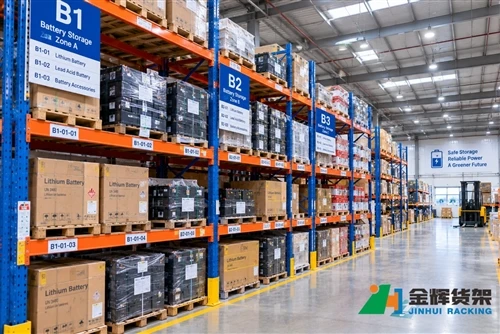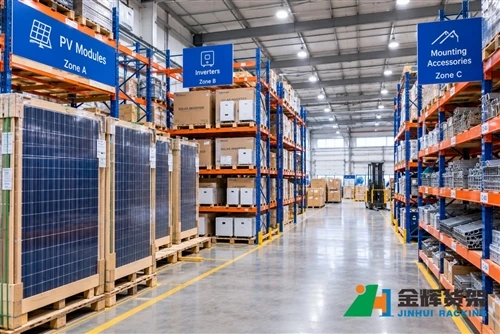
Battery warehouses handle products that vary in size, weight, packaging, chemistry, and storage requirements. From small consumer batteries packed in cartons to industrial battery units delivered on pallets, each product needs an appropriate storage location and a clear inventory management process. A well-planned warehouse racking system can help businesses organize stock, use available space efficiently, and improve picking accuracy.
However, battery storage requires more than simply placing cartons on shelves. Warehouse operators must consider product compatibility, manufacturer storage instructions, packaging condition, load distribution, handling equipment, and applicable fire and safety requirements. These factors should guide the selection and layout of the storage system.
1. Understand the Storage Requirements of Different Battery Products
Before choosing warehouse racking, identify the types of batteries being stored and how they arrive at the facility. Battery products should not automatically be treated as one uniform category because their packaging, dimensions, handling needs, and storage risks may differ significantly.
| Battery Product Type | Storage Considerations |
|---|---|
| Small consumer batteries | Carton dimensions, SKU variety, picking frequency, and clear location identification. |
| Packaged lithium-ion batteries | Manufacturer instructions, packaging integrity, product classification, and applicable fire protection requirements. |
| Industrial battery units | Unit weight, pallet dimensions, handling equipment, and verified rack load capacity. |
| Lead-acid batteries | Product orientation, leak prevention, corrosion considerations, and requirements for the specific battery type. |
| Battery accessories and components | Small-item picking, packaging separation, part identification, and convenient access. |
This classification is a starting point, not a substitute for product-specific requirements. Battery chemistry, condition, quantity, packaging, and local regulations can affect the permitted storage arrangement. Damaged, leaking, recalled, or otherwise suspect batteries should be handled under a separate, documented procedure rather than placed into ordinary inventory locations.
2. Select a Racking System Based on Product Size and Operating Needs
The right warehouse racking system depends on the dimensions and weight of each unit load, the number of SKUs, stock turnover, available floor space, and the equipment used for handling. A high-density layout is not automatically the best choice if it limits access or conflicts with the safety requirements for the products.
Selective Pallet Racking for Mixed Battery Inventory
Selective pallet racking provides direct access to individual pallet locations. It can be a practical option for warehouses storing multiple battery models, brands, capacities, or packaging formats that need to be retrieved independently.
Because each pallet location can be accessed without moving other pallets in the same bay, selective racking supports SKU separation, stock rotation, and order picking. It is especially useful when product variety and accessibility are more important than achieving the highest possible storage density.
Heavy-Duty Racking for Palletized Industrial Batteries
Industrial battery products can create substantial unit loads, depending on their size and packaging. Heavy-duty industrial pallet racking may be suitable when the complete pallet load, including packaging and pallet weight, falls within the system's engineered capacity.
Before installation, confirm the maximum pallet weight, load distribution, beam capacity, upright capacity, pallet dimensions, and handling equipment requirements. Do not select a rack based on appearance or nominal dimensions alone. The final configuration should be verified against the supplier's design information and the actual loads to be stored.
Small-Item Shelving for Battery Accessories
Battery terminals, connectors, cables, protective covers, and other accessories may be better suited to shelving or dedicated picking bins than to full pallet locations. Keeping these components in clearly labeled locations can reduce picking errors and make order assembly more efficient.
Accessories should also be separated from battery products where their handling, contamination, compatibility, or safety requirements call for different storage conditions.
3. Divide the Warehouse into Clearly Defined Storage Zones
A clear zoning plan helps warehouse staff identify where products belong, where they should be picked, and which inventory requires special handling. Zones should reflect actual operating and safety requirements rather than simply dividing the building into arbitrary sections.

A warehouse may use the following functional zones, adjusted to suit its product range and approved storage plan:
- Receiving and inspection: Check incoming shipments, packaging condition, labels, quantities, and visible damage before assigning storage locations.
- Standard inventory: Store approved, intact battery products in designated rack locations that meet their storage requirements.
- High-turnover picking: Position frequently ordered products where they can be retrieved efficiently without obstructing traffic or compromising safe handling.
- Reserve inventory: Use suitable upper rack levels for approved reserve stock, provided load limits, clearances, and product-specific storage conditions are maintained.
- Accessories and components: Organize smaller items by product code, size, compatibility, or order frequency.
- Exception handling: Establish controlled procedures for damaged packaging, discrepancies, returns, recalled products, or batteries requiring special assessment. Do not assume that an ordinary rack bay is suitable for suspect batteries.
Special storage areas for hazardous, damaged, or nonconforming batteries must be designed according to the battery type, risk assessment, applicable regulations, and emergency procedures. A painted floor boundary or a separate rack bay alone does not make an area suitable for hazardous battery storage.
4. Plan Rack Capacity and Pallet Stability Carefully
Battery storage places particular importance on accurate load data. A pallet that appears compact may still be heavy, and a load with an uneven weight distribution can behave differently from a uniformly distributed pallet.
When planning the rack layout, check the following points:
- Actual unit-load weight: Include the batteries, packaging, pallet, and any additional securing materials.
- Pallet dimensions and condition: Confirm that pallets are compatible with the rack beams and suitable for the intended load.
- Load distribution: Avoid unstable arrangements or concentrated loads that exceed the approved design assumptions.
- Packaging integrity: Do not store cartons that are crushed, wet, leaking, or otherwise unsuitable for normal handling.
- Load retention: Use appropriate wrapping, strapping, or other approved securing methods when needed to keep the unit load stable during handling.
- Rack configuration: Maintain the specified beam levels, clearances, and approved accessories. Changes to the storage arrangement should be reviewed by a competent person.
Heavier loads are often best placed at lower levels when the layout and operating method permit, but the final arrangement must follow the rack design, equipment limitations, and site-specific risk assessment. Never exceed the stated load capacity of beams, frames, pallets, or handling equipment.
5. Make Inventory Identification and Traceability Part of the Layout
Battery warehouses may handle products that look similar but differ in voltage, capacity, chemistry, model number, manufacturing batch, or destination market. Clear identification is essential for picking the correct item and maintaining traceability.
Use a consistent location code for each rack, bay, level, and pallet position. For example, a location such as B02-R04-L03-P02 could identify a specific aisle or zone, rack, level, and pallet position. Adapt the format to the warehouse's actual layout and warehouse management system.
Each inventory record should contain the information required for the business and the relevant product type. Depending on the operation, this may include:
- SKU or product model
- Battery chemistry and rated specifications, where relevant
- Lot, batch, or serial number, if applicable
- Quantity and unit of measure
- Receipt date and dispatch status
- Storage or handling instructions
- Applicable status labels, such as released, on hold, or returned
Barcode scanning or a warehouse management system (WMS) can connect physical rack locations with inventory records. For more guidance, see our article on how to label pallet rack locations for accurate warehouse inventory tracking.
Where batch or date-based stock rotation is required, configure the inventory process to follow the applicable product instructions and business rules. Do not assume that FIFO or FEFO is appropriate for every battery product without checking its storage life, condition, and manufacturer guidance.
6. Keep Aisles, Access Points, and Handling Routes Safe
A storage layout should support safe movement of forklifts, pallet trucks, workers, and goods. Narrowing aisles simply to add more rack bays can create congestion or make it difficult to handle palletized battery products securely.
During planning, consider:
- The turning radius, lift height, and load-handling capabilities of the equipment in use.
- Clearances required for pallet placement, retrieval, and safe travel.
- Marked pedestrian routes and suitable separation from vehicle traffic.
- Unobstructed exits, emergency equipment, electrical panels, and required access routes.
- Protection for rack uprights in areas exposed to vehicle impact.
- Safe access for inspection, cleaning, replenishment, and emergency response.
Warehouse operators should inspect racking regularly, report impact damage, and restrict access to affected areas until the condition has been assessed. Damaged rack components should not be used on the assumption that they can support the original load.
7. Consider Fire Protection and Battery-Specific Storage Requirements
Battery storage requirements vary significantly by chemistry, energy capacity, packaging, quantity, and condition. In particular, lithium-ion batteries can present fire risks if they are damaged, improperly handled, or stored under unsuitable conditions. The appropriate controls must be determined for the actual products and facility.
Before finalizing the rack layout, coordinate with qualified fire protection professionals, the relevant authorities, and the battery supplier as appropriate. Review the following items:
- Manufacturer storage temperature, humidity, orientation, and handling instructions.
- Applicable fire codes, building requirements, and insurer conditions.
- Required sprinkler or other fire protection provisions and any restrictions on rack height or configuration.
- Separation, containment, ventilation, monitoring, and emergency response measures where required by the specific risk assessment.
- Procedures for damaged, overheating, leaking, recalled, or otherwise suspect battery products.
- Staff training for recognizing abnormal conditions and escalating incidents.
Do not assume that standard pallet racking, ordinary warehouse sprinklers, or a designated storage zone automatically satisfies battery-specific fire safety requirements. The storage system and the building's protection measures must be evaluated together. Where required, obtain a project-specific assessment before increasing storage density or changing rack arrangements.
8. Improve Picking Efficiency Without Compromising Safety
Once the storage zones and rack configuration are established, warehouse managers can improve day-to-day efficiency by aligning product placement with order patterns and handling needs.
- Place frequently picked products in accessible locations: Use order history to identify fast-moving SKUs, while respecting weight and safety restrictions.
- Separate similar-looking products: Use distinct location labels and barcode verification to reduce selection mistakes.
- Standardize replenishment: Define when and how reserve stock is moved into picking locations.
- Monitor inventory discrepancies: Investigate repeated differences between system records and physical stock.
- Review congestion points: Observe receiving, replenishment, picking, and dispatch to identify avoidable travel or conflicting traffic.
- Audit the layout periodically: Adjust location assignments when product mix, order frequency, or packaging dimensions change.
Warehouse performance should be measured using practical indicators such as picking accuracy, inventory record accuracy, space utilization, order turnaround time, and rack damage reports. These metrics help determine whether the layout is meeting operational needs without encouraging unsafe storage practices.
9. A Practical Checklist Before Implementing Battery Warehouse Racking
| Planning Item | What to Confirm |
|---|---|
| Product assessment | Battery types, packaging, dimensions, weights, condition, and supplier instructions are documented. |
| Rack selection | The proposed system matches unit loads, access requirements, and handling equipment. |
| Load capacity | Beam, frame, pallet, and floor loading requirements have been checked. |
| Storage zoning | Standard stock, picking inventory, accessories, and exception-handling procedures are clearly defined. |
| Inventory control | Location labels, product identification, and traceability processes are consistent. |
| Safety and fire protection | Applicable codes, risk controls, emergency procedures, and fire protection requirements have been reviewed. |
| Operating procedures | Staff training, inspections, damage reporting, and safe handling practices are established. |
Conclusion
Effective warehouse racking for battery storage starts with understanding the products, their packaging, and their specific storage requirements. The right combination of rack selection, clear storage zones, verified load capacities, traceable inventory locations, and appropriate safety controls can help businesses manage battery products more efficiently.
Rather than choosing a storage system based on capacity alone, warehouse operators should evaluate accessibility, unit-load stability, inventory variety, handling equipment, and battery-specific fire and safety requirements together. A properly planned system can support more organized operations while providing a sound basis for future warehouse growth.
Plan Your Battery Warehouse Storage System with JINHUI RACK
JINHUI RACK provides industrial storage racking solutions for different warehouse layouts, load requirements, and inventory management needs. If you are planning a new battery warehouse or upgrading an existing storage area, share your product dimensions, pallet weights, warehouse layout, and handling requirements so the appropriate racking configuration can be evaluated.
Email: info@jhrack.com
WhatsApp: +86 18502527163