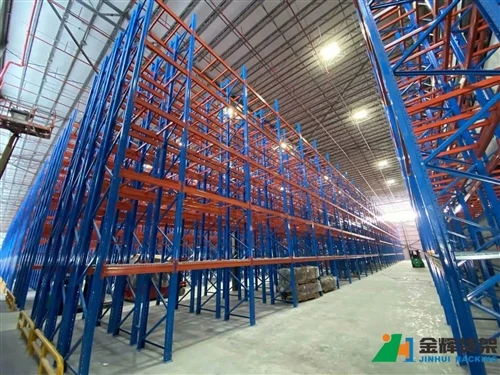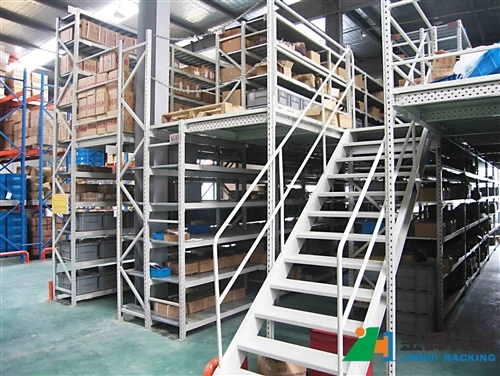
Choosing the right pallet racking system starts with the warehouse operation, not the rack itself. Pallet dimensions, load weight, available floor space, forklift access, inventory turnover, storage density, and future expansion all affect which racking configuration will work best.
For most warehouses, there is no single "best" pallet rack. A selective system may be the most practical choice for high SKU variety and direct pallet access, while a higher-density solution may make more sense when maximizing storage capacity is the primary objective.
This guide explains the main factors warehouse operators, distributors, contractors, and purchasing teams should evaluate before selecting a pallet racking system.
Quick Answer: What Should You Consider When Choosing Pallet Racking?
Before purchasing pallet racks, evaluate these eight factors:
- Pallet size and configuration
- Maximum pallet load
- Available warehouse height and floor area
- Required aisle width and forklift type
- Number of SKUs and required pallet accessibility
- Inventory turnover and storage method
- Current and future storage volume
- Local safety requirements and engineering conditions
The correct system is the one that provides an appropriate balance between storage capacity, accessibility, operational efficiency, safety, and total cost.
1. Start With Your Pallet Dimensions
The first specification to establish is the pallet itself. Pallet racks are designed around the dimensions and loading characteristics of the goods being stored, so the rack should not be selected before the pallet configuration is understood.
Measure the pallet's:
- Length
- Width
- Overall loaded height
- Maximum loaded weight
- Load overhang, if applicable
Also determine whether the warehouse uses one standard pallet size or several different pallet configurations. A warehouse storing multiple pallet sizes may require different beam arrangements or a more carefully designed rack layout.
For example, a rack designed around one standard pallet footprint may not provide the same operating clearance when pallets with different dimensions are introduced. This is why pallet dimensions should be treated as a basic design input rather than an afterthought.
2. Determine the Required Pallet Rack Load Capacity
Pallet rack load capacity should be calculated according to the actual loading configuration rather than based on a general "heavy duty" label.
The required capacity depends on factors such as:
- Maximum pallet weight
- Number of pallets stored per beam level
- Number of beam levels
- Beam span
- Upright frame configuration
- Rack height
- Load distribution
- Required safety factors and applicable engineering requirements
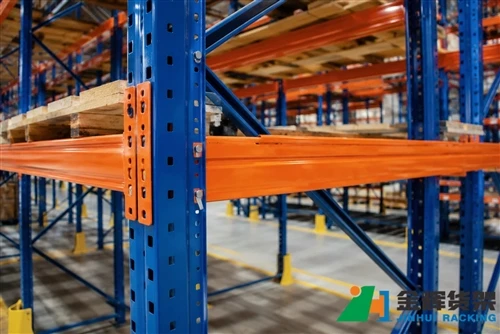
It is important to distinguish between beam capacity and the capacity of the complete rack structure. A pallet rack system is made up of interconnected components, and the performance of the complete system depends on the interaction between frames, beams, connectors, bracing, anchors, and the loads placed on the structure.
For this reason, warehouse buyers should provide the rack supplier with actual loading information instead of simply requesting a generic heavy-duty rack.
3. Check Your Warehouse Ceiling Height
Warehouse height can significantly influence the amount of usable pallet storage that can be created within the same floor area.
A warehouse with substantial clear height may be able to add additional storage levels instead of expanding the rack footprint. However, the maximum practical rack height depends on more than the ceiling itself.
Before increasing rack height, consider:
- Clear ceiling height
- Sprinkler system requirements
- Lighting and building services
- Forklift lift height
- Required clearance above stored loads
- Building structure and floor conditions
- Applicable local regulations and engineering requirements
Higher racks can increase storage capacity, but they may also require different material-handling equipment and additional engineering considerations.
4. Choose the Rack Configuration Based on Inventory Access
Storage density is important, but it should not be considered separately from pallet accessibility.
If operators need direct access to a large number of SKUs, a selective configuration is often a practical starting point. If inventory consists of fewer SKUs with larger quantities per SKU, higher-density storage methods may provide better use of warehouse space.
Selective Pallet Racking
Selective pallet racking provides direct access to individual pallet positions. This makes it suitable for warehouses with many SKUs, relatively frequent pallet movement, or inventory that requires flexible access.
Its main advantage is operational flexibility rather than maximum pallet density.
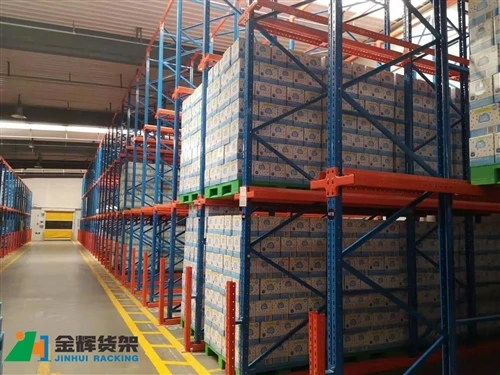
Drive-In Pallet Racking
Drive-in systems allow forklifts to enter storage lanes, reducing the number of aisles required. This can increase storage density, particularly when large quantities of similar products are stored.
The trade-off is reduced individual pallet accessibility compared with selective systems.
Double-Deep Pallet Racking
Double-deep configurations place pallet positions deeper into the rack system. They can increase storage density while retaining more access than some high-density systems, but they generally require suitable forklift equipment and a storage strategy that supports the configuration.
Push-Back and Pallet Flow Systems
Push-back and pallet flow systems can improve storage density and support specific inventory rotation requirements. They are typically considered when warehouse operators need more specialized storage behavior than conventional selective racking provides.
The important point is that rack selection should follow the warehouse's inventory strategy. The densest rack is not automatically the most efficient rack.
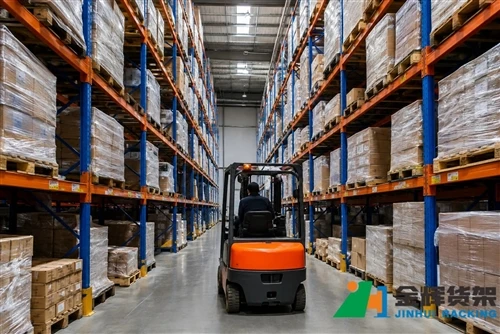
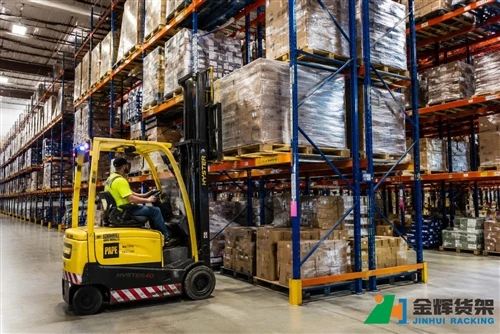
5. Consider Forklift Type and Aisle Requirements
A pallet racking layout must work with the material-handling equipment operating in the warehouse.
Different forklifts have different turning characteristics, lifting capabilities, and aisle requirements. A rack layout that looks efficient on a floor plan may become inefficient if the forklift cannot operate comfortably within the available aisle space.
When planning a warehouse racking system, consider:
- Forklift type
- Forklift turning radius
- Maximum lifting height
- Load dimensions
- Required operating aisle
- Inbound and outbound traffic flow
- Pedestrian movement
Warehouse managers should evaluate the rack layout and material-handling equipment as one operating system rather than designing each independently.
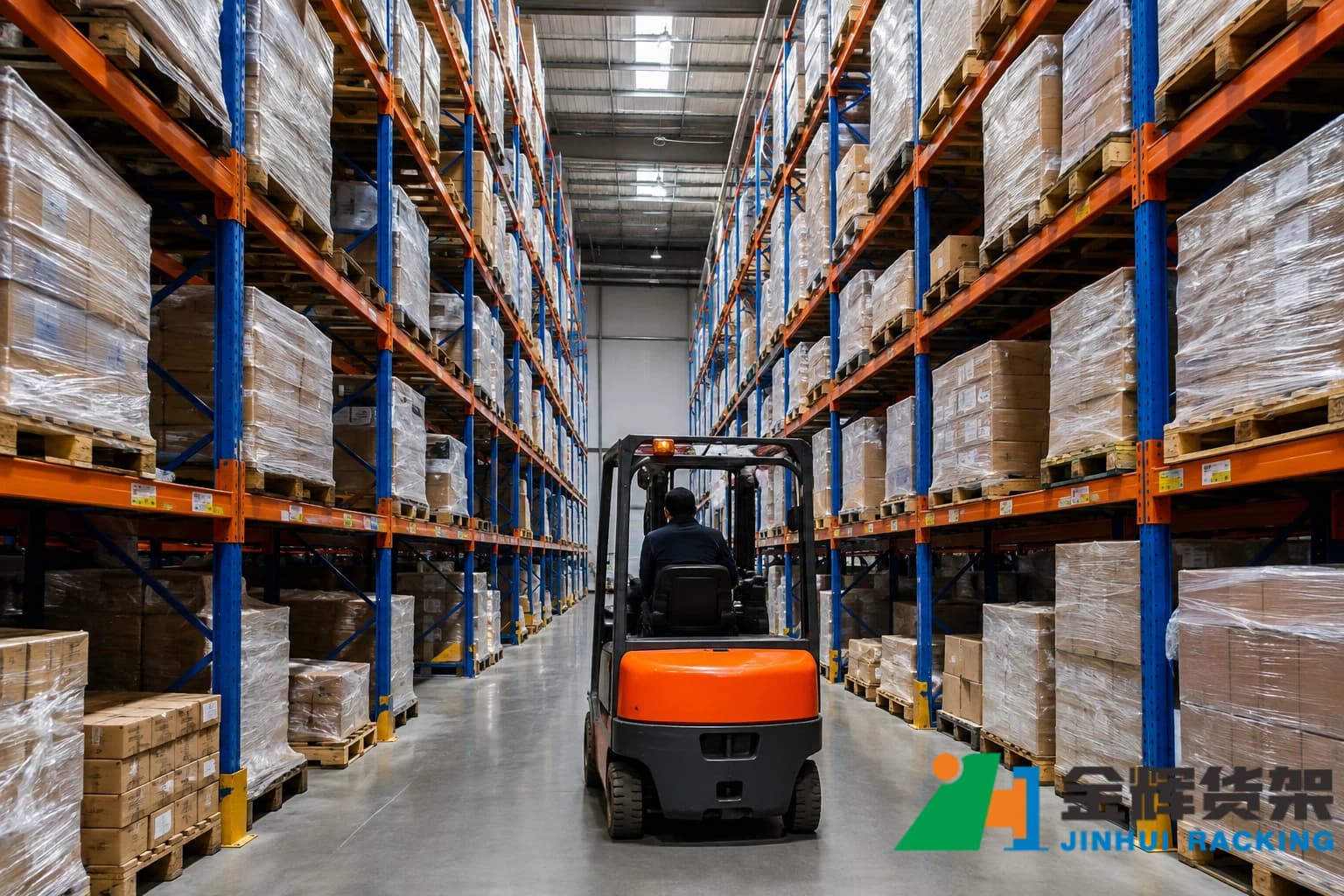
Forklift clearance and aisle configuration should be considered when designing a pallet racking layout.
6. Calculate Storage Density Without Sacrificing Productivity
Increasing the number of pallet positions is often one of the main reasons companies invest in warehouse racking. However, storage density should always be evaluated together with picking and replenishment efficiency.
For example, reducing the number of aisles may create more pallet positions, but if forklifts spend substantially more time traveling, turning, or waiting for access, the warehouse may not achieve the expected productivity improvement.
A useful evaluation should compare:
- Total pallet positions
- Floor area used by racks
- Number and width of aisles
- Average travel distance
- Pallet accessibility
- Expected inventory turnover
- Future storage requirements
This approach helps prevent a common purchasing mistake: selecting a rack based only on how many pallets can physically fit inside the warehouse.
7. Match the Racking System to Inventory Turnover
Inventory turnover is another important factor in rack selection.
Fast-moving products may require frequent access and replenishment. Slow-moving products may justify a denser storage arrangement because individual pallet access is needed less frequently.
For example, a distributor handling hundreds of SKUs may prioritize accessibility, while a manufacturer storing large quantities of a smaller product range may place greater emphasis on storage density.
Before choosing a system, classify inventory according to:
- SKU quantity
- Average pallet quantity per SKU
- Daily or weekly pallet movement
- FIFO or other inventory rotation requirements
- Product dimensions and weight
- Seasonal demand fluctuations
This information can make the difference between a rack system that simply stores products and one that actually improves warehouse operations.
8. Leave Room for Future Warehouse Growth
Warehouse storage requirements rarely remain constant. Product lines expand, order volumes change, and inventory levels can increase after a business grows.
For this reason, a pallet racking design should consider future requirements whenever possible.
Useful questions include:
- Will the number of SKUs increase?
- Will average inventory levels change?
- Could additional rack bays be installed later?
- Will forklift equipment change?
- Could the warehouse layout be reconfigured?
A modular rack configuration can make future expansion easier, provided that the original structural design and building conditions allow for it.
9. Compare the Total Cost, Not Just the Rack Price
The lowest quotation is not necessarily the lowest-cost warehouse solution.
When comparing pallet racking suppliers, consider the complete project cost, including:
- Rack components
- Engineering and design requirements
- Installation
- Material-handling equipment compatibility
- Anchoring and accessories
- Future expansion
- Maintenance and replacement components
A system that costs slightly more initially may provide better utilization of warehouse space or lower operating costs over its service life.
10. Common Mistakes When Selecting Pallet Racking
Many warehouse racking problems can be traced back to incomplete information during the planning stage.
Choosing the Rack Before Defining the Load
Ordering a rack before confirming pallet weight and dimensions can lead to unsuitable beam spans, frame configurations, or storage levels.
Focusing Only on Maximum Storage Density
Maximum density is not always the same as maximum warehouse efficiency. Accessibility and forklift productivity must also be considered.
Ignoring Future Expansion
A layout designed only for today's inventory may become difficult to expand when the business grows.
Using Generic Rack Specifications
Specifications such as "heavy duty" or "industrial pallet rack" do not provide enough information to determine whether a system is suitable for a specific warehouse. Actual dimensions, loads, spans, levels, and operating conditions should be defined.
Designing Rack Layout Without Considering Forklifts
The rack and forklift should be treated as a combined warehouse system. A layout that does not provide appropriate operating clearance can reduce productivity and create operational risks.
How to Select the Right Pallet Racking System: A Practical Decision Process
A simple selection process can help purchasing teams organize the information before contacting a rack manufacturer.
- Measure the warehouse: record floor dimensions, clear height, columns, doors, loading areas, and building obstructions.
- Define the pallet: record pallet dimensions, loaded height, and maximum weight.
- Analyze inventory: identify SKU quantity, turnover, and pallet quantities per SKU.
- Identify handling equipment: determine forklift type, lifting height, and operating requirements.
- Set storage objectives: determine whether accessibility, density, FIFO, or flexibility is the primary objective.
- Compare suitable rack configurations: evaluate selective, drive-in, double-deep, push-back, pallet flow, or other suitable systems.
- Review safety and engineering requirements: confirm the design against applicable local requirements and project conditions.
- Plan for expansion: consider how the system can adapt to future inventory growth.
This process gives suppliers the information needed to recommend a more appropriate configuration instead of providing a generic rack quotation.
What Information Should You Send to a Pallet Rack Manufacturer?
If you are requesting a quotation for a warehouse racking project, providing complete information can significantly speed up the design process.
At minimum, prepare:
- Warehouse length and width
- Clear ceiling height
- Pallet dimensions
- Maximum pallet weight
- Number of pallets required
- Number of pallet positions per SKU, if available
- Required number of storage levels
- Forklift type
- Preferred rack configuration, if already determined
- Warehouse layout or CAD drawing, if available
- Destination country and project location
Photos of the warehouse and existing storage equipment can also help suppliers understand site conditions.

A warehouse layout should consider rack dimensions, pallet positions, aisles, forklift movement, and future expansion.
Why Custom Pallet Racking Design Matters
Warehouse conditions vary considerably from one project to another. Two warehouses with the same floor area may require completely different rack configurations because their pallet sizes, inventory profiles, forklift equipment, or storage objectives are different.
For this reason, a professional warehouse racking solution should be based on project-specific information rather than a standard rack size selected from a catalog.
Jinhui Rack can work with warehouse operators, distributors, contractors, and industrial customers to develop pallet racking configurations according to storage requirements, pallet specifications, available space, and operating conditions.
Pallet Racking Selection FAQ
What is the best pallet racking system for a warehouse?
There is no universal best system. Selective pallet racking is often suitable when direct access to many SKUs is important, while higher-density systems can be more appropriate when storage density is the primary objective. The correct choice depends on pallet configuration, inventory turnover, forklift operation, warehouse dimensions, and storage requirements.
How do I determine pallet rack capacity?
Determine the maximum pallet weight, number of pallets per beam level, beam span, rack height, frame configuration, and load distribution. The complete rack structure should be evaluated according to the applicable engineering and safety requirements for the project.
Is selective pallet racking suitable for small warehouses?
It can be. Selective racking provides direct access to individual pallet positions and can be configured for different warehouse sizes. Whether it is the most efficient solution depends on the required number of pallet positions and available aisle space.
How high should pallet racks be?
Rack height depends on clear warehouse height, pallet load height, required storage levels, forklift capability, sprinkler and building requirements, and applicable local regulations. Rack height should be determined as part of the overall warehouse design rather than selected independently.
Should I choose high-density storage or direct pallet access?
The decision depends largely on inventory characteristics. Warehouses with many SKUs and frequent pallet access often benefit from accessibility, while operations storing larger quantities of fewer SKUs may benefit more from higher-density storage.
Final Checklist Before Ordering Pallet Racking
Before approving a pallet racking purchase, make sure you can answer the following questions:
- What are the pallet dimensions?
- What is the maximum loaded pallet weight?
- How many pallets need to be stored?
- How many different SKUs are involved?
- How frequently are pallets accessed?
- What forklift will operate in the aisles?
- How much clear warehouse height is available?
- Is storage density or accessibility the higher priority?
- Will storage requirements increase in the future?
- Have applicable engineering and safety requirements been reviewed?
If these questions have clear answers, the rack selection process becomes much more straightforward and the supplier can provide a more accurate proposal.
Build a Pallet Racking System Around Your Actual Warehouse Requirements
The right pallet racking system is not determined by rack appearance or a single capacity number. It is the result of matching the storage structure with the warehouse, the inventory, the material-handling equipment, and the company's operating goals.
For a warehouse with high SKU variety, accessibility may be the priority. For a facility storing large quantities of similar products, density may have greater value. In both cases, the best starting point is accurate information about pallets, loads, dimensions, inventory movement, and future requirements.
If you are planning a new warehouse, replacing an existing storage system, or expanding pallet capacity, providing these details to the manufacturer will help you move from a generic rack quotation toward a more practical warehouse storage solution.
Need help evaluating a pallet racking configuration? Contact Jinhui Rack with your warehouse dimensions, pallet size, load weight, and required storage quantity for a project-specific discussion.
WhatsApp: +8618502527163
Email: info@jhrack.com