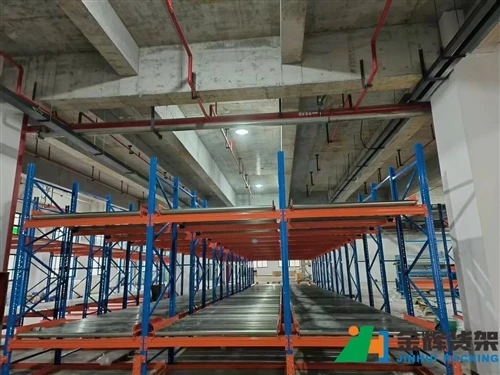
Planning an Efficient Gravity Rack System for Your Warehouse
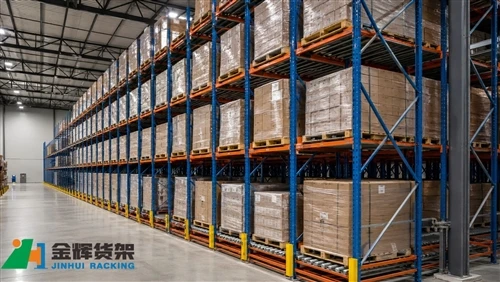
A gravity rack system is far more than a storage rack with rollers. Every successful pallet flow installation begins with careful engineering that considers warehouse dimensions, pallet specifications, inventory turnover, forklift operations, and future business growth.
Proper system design ensures smooth pallet movement, maximizes storage density, improves safety, and minimizes maintenance throughout the life of the warehouse. Poorly designed gravity rack systems, however, can lead to pallet jams, excessive roller wear, reduced productivity, and unnecessary operating costs.
Whether you're building a new warehouse or upgrading an existing facility, understanding the fundamentals of gravity rack design is essential for achieving the highest return on investment.

Why Gravity Rack Design Is Important
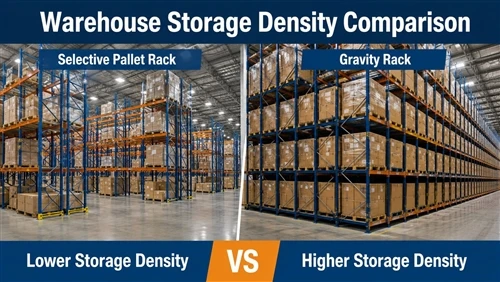
Unlike selective pallet racking, gravity rack systems rely on controlled pallet movement. Every lane must allow pallets to travel smoothly from the loading side to the picking side while maintaining a safe and consistent speed.
To achieve this, engineers evaluate multiple design factors, including pallet dimensions, load weight, lane length, roller spacing, slope angle, and braking requirements.
A properly engineered gravity rack system delivers several important benefits:
- Higher storage density
- Reliable FIFO inventory rotation
- Smooth pallet movement
- Reduced forklift travel
- Improved warehouse safety
- Lower maintenance costs
Learn more about our customized Gravity Rack System solutions for high-density warehouse storage.
Step 1: Analyze Your Warehouse Layout
The first step in designing a gravity rack system is understanding the available warehouse space. Engineers evaluate both floor area and building height to maximize pallet capacity while maintaining efficient forklift traffic.
Important layout considerations include:
- Warehouse length and width
- Available ceiling height
- Column spacing
- Loading dock locations
- Forklift travel routes
- Fire protection requirements
- Emergency access
These factors determine the optimal rack arrangement and the number of pallet flow lanes that can be installed.
Step 2: Determine Pallet Specifications
Pallet dimensions directly affect lane width, roller spacing, beam length, and rack capacity. Accurate pallet information is therefore one of the most critical design inputs.
Typical design information includes:
- Pallet length
- Pallet width
- Pallet height
- Maximum pallet weight
- Load center of gravity
- Bottom pallet construction
Different pallet types require different roller configurations. Wooden pallets, plastic pallets, and steel pallets each interact differently with gravity rollers and should be evaluated during system design.

Step 3: Select the Appropriate Lane Depth
Lane depth has one of the greatest impacts on storage density and system performance.
Longer pallet flow lanes increase storage capacity because more pallets are stored within each lane. However, longer lanes also require additional brake rollers and more precise engineering to maintain smooth pallet movement.
| Lane Depth | Storage Density | Typical Application |
|---|---|---|
| 2–4 Pallets | Medium | General Warehousing |
| 5–8 Pallets | High | Food & Beverage |
| 9–15 Pallets | Very High | Cold Storage & Distribution Centers |
Step 4: Design the Roller Layout
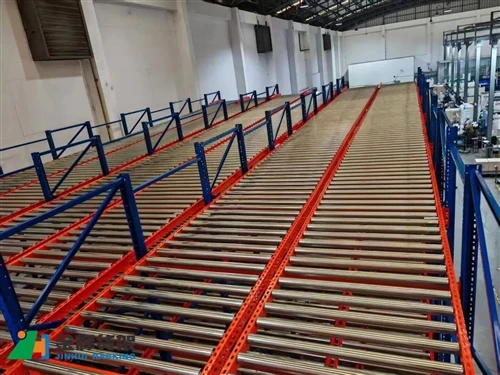
The roller system is the heart of every gravity rack. Roller diameter, spacing, material, and brake roller placement all influence pallet movement.
Engineers calculate roller layouts based on pallet weight and bottom support structure to ensure every pallet travels safely without excessive speed or vibration.
Modern gravity rack systems typically incorporate brake rollers to automatically control pallet speed, especially in long flow lanes or when handling heavy loads.
Step 5: Calculate the Correct Slope Angle
One of the most important engineering parameters in a gravity rack system is the lane slope. The incline must be carefully calculated so that pallets move smoothly under gravity without rolling too quickly or stopping before reaching the picking position.
The ideal slope depends on several variables, including pallet weight, pallet dimensions, roller type, ambient temperature, and the friction coefficient of the pallet base. In most warehouse applications, engineers design gravity rack systems with a gentle incline that balances smooth pallet movement with maximum operational safety.
Excessive slope angles may increase pallet speed and impact force, while insufficient slopes can result in pallet stoppage and reduced productivity. Proper engineering calculations ensure consistent pallet flow regardless of load conditions.
Step 6: Configure Brake Rollers and Speed Controllers
Modern gravity rack systems rely on brake rollers to maintain a safe and controlled pallet speed throughout each lane. These specialized rollers automatically create resistance as pallet speed increases, preventing collisions and protecting both products and warehouse personnel.
The number and placement of brake rollers depend on:
- Lane length
- Pallet weight
- Slope angle
- Expected pallet velocity
- Warehouse operating temperature
Heavy-duty warehouses storing loads above 1,000 kg per pallet generally require additional speed controllers compared with lighter warehouse applications.
Step 7: Incorporate Essential Safety Features
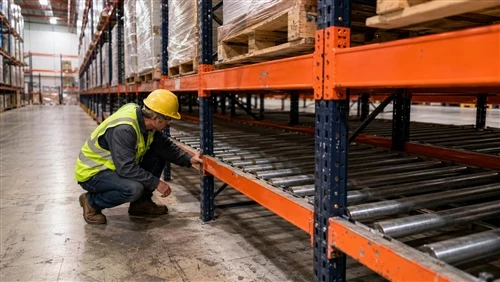
Warehouse safety should always be integrated into the initial design rather than added after installation. A properly designed gravity rack system includes multiple safety components that protect operators, forklifts, and stored products.
Common safety features include:
- Pallet separators
- End pallet stops
- Lane guides
- Entry guides
- Forklift impact protectors
- Rack column guards
- Load warning labels
- Anti-collapse devices
These components help ensure reliable operation while extending the service life of the entire storage system.
Step 8: Plan for Future Warehouse Expansion
Warehouse requirements often change as businesses grow. Designing a gravity rack system with future expansion in mind allows additional lanes or storage levels to be incorporated without replacing the original installation.
When planning expansion, engineers should consider:
- Projected inventory growth
- Additional product lines
- Future automation upgrades
- Warehouse Management System (WMS) integration
- Potential conveyor connections
- Available building expansion space
A scalable warehouse design reduces future investment while minimizing operational disruption.
Common Gravity Rack Design Mistakes
Even experienced warehouse operators can overlook important design considerations during project planning. Avoiding these common mistakes helps ensure reliable long-term system performance.
| Common Mistake | Potential Impact | Recommended Solution |
|---|---|---|
| Ignoring pallet bottom design | Poor pallet movement | Verify pallet compatibility before engineering. |
| Selecting excessive lane depth | Higher equipment cost and slower inventory turnover | Match lane depth to actual inventory profile. |
| Insufficient brake rollers | Unsafe pallet speed | Calculate speed control based on pallet weight. |
| Poor forklift aisle planning | Traffic congestion | Optimize loading and picking routes. |
| No allowance for future growth | Costly warehouse modifications | Design a scalable storage layout. |
Frequently Asked Questions
How is the lane depth determined?
Lane depth depends on pallet throughput, SKU quantity, available warehouse space, and desired storage density. Higher throughput warehouses typically benefit from deeper lanes.
Can gravity rack systems be customized?
Yes. Every gravity rack system is engineered according to pallet size, load capacity, warehouse dimensions, and operational requirements.
How many brake rollers are required?
The quantity varies depending on pallet weight, lane length, and slope angle. Engineering calculations determine the optimal configuration for safe pallet movement.
What pallet types are compatible?
Most wooden, plastic, and steel pallets can be used, provided the pallet bottom design is suitable for roller conveyance.
Can gravity racks be integrated with warehouse automation?
Yes. Gravity rack systems can be integrated with conveyors, AS/RS equipment, pallet shuttle systems, and Warehouse Management Systems (WMS) to improve overall logistics efficiency.
Conclusion
A successful gravity rack system begins with intelligent engineering. Careful planning of warehouse layout, pallet specifications, lane depth, roller configuration, safety features, and future expansion ensures reliable performance and long-term value.
Rather than selecting a standard configuration, businesses should work with experienced engineers to develop a customized pallet flow solution that matches their operational objectives. A properly designed gravity rack system not only maximizes storage capacity but also improves productivity, inventory accuracy, and warehouse safety for years to come.
For a complete understanding of pallet flow storage, we also recommend reading:
- What Is a Gravity Rack System? Complete Guide to FIFO Warehouse Storage
- Gravity Rack vs Drive-In Rack
- How Much Can a Gravity Rack System Increase Warehouse Storage Capacity?
- Gravity Rack Cost Guide
- Gravity Rack vs Selective Pallet Racking
Need a Custom Gravity Rack Design?
Jinhui Rack has more than 20 years of experience designing customized gravity rack systems for food processing, cold storage, logistics, retail, pharmaceutical, and manufacturing warehouses. Our engineering team will evaluate your warehouse layout and recommend the most efficient pallet flow solution for your business.
Explore Our Gravity Rack System
pallet flow rack system
WhatsApp
+8618502527163
Email
info@jhrack.com