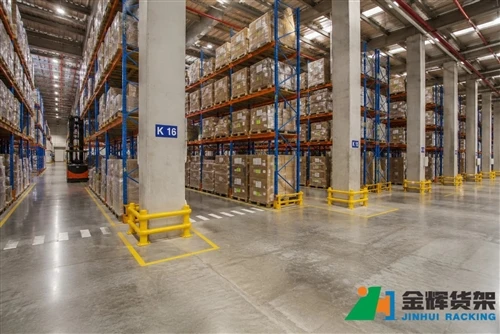
Start with Your Warehouse Reality, Not the Product
One of the biggest mistakes in racking selection is starting with the product instead of the operation.
Before choosing between selective, drive-in, or shuttle racking, you should clearly understand:
- How many SKUs do you manage?
- What is your pallet turnover rate?
- Is your priority storage density or picking efficiency?
- What is your budget and long-term plan?
These factors will directly determine which system is actually suitable-not the price alone.
Scenario 1: High SKU, Fast Picking → Selective Racking
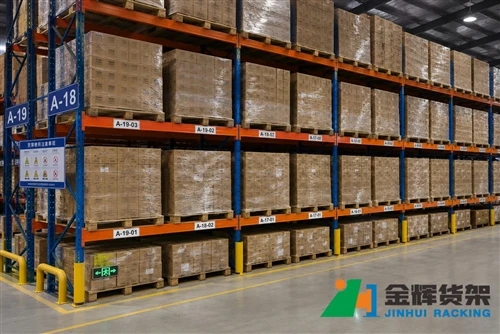
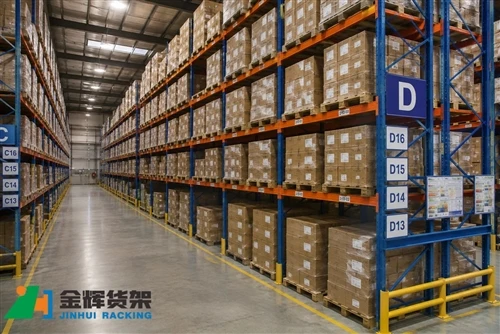
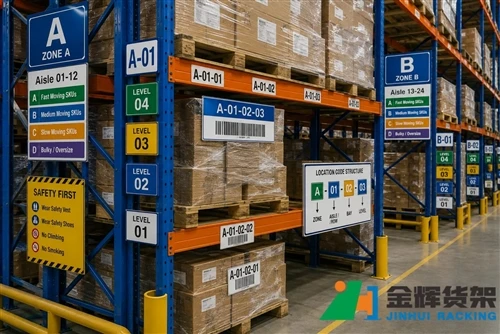
If your warehouse handles a large number of SKUs with frequent picking operations, selective racking is usually the most practical solution.
This is common in:
- E-commerce fulfillment centers
- Retail distribution warehouses
- Spare parts storage
The key advantage is direct access to every pallet, which significantly improves picking efficiency and reduces operational complexity.
However, the trade-off is lower storage density due to the need for multiple aisles.
Scenario 2: Bulk Storage, Limited Space → Drive-In Racking
If your warehouse stores large quantities of the same product with relatively low SKU variety, drive-in racking becomes a strong candidate.
Typical applications include:
- Cold storage warehouses
- Food and beverage storage
- Manufacturing inventory buffers
By reducing aisle space, drive-in systems significantly increase storage density.
However, this comes with limitations:
- LIFO inventory management
- Lower operational efficiency
- Higher dependence on forklift operation
If you are working with cold storage, you may also find this useful: cold storage racking design guide.

Scenario 3: High Throughput + Efficiency Focus → Shuttle Racking
When both storage density and operational efficiency are important, shuttle racking becomes a more advanced solution.
This system is often used in:
- Large logistics distribution centers
- High-volume warehouses
- Operations planning for automation upgrades
By using a shuttle system to move pallets inside the rack, forklift travel is minimized, leading to faster operations and improved safety.
The main consideration is higher initial investment, but in many cases, it pays off through improved efficiency and reduced labor costs.
A Quick Decision Framework
If you need a simple way to decide:
- Choose Selective: if you need flexibility and fast access
- Choose Drive-In: if you need maximum storage density with low SKU variety
- Choose Shuttle: if you need both density and efficiency
This framework can help narrow down your options before moving into detailed design.
What Happens If You Choose the Wrong System?
In real projects, the cost of choosing the wrong system is often underestimated.
Common consequences include:
- Low picking efficiency and higher labor costs
- Underutilized warehouse space
- Operational bottlenecks
- Costly redesign or system replacement
In several cases we've handled, correcting an initial design mistake cost more than the original racking investment.
Our Practical Approach to System Selection
Instead of recommending a specific product upfront, we typically start by analyzing the warehouse data, including layout, pallet specifications, and operational flow.
Based on this, we simulate different layout options and compare their performance before making a recommendation.
This approach helps ensure that the selected system is not only suitable today, but also scalable for future needs.
Conclusion
Choosing between selective, drive-in, and shuttle racking is not a simple comparison-it is a decision based on your warehouse reality.
By understanding your operational needs and applying a structured decision framework, you can select a system that improves both efficiency and long-term performance.
Need Help Making the Right Decision?
If you're unsure which system fits your warehouse, we can help you evaluate your requirements and recommend the most suitable solution.