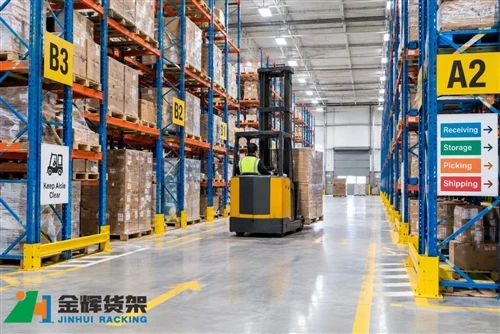
Why Pallet Rack Load Capacity Matters
Every heavy duty selective pallet rack system has a designed load capacity. Exceeding this capacity can reduce structural safety, damage rack components, and create potential risks for warehouse employees and inventory.
Unlike general shelving systems, industrial pallet racks are engineered to support thousands of kilograms of palletized goods. However, the actual capacity varies depending on rack configuration and operating conditions.
Before purchasing or installing warehouse racking, companies should understand how load ratings are calculated and what factors influence the final capacity.

What Determines Heavy Duty Selective Pallet Rack Capacity?
The load capacity of a selective pallet rack is determined by multiple structural components working together. The weakest component in the system usually determines the overall safe working load.
1. Upright Frame Capacity
The upright frame is the vertical structure that supports the entire rack bay. Its capacity depends on:
- Steel profile design.
- Upright column thickness.
- Frame height.
- Bracing configuration.
- Base plate design.
Taller racks require stronger upright frames because they experience greater vertical loads and potential impact forces from forklifts.
2. Beam Load Capacity
Pallet rack beams directly support pallet loads. Beam capacity depends on:
- Beam length.
- Steel thickness.
- Beam profile design.
- Number of pallets stored per level.
- Load distribution.
For example, a beam designed for two pallets per level will have different requirements compared with a beam supporting three or four pallets.
3. Rack Configuration
The same pallet rack components can have different load ratings depending on how they are configured.
Important factors include:
- Number of storage levels.
- Rack height.
- Bay width.
- Beam spacing.
- Pallet type.
A warehouse using taller racks with more storage levels requires additional engineering compared with a lower rack system.
Typical Load Capacity of Heavy Duty Selective Pallet Racking
Heavy duty selective pallet racks are commonly designed to support pallet loads ranging from several hundred kilograms to several tons per bay.
Typical industrial applications may include:
- 1,000–2,000 kg per pallet position for standard warehouse applications.
- 2,000–5,000 kg or more per beam level for heavy industrial storage.
- Higher capacities for specially engineered projects.
The exact capacity should always be confirmed through professional rack design and engineering calculations.
Pallet Rack Capacity Labeling
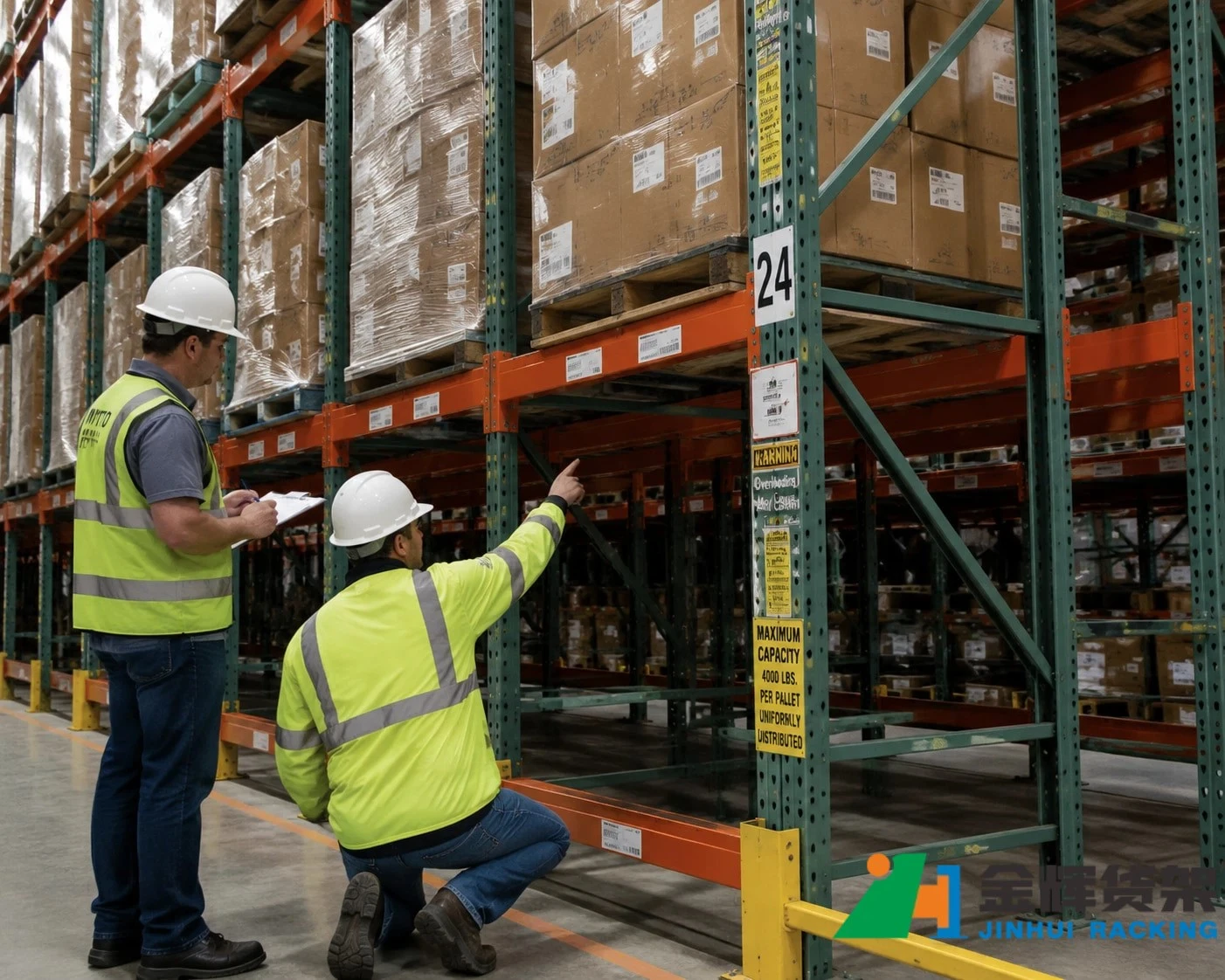
Professional warehouse racking systems should include clearly visible load capacity labels. These labels provide important information such as:
- Maximum pallet weight.
- Maximum beam level load.
- Total bay capacity.
- Safety instructions.
Warehouse operators should never rely on appearance alone when determining whether a rack can support a load. A rack that looks strong may still exceed its designed capacity if overloaded.
How Pallet Weight Should Be Distributed
Proper load distribution is essential for maintaining pallet rack safety.
Warehouse operators should ensure:
- Pallets are centered correctly on beams.
- Loads are evenly distributed.
- Damaged pallets are removed.
- Heavy products are stored on lower levels when possible.
- Uneven loads are avoided.
Incorrect pallet placement can create additional stress on beams and connectors even when the total weight is within the rated capacity.
How to Calculate Heavy Duty Selective Pallet Rack Capacity
Calculating pallet rack capacity requires evaluating the entire rack structure rather than looking at a single component. The safe working load depends on the combined strength of upright frames, beams, connectors, and the way pallets are positioned.
A basic pallet rack capacity calculation should consider:
- Number of pallets stored per beam level.
- Weight of each pallet.
- Number of beam levels.
- Total bay loading.
- Rack height and configuration.
For example, if one beam level stores two pallets and each pallet weighs 1,000 kg, the beam level must safely support at least 2,000 kg plus an appropriate safety margin.
However, the actual engineering calculation is more complex because loads create different stresses on beams and upright frames. Professional pallet rack manufacturers use structural analysis and testing data to determine safe capacity ratings.
Static Load Capacity vs Dynamic Load Capacity
Many warehouse operators confuse static load capacity with working load capacity. These two concepts are different.
Static Load Capacity
Static load refers to the weight supported by the rack when the load remains stationary. This represents the basic structural strength of the rack under stable conditions.
Dynamic Load Capacity
Dynamic load considers real warehouse conditions, including:
- Forklift movement.
- Pallet placement impact.
- Repeated loading and unloading.
- Daily operational stress.
Because warehouse racks operate in active environments, dynamic conditions are more important when selecting a heavy duty selective pallet racking system.
The Importance of Safety Factors in Pallet Rack Design
Professional pallet rack systems are not designed to operate at their absolute maximum theoretical strength. Engineers apply safety factors to ensure reliable performance under real working conditions.
Safety factors consider possible variations such as:
- Slight differences in pallet weights.
- Forklift impact risks.
- Material aging.
- Installation conditions.
- Unexpected operating situations.
This is why warehouse operators should never intentionally load racks beyond their rated capacity, even if the structure appears stable.
Common Causes of Pallet Rack Overloading
Overloading is one of the most common causes of warehouse rack damage. In many cases, problems occur because rack capacities are not clearly communicated or warehouse layouts change over time.
Common causes include:
- Adding heavier products without recalculating capacity.
- Replacing pallets with larger or heavier loads.
- Removing capacity labels.
- Changing beam levels without engineering approval.
- Using damaged pallets that concentrate loads unevenly.
- Ignoring previous forklift impact damage.
Regular inspections and proper employee training are essential for preventing unsafe loading conditions.
Can You Increase Heavy Duty Pallet Rack Capacity?
In some situations, warehouse owners can increase storage capacity, but this should only be done after professional evaluation.
Possible methods include:
- Installing stronger beams.
- Adding additional upright frames.
- Reducing beam spans.
- Increasing rack depth.
- Using upgraded structural components.
Simply adding more products to existing racks without modification is unsafe and may exceed the original design capacity.
How to Improve Pallet Rack Safety
A high-capacity pallet rack system requires proper operation and maintenance to perform safely throughout its service life.
Recommended safety practices include:
- Display clear load capacity signs.
- Train forklift operators properly.
- Inspect racks regularly.
- Replace damaged components immediately.
- Keep aisles clear.
- Avoid unauthorized rack modifications.
Warehouse safety depends not only on rack design but also on daily operating practices.
Heavy Duty Selective Pallet Rack Inspection Checklist
Regular inspections help identify potential issues before they become serious safety problems.
| Inspection Item | What to Check |
|---|---|
| Upright Frames | Bent columns, cracks, impact damage |
| Beams | Deformation, connector damage, improper loading |
| Anchors | Loose bolts or damaged floor fixing |
| Load Labels | Visible and accurate capacity information |
| Pallet Condition | Broken pallets or unstable loads |
Frequently Asked Questions
How much weight can a heavy duty selective pallet rack hold?
The capacity varies depending on rack design, beam size, upright specifications, and configuration. Many industrial systems support thousands of kilograms per bay, but the exact rating must be confirmed through engineering calculations.
What is the maximum weight per pallet position?
The pallet position capacity depends on the beam design and pallet configuration. Standard industrial applications commonly range from hundreds of kilograms to several tons per pallet level.
Can I increase pallet rack capacity by adding more beams?
Adding beams may change load distribution and should only be completed after confirming the rack structure can safely support the new configuration.
How often should pallet racks be inspected?
Inspection frequency depends on warehouse activity, but regular visual checks and scheduled professional inspections are recommended for active industrial environments.
Why are pallet rack capacity labels important?
Capacity labels provide operators with clear information about safe loading limits and help prevent accidental overloading.
Conclusion
Understanding heavy duty selective pallet rack load capacity is essential for creating a safe and efficient warehouse environment. Rack capacity depends on multiple factors, including beam strength, upright design, pallet weight, rack configuration, and operating conditions.
A properly engineered pallet racking system can provide years of reliable service, while overloaded or incorrectly configured racks may create unnecessary safety risks.
By selecting the right rack design, following capacity guidelines, and performing regular inspections, businesses can maximize storage efficiency while maintaining warehouse safety.
Professional Heavy Duty Pallet Racking Solutions from Jinhui Rack
Jinhui Rack provides engineered warehouse storage solutions designed for different load requirements, warehouse layouts, and industrial applications. Our heavy duty selective pallet racking systems are customized according to pallet weight, storage height, forklift operation, and safety standards.
Learn more about our Heavy Duty Selective Pallet Racking System and find the right solution for your warehouse.
WhatsApp
+8618502527163
Email
info@jhrack.com