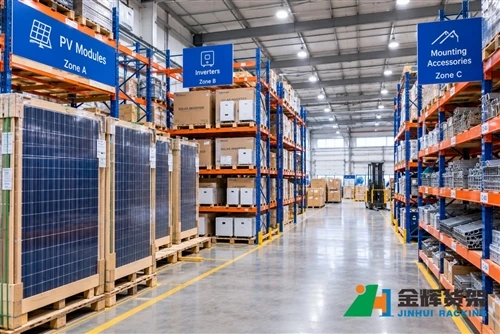
Warehouse operators often need to increase storage capacity without expanding the building footprint. When conventional selective pallet racking uses too much floor space for the available inventory volume, high-density storage systems may provide an alternative. Pallet flow, drive-in, and push-back racking are three common options, each designed around a different balance of storage density, pallet accessibility, inventory rotation, and handling requirements.
Choosing the right system requires more than comparing the number of pallet positions. Product turnover, SKU variety, pallet consistency, forklift access, loading patterns, and inventory rotation rules all affect the final layout. Understanding the differences between these systems helps warehouse planners select a configuration that supports operational requirements as well as storage capacity.

1. What Is High-Density Warehouse Storage?
High-density storage refers to warehouse arrangements designed to store more palletized goods within a given floor area. These systems typically reduce the number of individual access aisles or use dedicated channels to accommodate multiple pallets in depth.
Compared with conventional selective pallet racking, high-density configurations can increase space utilization when inventory characteristics and operating procedures suit the system. However, reducing aisle space may also reduce direct access to individual pallets, making product flow and storage planning especially important.
High-density storage may be worth evaluating when a warehouse has the following requirements:
- Limited floor space: The facility needs additional pallet capacity without a major building expansion.
- Large quantities of similar products: Many pallets share the same SKU or can be grouped into suitable storage lanes.
- Predictable inventory movement: Receiving and dispatch patterns can be matched to the selected storage method.
- Defined stock rotation rules: Products have clear first-in, first-out (FIFO) or last-in, first-out (LIFO) requirements.
- Compatible handling equipment: Forklifts and other material-handling equipment can operate safely within the proposed layout.
High-density storage is not automatically the best choice for every warehouse. Facilities with many SKUs and frequent access to individual pallets may still benefit from selective pallet racking or a combination of different rack types.
2. Understanding the Three Main High-Density Racking Systems
Pallet Flow Racking
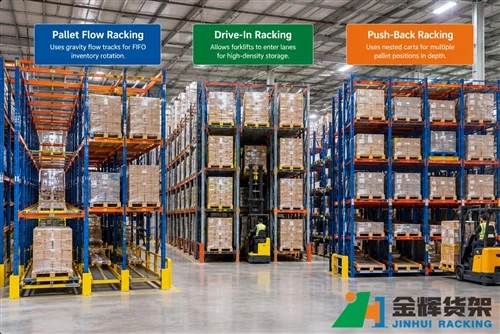
Pallet flow racking uses inclined roller or wheel tracks to move pallets through a storage lane by gravity. Operators load pallets from one side, and the pallets advance toward the retrieval side as stock is removed. A properly designed pallet flow arrangement can support FIFO inventory rotation.
This configuration can be suitable for products that move in predictable quantities and require controlled stock rotation. It is often considered for distribution operations, food and beverage storage, and other applications where the order of pallet movement matters.
Important planning factors include pallet dimensions and condition, lane depth, load characteristics, flow speed, braking or control devices, and access for maintenance. Pallet flow systems must be designed for the intended loads and operating conditions.
Drive-In Racking
Drive-in racking allows suitable forklifts to enter storage lanes to place or retrieve pallets on supporting rails. Because multiple pallet positions can be arranged in depth, the system can reduce the number of aisles needed compared with selective pallet racking.
Drive-in systems commonly operate on a LIFO basis within a lane: the last pallet loaded is generally the first pallet retrieved. They are often considered for large quantities of similar products with relatively low SKU variety and predictable storage patterns.
Because equipment enters the rack structure, aisle dimensions, rail clearances, pallet quality, operator training, and rack protection require careful attention. The layout must match the specific forklift and pallet configuration.
Push-Back Racking
Push-back racking uses nested carts or similar moving supports on inclined rails. When a new pallet is loaded from the front, it pushes previously stored pallets farther back into the lane. During retrieval, the remaining pallets move forward as space becomes available.
This arrangement can provide multiple pallet positions in depth while allowing loading and retrieval from the same aisle. It is often considered for warehouses that need higher storage density than selective racking but still require relatively convenient access to multiple product lanes.
Push-back racking generally follows LIFO operation within each lane. The system design should account for pallet weight, dimensions, cart and rail compatibility, operating clearances, and the number of pallet positions required in depth.
3. Compare Pallet Flow, Drive-In, and Push-Back Racking
The following table summarizes the main operational differences. Actual performance depends on the specific design, inventory profile, equipment, and warehouse layout.
| Comparison Factor | Pallet Flow Racking | Drive-In Racking | Push-Back Racking |
|---|---|---|---|
| Pallet movement | Pallets move along inclined flow tracks. | Forklifts enter lanes to place and retrieve pallets. | Pallets move on nested carts or supports. |
| Typical inventory flow | FIFO | LIFO | LIFO |
| Access arrangement | Loading and retrieval generally occur on opposite sides. | Loading and retrieval generally use the same lane opening. | Loading and retrieval generally occur from the same aisle. |
| Suitable inventory pattern | Products requiring controlled rotation and regular flow. | Large quantities of similar products with relatively low SKU variety. | Grouped pallet inventory requiring multiple positions in depth. |
| Planning priority | Flow control, pallet consistency, and lane design. | Forklift compatibility, lane clearances, and safe operation. | Cart and rail design, pallet loads, and operating clearances. |
| Key limitation | Requires compatible pallets and properly controlled flow. | Direct access to every pallet is limited within a lane. | Individual pallet access and rotation are constrained by lane operation. |
No single system is universally superior. The most appropriate choice depends on how inventory enters, moves through, and leaves the warehouse.
4. How Inventory Rotation Affects Rack Selection
Inventory rotation is one of the most important factors when comparing high-density storage systems. The selected rack should support the required movement sequence rather than forcing operators to work around an unsuitable layout.
When FIFO Is Required
FIFO means first-in, first-out: the pallet received first should be the first pallet retrieved. This approach may be important for products with expiry dates, batch control requirements, or a need for consistent stock rotation.
Pallet flow racking can support FIFO because pallets are loaded from one side and retrieved from the opposite side. However, the system must be designed and operated correctly, and inventory records should still track product batches and dates where required.
When LIFO Is Acceptable
LIFO means last-in, first-out: the most recently loaded pallet is generally the first one retrieved from a lane. Drive-in and push-back racking commonly use this operating pattern.
LIFO arrangements may suit products that do not require strict chronological rotation and can be stored in grouped quantities. Before selecting such a system, operators should confirm that its inventory sequence is compatible with product handling rules and customer requirements.
Where a facility stores products with different rotation needs, it may be more practical to allocate different rack types to different inventory groups rather than forcing all products into one system.
5. Evaluate Storage Density and Pallet Accessibility Together
Increasing pallet positions is only one part of warehouse optimization. A layout must also allow operators to receive, locate, retrieve, and replenish inventory without creating excessive handling time or unsafe working conditions.
When evaluating alternative rack configurations, consider the following factors:
- Number of SKUs: A high SKU count may require more independent locations and greater access to individual pallets.
- Pallet quantity per SKU: Products stored in large, consistent quantities may be easier to allocate to deep storage lanes.
- Order frequency: Frequently retrieved inventory may require a layout that minimizes unnecessary handling and travel.
- Inventory turnover: Fast-moving and slow-moving products may need different storage arrangements.
- Available aisle space: Rack layout must account for equipment turning, travel, loading, and retrieval.
- Building dimensions: Clear height, columns, doors, floor conditions, and building services can constrain the layout.
- Replenishment requirements: The warehouse must be able to move stock into storage lanes at the required rate.
A useful comparison should evaluate usable pallet capacity alongside operating efficiency. A system with a higher theoretical storage count may not deliver better overall results if it creates longer handling times, complicated replenishment, or access limitations.
6. Check Pallet and Equipment Compatibility
High-density rack systems depend on consistent interaction between the rack structure, pallets, and material-handling equipment. A configuration that works with one pallet type or forklift may not be suitable for another.
Before confirming a design, warehouse planners should review:
- Pallet length, width, height, condition, and load distribution.
- Maximum and typical pallet weights.
- Rack beam, rail, cart, and support capacities as applicable.
- Forklift type, dimensions, operating height, and required clearances.
- Floor flatness, slab conditions, and anchoring requirements.
- Rack protection, aisle markings, access routes, and operating procedures.
- Inspection, maintenance, and staff training requirements.
Rack components and load limits must be matched to the actual system design. Operators should not modify structural components, exceed specified capacities, or change rack configurations without appropriate technical review.
7. Common Mistakes When Choosing High-Density Racking
| Common Mistake | Potential Consequence | Recommended Approach |
|---|---|---|
| Choosing a system based only on pallet capacity | Storage density may increase while retrieval becomes less efficient. | Compare capacity, handling time, and access requirements together. |
| Ignoring FIFO or LIFO requirements | The storage method may conflict with inventory rotation procedures. | Define product rotation rules before choosing the rack type. |
| Using inconsistent or unsuitable pallets | Pallets may not move or sit correctly on the intended supports. | Confirm pallet specifications and condition against the system design. |
| Overlooking forklift clearances | Loading and retrieval may become difficult or unsafe. | Plan around the actual handling equipment and operating method. |
| Combining incompatible inventory in the same lane | Retrieval, replenishment, and stock control may become complicated. | Group products according to SKU, movement, and storage requirements. |
| Changing rack components without checking specifications | Load capacity or structural stability may be affected. | Verify proposed changes against approved design information. |
8. Can Different Racking Systems Be Combined?
Yes. A warehouse does not necessarily need to use one storage system throughout the entire facility. Combining rack types can help match different inventory groups to their individual storage and retrieval requirements.
For example, selective pallet racking may be used for products that require direct access to individual pallets, pallet flow racking may be allocated to suitable FIFO inventory, and drive-in or push-back racking may be considered for grouped products that can be stored in depth.
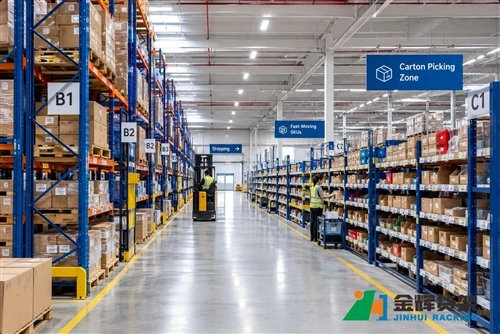
A mixed layout should still provide clear zone identification, compatible handling routes, consistent inventory records, and appropriate separation between different operating activities.
The final configuration should be based on the facility's inventory profile and workflow. Combining systems without a clear storage strategy may add complexity instead of improving efficiency.
9. How to Select the Right High-Density Storage System
Before requesting a rack design, prepare a clear summary of warehouse operations. This information helps suppliers assess whether pallet flow, drive-in, push-back, or a mixed configuration is appropriate.
- Inventory data: SKU count, pallet quantities, dimensions, weights, and product grouping.
- Stock rotation: Whether FIFO, LIFO, or another inventory control method is required.
- Movement profile: Receiving volume, retrieval frequency, replenishment rate, and dispatch patterns.
- Building information: Available floor area, clear height, columns, exits, floor conditions, and obstructions.
- Equipment details: Forklift type, aisle requirements, lifting height, and pallet-handling method.
- Capacity targets: Required pallet positions and expected changes in inventory volume.
- Operating constraints: Safety requirements, maintenance access, staff procedures, and future expansion plans.
Use these details to compare layout proposals on storage capacity, retrieval efficiency, inventory rotation, equipment compatibility, and safety. The objective is to select a system that meets the warehouse's real operating requirements rather than simply maximizing the number of pallet positions.
Frequently Asked Questions
Which high-density racking system provides FIFO inventory rotation?
Pallet flow racking can support FIFO by loading pallets from one side and retrieving them from the opposite side. The design, pallet compatibility, and operating procedures must support the required stock sequence.
Is drive-in racking suitable for warehouses with many SKUs?
It can be used in some multi-SKU facilities, but drive-in racking is generally easier to manage when products can be grouped into suitable lanes with predictable quantities. Warehouses requiring frequent direct access to many individual pallets should evaluate accessibility carefully.
What is the main difference between drive-in and push-back racking?
Drive-in racking allows forklifts to enter storage lanes to place and retrieve pallets. Push-back racking uses carts or moving supports so pallets can be stored in depth and retrieved from the same aisle without driving into the storage lane.
Does high-density racking always reduce warehouse costs?
Not necessarily. High-density systems may improve space utilization, but the overall investment and operating costs also depend on rack design, equipment, installation, maintenance, labor, inventory movement, and the cost of available warehouse space.
Can high-density racking be installed in an existing warehouse?
Potentially, but the building dimensions, floor conditions, existing equipment, inventory characteristics, access requirements, and applicable safety requirements should be assessed before the system is selected or installed.
Conclusion
Pallet flow, drive-in, and push-back racking offer different ways to increase warehouse storage density. Pallet flow can support FIFO inventory rotation, while drive-in and push-back systems commonly suit grouped inventory operated on a LIFO basis. Their suitability depends on pallet characteristics, SKU variety, handling equipment, and the warehouse's daily workflow.
Before choosing a system, evaluate storage capacity and pallet accessibility together. A carefully planned configuration can improve space utilization while maintaining practical inventory control, efficient handling, and safe warehouse operations.
Contact JINHUI RACK
Planning to increase warehouse storage density or compare different pallet racking systems? Contact JINHUI RACK to discuss your available space, pallet specifications, inventory rotation requirements, and storage capacity targets.
Email: info@jhrack.com
WhatsApp: +86 185 0252 7163
Explore our products: Pallet Flow Racking | Drive-In Racking | Push-Back Racking
Contact page: Contact JINHUI RACK