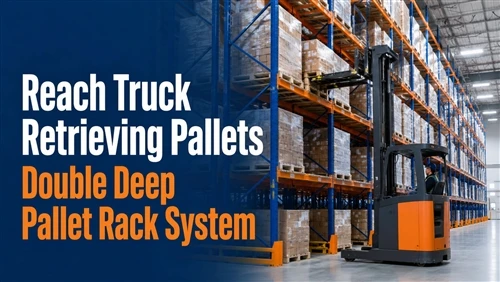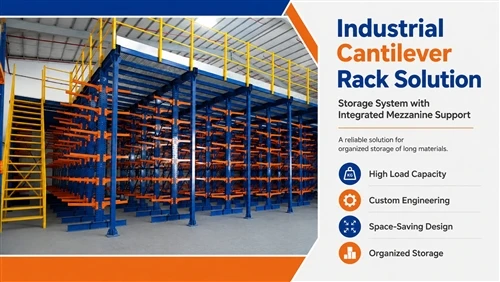
Understanding Drive-In and Shuttle Racking Systems
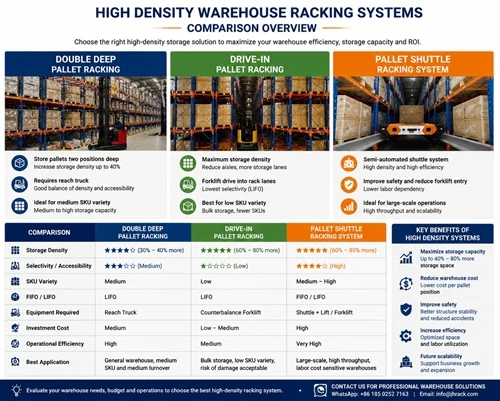
Both drive-in and shuttle racking systems are high-density storage solutions designed to reduce aisle space and maximize pallet storage.
Drive-in racking allows forklifts to enter storage lanes directly, while shuttle racking uses a semi-automated shuttle cart to move pallets inside the rack structure.
If you want to understand drive-in systems in detail, you can read our drive-in racking cold storage guide.

Key Differences Between Drive-In and Shuttle Racking
| Factor | Drive-In Racking | Shuttle Racking |
|---|---|---|
| Operation | Forklift enters lanes | Shuttle moves pallets automatically |
| Storage Density | High | Very High |
| Efficiency | Manual, slower | Automated, faster |
| Safety | Higher collision risk | Reduced forklift interaction |
| Cost | Lower initial cost | Higher initial investment |
Storage Density and Space Utilization
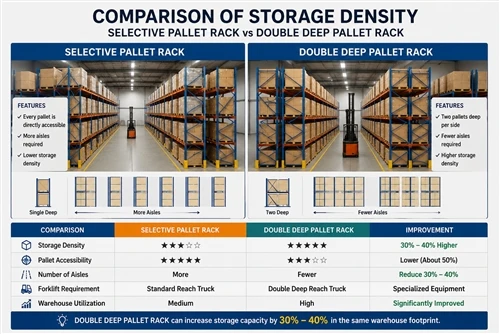
Both systems significantly increase storage density by eliminating aisles. Drive-in racking can increase storage capacity by up to 60–75% compared to selective systems, making it ideal for cold storage warehouses.
Shuttle racking, however, can achieve even higher density by allowing deeper storage lanes and reducing space requirements further.
Operational Efficiency and Throughput
In drive-in systems, forklift operators must physically enter the racking lanes, which slows down operations and increases handling time.
Shuttle systems automate pallet movement, allowing faster loading and unloading, significantly improving throughput in high-volume warehouses.
In some cases, shuttle systems can improve loading efficiency by over 30%, especially in cold storage environments where operational speed is critical.
Safety Comparison
Safety is a major difference between the two systems.
- Drive-In: Forklifts operate inside narrow lanes, increasing the risk of collisions and structural damage.
- Shuttle: Forklifts stay outside the rack, significantly reducing accident risk.
By reducing forklift movement inside racks, shuttle systems improve overall warehouse safety and reduce maintenance costs.
Cost Analysis: Initial vs Long-Term Investment
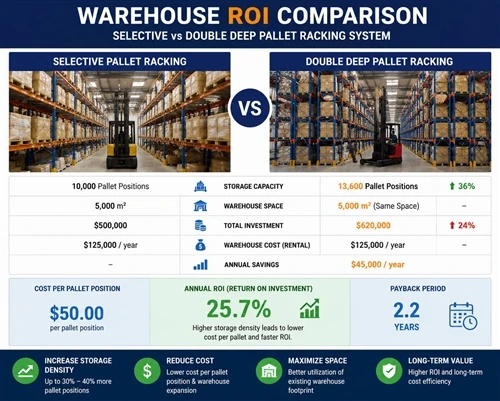
Drive-in racking is more cost-effective initially due to its simpler structure and lack of automation.
Shuttle racking requires higher upfront investment, including shuttle devices and control systems, but can reduce labor costs and improve long-term efficiency.
Cold Storage Performance
In cold storage environments, both systems help reduce energy consumption by minimizing aisle space.
Drive-in racking is widely used for bulk frozen goods, while shuttle systems are preferred for high-throughput cold chain operations due to reduced labor exposure to low temperatures.

When to Choose Drive-In vs Shuttle Racking
Choose Drive-In Racking If:
- Budget is limited
- Low SKU, high volume storage
- LIFO inventory is acceptable
Choose Shuttle Racking If:
- High throughput is required
- Safety is a priority
- FIFO/LIFO flexibility is needed
- Long-term ROI is more important than initial cost
Conclusion
Both drive-in and shuttle racking systems are effective solutions for cold storage warehouses, but they serve different operational needs.
Drive-in racking offers a cost-effective solution for bulk storage, while shuttle systems provide higher efficiency, safety, and scalability for modern logistics operations.
Need Help Choosing the Right System?
Our experts can help you design the most efficient cold storage racking solution based on your warehouse size, SKU type, and operational requirements.