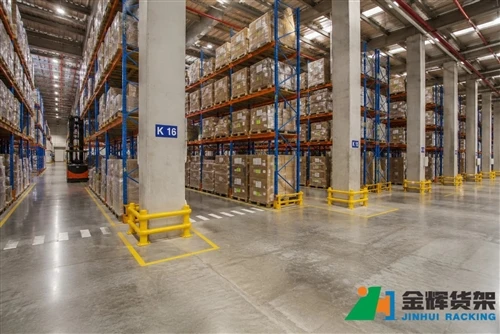
Why There Is No "Standard Price" for Warehouse Racking
One of the most common questions from buyers is: "What is the price per pallet position?"
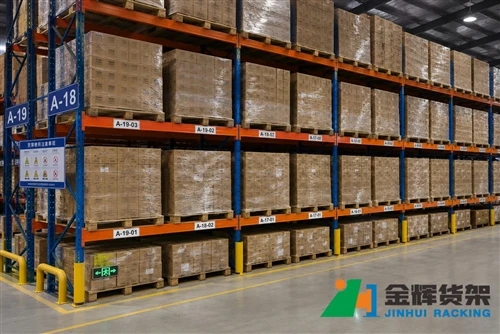
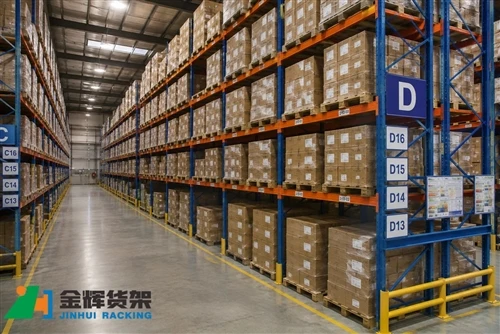
In reality, there is no universal answer. Warehouse racking systems are highly customized engineering products. Even small changes in layout, load capacity, or warehouse dimensions can significantly impact the final cost.
In international projects we've supported across Southeast Asia, the Middle East, and North America, price variations of 20–40% are common for systems with similar storage capacity but different operational requirements.
Core Factors That Determine Racking System Cost
From a technical and commercial perspective, racking cost is influenced by several key variables:
1. Load Capacity and Structural Design
Heavier pallet loads require thicker steel, stronger beams, and reinforced uprights. This directly increases material consumption and manufacturing complexity.
2. Warehouse Height and Layout
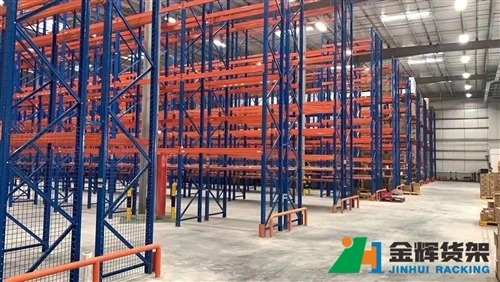
Higher warehouses require taller uprights and additional structural stability considerations. Layout efficiency also affects the total number of components required.
3. Racking System Type
Different systems come with different cost structures:
- Selective racking: lower cost, high accessibility
- Drive-in racking: higher density, moderate cost
- Shuttle systems: higher investment, better efficiency
You can also compare system differences in our detailed guide: selective vs double deep racking comparison.
Typical Cost Breakdown in Real Projects
Based on our project experience, the total investment of a racking system is usually divided into the following components:
- Racking structure (steel components)
- Transportation and shipping
- Installation and labor
- Optional accessories (protectors, decking, guide rails)
In export projects, logistics costs can account for 10–25% of the total budget, depending on destination and shipment volume.
Cost Per Pallet Position: A Practical Benchmark
While exact pricing varies, many buyers use "cost per pallet position" as a reference metric.
However, this metric should be used carefully. A lower cost per pallet does not always mean a better investment, especially if it reduces efficiency or increases operational costs.
In several cold storage projects, clients chose high-density systems with slightly higher upfront costs but achieved lower long-term operating expenses due to reduced space and energy usage.
Hidden Costs Buyers Often Overlook
Focusing only on initial quotation can lead to unexpected expenses later.
Common hidden costs include:
- Warehouse modification requirements
- Operational inefficiencies due to poor layout
- Maintenance and repair costs
- Future redesign or expansion limitations
These factors are often more expensive than the racking system itself over time.
ROI: Looking Beyond Initial Investment
From a long-term perspective, racking systems should be evaluated based on return on investment rather than initial cost alone.
A well-designed system can:
- Increase storage capacity by 30–80%
- Improve operational efficiency
- Reduce labor and handling time
These improvements directly impact warehouse profitability, especially in high-volume logistics operations.

Regional Considerations in Global Projects (GEO Insight)
Cost structures also vary by region due to differences in labor, transportation, and installation practices.
For example:
- North America: higher labor cost, stricter safety standards
- Southeast Asia: lower installation cost, flexible layouts
- Middle East: large-scale projects with high-density requirements
Understanding these regional factors helps optimize both design and budgeting for international buyers.
Our Approach: Cost Optimization Through Design
Instead of focusing only on product pricing, we approach each project by optimizing the entire system-from layout to structural design and installation planning.
This ensures that clients not only receive competitive pricing but also achieve better long-term performance and scalability.
Conclusion
Warehouse racking system cost is influenced by a combination of technical, operational, and regional factors. Understanding these variables is essential for making informed decisions.
A cost-effective solution is not necessarily the cheapest-but the one that delivers the best balance between investment and performance.
Get a Project-Based Quotation
If you would like an accurate quotation, we recommend sharing your warehouse layout, pallet size, and load requirements. Our team can provide a tailored solution based on your project conditions.