One of the first questions many warehouse managers ask when planning a new storage project is simple: how much does heavy duty pallet racking cost?
There is no single price that applies to every warehouse. A pallet rack system is normally priced according to its dimensions, load requirements, number of storage positions, steel specifications, accessories, surface finish, delivery location, and installation requirements.
Two warehouses may use the same type of selective pallet racking but receive very different quotations because their pallet sizes, rack heights, beam capacities, aisle layouts, and project quantities are not the same.
Understanding these cost factors before requesting a quotation makes it easier to compare suppliers and avoid choosing a storage system based only on the lowest initial price.
What Is the Typical Cost of Heavy Duty Pallet Racking?
Heavy duty pallet racking is normally quoted as a complete storage system rather than as a simple price per shelf. The final project cost depends on how the rack is configured and how many pallet positions are required.
For example, a small warehouse with a few rack bays and relatively low pallet loads will have a very different budget from a distribution center requiring several hundred bays, taller upright frames, higher-capacity beams, and additional protection equipment.
When reviewing a quotation, it is therefore more useful to look at the complete system cost and the resulting storage capacity rather than comparing the price of one individual rack bay.
What Affects Heavy Duty Pallet Racking Cost?
Several factors have a direct influence on the price of an industrial pallet racking project. Understanding these factors can help warehouse managers prepare more accurate budgets.
1. Rack Height and Upright Frame Size
The height of the pallet rack is one of the most obvious factors affecting material requirements.
A taller rack generally requires longer upright frames and may require additional structural considerations depending on the design and load requirements. Warehouse ceiling height, sprinkler clearance, lifting equipment, and local operating conditions should all be considered before selecting the final rack height.
For this reason, a quotation for a 3-level storage system cannot simply be compared with one designed for 5 or 6 pallet levels without considering the difference in storage capacity.
2. Beam Load Capacity
Beam capacity is another major pricing factor.
The required beam specification depends on the weight of each pallet, the number of pallets stored per bay, beam span, and the number of storage levels.
For example, a warehouse storing relatively light palletized cartons may require a different beam specification from a facility storing heavy metal components, machinery parts, or industrial materials.
Increasing the required load capacity can affect the steel specification and overall system cost, so accurate pallet weight information should be provided when requesting a quotation.
3. Number of Pallet Positions
The total number of pallet positions has a significant effect on the overall project budget.
A warehouse with 1,000 pallet positions naturally requires more uprights, beams, connectors, and accessories than a small installation with 100 positions. However, larger projects can sometimes achieve better overall purchasing efficiency because manufacturing and shipping quantities are higher.
Instead of asking only for the price of one rack bay, buyers should compare the quotation based on the total number of usable pallet positions provided by the system.
4. Pallet Dimensions
Pallet size directly influences rack bay width and depth.
Common pallet dimensions vary between markets and industries, and a rack designed around one pallet standard may not be suitable for another without changing its configuration.
When requesting a quotation, provide the supplier with the actual pallet length, width, height, and loaded weight. This information allows the rack manufacturer to determine an appropriate bay configuration rather than estimating from incomplete information.
How Warehouse Layout Affects Pallet Rack Pricing
The warehouse layout is closely connected to the final cost of a pallet racking project.
Rack quantity alone does not determine the most economical solution. The layout must also account for forklift aisles, pedestrian areas, building columns, emergency exits, doors, loading areas, and available ceiling height.
A poorly planned layout can result in unused floor space or insufficient operating clearance. In some cases, a slightly different rack arrangement can provide more pallet positions without increasing the warehouse footprint.
Forklift Aisle Width
Forklift requirements should be considered during the early design stage. Different types of forklifts require different operating clearances, and the aisle arrangement can affect the total number of rack rows that fit into a warehouse.
Reducing aisle width may appear to increase storage density, but it should never be done without confirming that the selected material handling equipment can operate safely within the available space.
Warehouse Ceiling Height
Available vertical space can also influence the cost and capacity of a pallet rack system.
A taller warehouse may allow additional pallet levels, increasing storage capacity without requiring more floor area. However, higher racks can also require suitable handling equipment and additional planning for sprinkler systems, lighting, and building clearance.
Cost of Pallet Rack Accessories
The rack structure itself is only one part of a complete warehouse storage system. Depending on the application, additional safety and storage accessories may be required.
Common accessories include:
- Wire mesh decking.
- Steel pallet supports.
- Upright protectors.
- End-of-row guards.
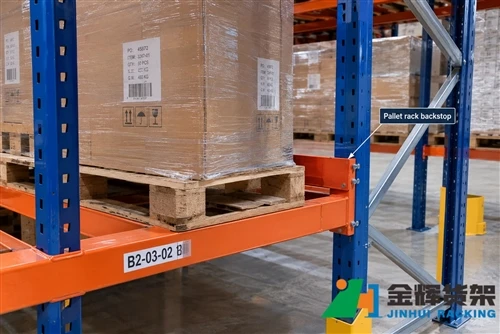
- Back stops.
- Row spacers.
- Safety barriers.
Not every warehouse requires the same combination of accessories. The appropriate selection depends on pallet construction, forklift traffic, storage conditions, and the customer's operational requirements.
5. Steel Material and Rack Specifications
The amount and specification of steel used in a pallet racking system naturally affect its price. Upright frames and beams must be selected according to the required load, span, rack height, and storage configuration.
Two rack systems may look similar in a warehouse but use different steel thicknesses, profiles, or structural designs. These differences can affect both the initial quotation and the actual performance of the system.
For this reason, buyers should avoid comparing suppliers only by appearance or by the price of a single rack bay. The steel specification and designed load capacity should also be reviewed.
6. Surface Treatment and Finish
Surface treatment is another factor that can influence pallet rack pricing. Powder coating is widely used for warehouse racking because it provides a durable finish and helps protect the steel surface during normal warehouse use.
The final finish may vary according to the manufacturer's standard process, customer requirements, and project environment.
For standard indoor warehouse applications, a conventional powder-coated finish is often sufficient. More demanding environments may require additional consideration when selecting the appropriate coating and material specifications.
7. Wire Decking and Other Storage Components
Some warehouses place pallets directly on rack beams, while others use wire mesh decking, pallet supports, or other load-supporting components.
The choice depends on pallet construction, load characteristics, fire safety requirements, and the way goods are handled.
Adding decking across multiple rack levels increases the material quantity and therefore affects the project quotation. However, it can also provide practical benefits for warehouses handling different pallet types or smaller loads.
How Installation Affects the Total Cost
The purchase price of the rack components is not necessarily the total cost of a warehouse racking project. Installation can also represent an important part of the overall budget.
Installation requirements vary according to:
- Total number of rack bays.
- Rack height and configuration.
- Warehouse floor conditions.
- Number of storage levels.
- Safety accessories.
- Site accessibility.
- Local labor rates.
A large project with tall rack structures may require more installation time and equipment than a small warehouse installation.
When comparing quotations, buyers should check whether installation is included, quoted separately, or expected to be completed by the customer's own team.
Shipping and Delivery Costs
Transportation is another cost that is easy to overlook when preparing a warehouse rack budget.
Pallet racking contains long upright frames, beams, braces, and other steel components. The number of truckloads or containers required depends on the quantity, dimensions, packing method, and shipping destination.
For international projects, the final logistics cost may also depend on the shipping method, destination port, inland transportation, and local handling charges.
For this reason, a factory quotation and the final delivered project cost are not always the same thing.
Custom Pallet Racking vs Standard Configurations
Standard rack configurations can be economical when the warehouse layout and pallet requirements closely match the manufacturer's existing designs.
However, many industrial warehouses have specific requirements involving building columns, unusual pallet dimensions, limited ceiling height, special load capacities, or restricted forklift aisles.
In these cases, customized pallet racking may provide a better overall solution even if the initial quotation is higher.
A customized design can help make better use of available warehouse space and avoid unnecessary modifications after installation.

Why the Cheapest Pallet Rack Quotation Is Not Always the Best Choice
When purchasing industrial storage equipment, comparing prices is important, but the lowest quotation should not automatically be considered the best deal.
A meaningful comparison should include:
- Rack dimensions.
- Specified load capacity.
- Steel specifications.
- Number of pallet positions.
- Surface treatment.
- Included accessories.
- Packaging and delivery terms.
- Installation requirements.
- Warranty and after-sales support.
For example, Supplier A may offer a lower price per bay but include fewer pallet positions or fewer safety components. Supplier B may have a higher initial quotation but provide a more efficient layout and greater storage capacity.
Comparing the complete project scope provides a much more useful basis for making a purchasing decision.
What Information Should You Provide When Requesting a Pallet Rack Quote?
A supplier can prepare a more accurate quotation when the customer provides sufficient project information from the beginning.
Before requesting a quotation, prepare the following details:
- Warehouse length and width.
- Clear ceiling height.
- Pallet length and width.
- Loaded pallet weight.
- Number of pallets to be stored.
- Required storage levels.
- Forklift type.
- Preferred rack configuration.
- Warehouse location.
- Any required safety accessories.
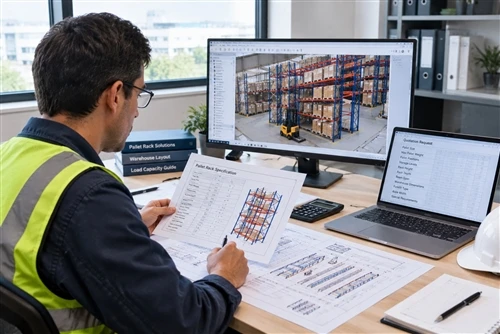
A warehouse layout drawing or basic floor plan is also useful. Even a simple drawing showing columns, doors, loading areas, and available storage space can help the rack supplier understand the project more accurately.
How to Compare Heavy Duty Pallet Rack Quotations
Once several suppliers have submitted quotations, compare them using the same technical requirements.
| Item | What to Compare |
|---|---|
| Rack dimensions | Height, width, depth, and number of levels |
| Load capacity | Per pallet, per beam level, and per bay where applicable |
| Storage capacity | Total usable pallet positions |
| Accessories | Decking, protectors, safety barriers, and other components |
| Installation | Included, excluded, or separately quoted |
| Delivery | Shipping terms and destination costs |
How to Reduce Heavy Duty Pallet Racking Costs Without Sacrificing Quality
There are several practical ways to control the cost of a warehouse racking project without simply choosing lower-grade components.
Optimize the Warehouse Layout
A well-planned layout can increase the number of usable pallet positions within the same warehouse footprint. This may reduce the need for additional floor space or future rack expansion.
Choose the Capacity Based on Actual Requirements
Rack components should be selected according to the actual pallet load and storage configuration. Specifying unnecessarily high capacity for every rack level can increase material costs without providing a practical benefit.
Use Accessories Where They Are Needed
Safety and storage accessories should be selected according to the application rather than added without considering their purpose. The right accessories can provide protection and improve operation while keeping the project within budget.
Consider Future Expansion
It can be more economical to select a modular rack design that can be expanded later rather than completely replacing the system when inventory grows.
Frequently Asked Questions
How much does heavy duty pallet racking cost?
The total cost depends on rack dimensions, load capacity, quantity, pallet size, accessories, installation, and delivery requirements. A project-specific quotation is more accurate than using a single standard price.
What is the biggest factor affecting pallet rack price?
Rack quantity, dimensions, load requirements, and configuration are among the main factors. For large projects, the total number of pallet positions can have a particularly significant effect on the overall budget.
Does pallet rack installation cost extra?
It depends on the supplier and project arrangement. Some quotations include installation, while others provide the rack components separately and quote installation as an additional service.
Is customized pallet racking more expensive?
Customized designs may have a higher initial cost than standard configurations, but they can provide better space utilization when a warehouse has specific dimensions, load requirements, or operational restrictions.
What should I send to a rack manufacturer for a quotation?
Provide warehouse dimensions, pallet size, loaded pallet weight, required storage quantity, storage levels, forklift information, and a floor plan if available. These details allow the manufacturer to prepare a more accurate design and quotation.
Conclusion
The cost of heavy duty pallet racking depends on much more than the price of the steel rack itself. Rack dimensions, load capacity, pallet specifications, storage density, accessories, installation, and logistics all contribute to the final project budget.
For this reason, warehouse managers should compare complete storage solutions rather than choosing a supplier solely because it offers the lowest price per rack bay.
A properly designed system can provide more usable pallet positions, better warehouse workflow, and greater flexibility for future expansion. When requesting quotations, providing accurate warehouse and product information is one of the simplest ways to receive a realistic proposal.
Get a Heavy Duty Pallet Racking Quotation from Jinhui Rack
Jinhui Rack provides customized heavy duty pallet racking solutions for warehouses, distribution centers, manufacturing facilities, and other industrial applications. Our team can develop rack configurations according to pallet dimensions, load requirements, available warehouse space, and storage objectives.
If you are planning a new warehouse racking project, provide your warehouse dimensions, pallet specifications, required storage capacity, and available layout drawing. This information allows our team to evaluate the project and recommend a suitable configuration.
You can also review our Heavy Duty Selective Pallet Racking System for more information about our industrial storage solutions.
WhatsApp
+8618502527163
Email
info@jhrack.com