What Is Very Narrow Aisle Pallet Racking?
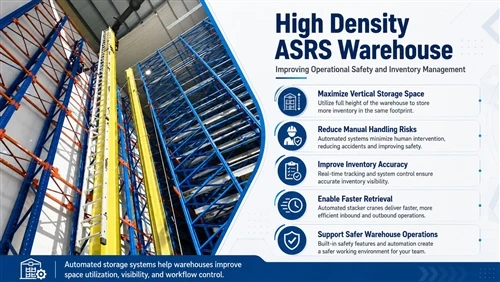
Very Narrow Aisle (VNA) pallet racking is a high-density warehouse storage system designed to maximize storage capacity by reducing aisle width. Unlike standard pallet racking, VNA systems allow racks to be placed much closer together, significantly increasing the number of pallet positions within the same floor area.
This system is commonly used in modern warehouses where space optimization is critical, especially in facilities with high SKU variety and high turnover rates.

How VNA Pallet Racking Works
In a VNA system, aisle widths are typically reduced to between 1.5 and 2.0 meters, compared to 2.5–3.5 meters in conventional systems. This allows more racking rows to be installed within the same warehouse footprint.
Because of the narrow aisles, VNA systems rely on specialized handling equipment such as turret trucks or guided forklifts. These machines can operate efficiently in tight spaces while maintaining precise pallet placement.
The combination of narrow aisles and high vertical storage makes VNA one of the most efficient systems for maximizing cubic warehouse space.
Typical Dimensions of VNA Racking
| Parameter | Typical Range |
|---|---|
| Aisle Width | 1.5 – 2.0 meters |
| Rack Height | 8 – 15 meters |
| Rack Depth | 800 – 1200 mm |
| Pallet Load Capacity | 500 – 1500 kg per pallet |
These specifications may vary depending on warehouse layout and load requirements.
Advantages of Very Narrow Aisle Racking
VNA systems offer several key benefits that make them popular in high-efficiency warehouse environments:
- Maximum space utilization: More storage positions within the same footprint
- Full pallet accessibility: Direct access to every pallet position
- High vertical storage: Efficient use of warehouse height
- Improved inventory control: Suitable for operations with many SKUs
For companies seeking to improve storage efficiency, exploring different pallet racking systems can help identify the best configuration.
Disadvantages of VNA Systems
Despite its advantages, VNA racking also has some limitations:
- Requires specialized handling equipment
- Higher initial investment cost
- Less flexibility for layout changes
- More complex installation and planning
These factors should be carefully evaluated before choosing a VNA system.
VNA vs Selective Pallet Racking
| Feature | VNA Racking | Selective Racking |
|---|---|---|
| Aisle Width | 1.5 – 2.0 m | 2.5 – 3.5 m |
| Storage Density | High | Medium |
| Accessibility | Direct access | Direct access |
| Equipment | Specialized trucks | Standard forklifts |
| Cost | Higher | Lower |
Selective racking is more flexible, while VNA offers better space efficiency.
VNA vs Drive-In Racking
| Feature | VNA Racking | Drive-In Racking |
|---|---|---|
| Storage Type | Single-deep | Multi-deep lanes |
| Density | High | Very high |
| Access | Direct | Limited (LIFO) |
| Best Use | High SKU variety | Bulk storage |
For bulk storage, systems like drive-in pallet racking may provide higher density, but at the cost of accessibility.
When Should You Use VNA Racking?
VNA pallet racking is best suited for the following situations:
- Limited warehouse space but high storage demand
- Operations with a large number of SKUs
- Businesses that require both density and accessibility
- Warehouses aiming to optimize vertical storage
Key Design Considerations for VNA Systems
Designing a VNA system requires careful planning:
- Aisle width must match handling equipment
- Floor flatness is critical for safe operation
- Rack height must comply with structural limits
- Load capacity must be properly calculated
Understanding rack dimensions and layout planning is essential to achieving optimal performance.
Is VNA Racking Worth the Investment?
Although VNA systems require higher upfront investment, they often deliver long-term value by increasing storage capacity without expanding warehouse space.
For businesses with high storage demands, VNA can significantly reduce cost per pallet position over time.
Final Thoughts
Very narrow aisle pallet racking is a powerful solution for maximizing warehouse efficiency. By reducing aisle width and increasing vertical storage, it offers a balance between density and accessibility.
If your warehouse requires both high density and direct pallet access, investing in a very narrow aisle pallet racking solution can provide an ideal balance between efficiency and accessibility.