Cantilever rack arm length and load capacity are two of the most important parameters to confirm when planning a storage system for long, bulky, or irregular materials.
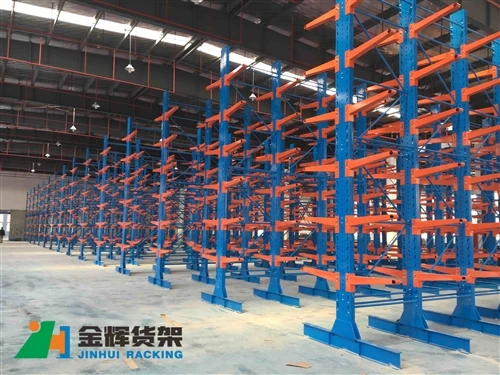
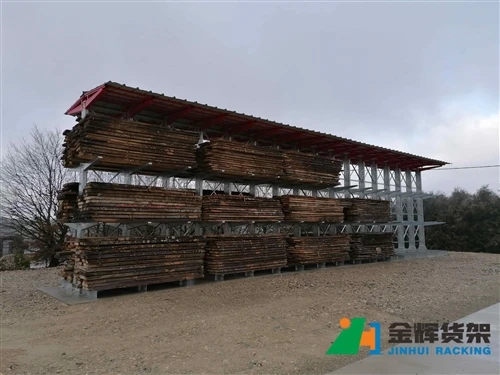
Unlike conventional pallet racking, cantilever racking uses horizontal arms extending from vertical columns to support items such as steel pipes, timber, aluminum profiles, boards, furniture panels, and other long materials.
The correct arm length and load capacity cannot be selected independently. Material length, weight, load distribution, upright spacing, number of support points, and storage method all affect the final rack design.
Why Cantilever Arm Length Matters
The cantilever arm supports the stored material and determines how far the load can extend from the upright column.
If the arm is too short, the material may not receive sufficient support. If it is unnecessarily long, the bending force on the arm and upright can increase.
The required arm length should therefore be selected according to the actual depth of the stored material.
Typical materials include:
- Steel pipes and tubes
- Aluminum profiles
- Timber and lumber
- Wood panels and boards
- PVC pipes
- Metal bars and profiles
- Furniture components
- Building materials
In most projects, the arm should provide stable support without excessive overhang that could affect safe storage or handling.
How Arm Length Affects Load Capacity
A cantilever arm works like a horizontal lever extending from the upright column.
As the load moves farther away from the column, the bending moment on the arm increases.
This means that two arms made from the same steel section may have different allowable capacities when their lengths are different.
In general:
Longer Arm = Greater Bending Moment = Lower Allowable Load for the Same Arm Section
For this reason, load capacity should always be confirmed together with arm length.
A supplier should not simply provide a "kg per arm" figure without knowing the arm projection and load position.
Load Position Is Just as Important as Total Weight
The same total load can create different stress depending on where the material is positioned on the arm.
A load placed close to the upright creates less bending force than the same load positioned near the end of the arm.
For example:
- A compact bundle positioned near the column creates a shorter load moment.
- A wide bundle extending toward the arm tip creates a longer load moment.
- An uneven load can place more force on one arm than on neighboring arms.
This is why actual product dimensions and load distribution should be provided before the rack capacity is finalized.
How Many Cantilever Arms Are Needed?
Long materials should normally be supported at multiple points along their length.
The required number of arms depends on:
- Material length
- Material stiffness
- Total weight
- Risk of bending or sagging
- Bundle dimensions
- Required upright spacing
For rigid steel sections, wider support spacing may be possible. Flexible materials such as thin boards, plastic pipes, or lightweight profiles may require more support points.
Using too few supports can cause the material to sag between uprights, while adding unnecessary supports increases rack cost and reduces layout efficiency.

Upright Spacing and Material Length
The distance between cantilever uprights should be planned together with the material length.
For example, a long steel pipe bundle may be supported by several upright columns positioned at regular intervals.
The layout should ensure that:
- The load is distributed across multiple arms
- Material overhang remains controlled
- Individual arms are not overloaded
- Stored products do not sag excessively
- Forklift handling remains convenient
There is no single standard upright spacing that is suitable for every long-material application.
The correct spacing should be based on the actual product rather than only the available warehouse length.
Arm Load vs Level Load vs Total Rack Load
When reviewing a cantilever rack quotation, buyers should distinguish between several different capacity terms.
| Capacity Term | Meaning |
| Arm Load | Maximum allowable load on one cantilever arm |
| Level Load | Total load supported by all arms at the same storage level |
| Column Load | Accumulated load transferred through one upright column |
| Rack Row Load | Total stored load carried by the complete rack row |
These values are related but should not be treated as interchangeable.
A rack may use strong individual arms, but the complete structure must still be checked for upright capacity, base stability, bracing, and anchoring.
Single-Sided vs Double-Sided Cantilever Rack
Cantilever racks can be configured as single-sided or double-sided systems.
Single-Sided Cantilever Rack
Single-sided racks are commonly installed against warehouse walls or along perimeter areas.
This layout provides storage access from one side and can make efficient use of wall space.
Double-Sided Cantilever Rack
Double-sided racks have arms extending from both sides of the upright structure.
They are often installed in central warehouse areas and can provide higher storage capacity per rack row.
The choice depends on available floor space, material handling routes, forklift access, and required storage capacity.
For more information, see our cantilever storage rack system.
Different Materials Require Different Rack Designs
The same cantilever rack configuration is not ideal for every type of product.
Steel Pipes and Tubes
Steel pipes are usually heavy and rigid. The rack should provide sufficient arm capacity and stable support along the material length.
Aluminum Profiles
Aluminum profiles are lighter than steel but may be more sensitive to scratches, deformation, or uneven support.
Timber and Lumber
Timber can vary significantly in length, weight, and stiffness. Arm spacing should be planned to reduce sagging and maintain organized bundles.
Boards and Panels
Long panels may require closer support spacing to prevent bending, especially when stored in large bundles.
Plastic or PVC Pipes
Plastic pipes may be lightweight but flexible, so the rack often requires more support points than rigid steel materials.

Common Cantilever Rack Design Mistakes
Several mistakes can reduce storage efficiency or create unnecessary structural risks.
- Selecting arms only by load capacity: Arm length and load position must also be considered.
- Using too few upright supports: Long materials may sag or concentrate excessive load on individual arms.
- Ignoring material overhang: Excessive overhang can make handling less stable.
- Assuming all loads are evenly distributed: Actual bundles may place more load on certain support points.
- Choosing rack dimensions before confirming forklift operation: Aisle width and loading direction should be included in the layout.
- Changing arm levels without reviewing capacity: The complete upright loading should still remain within the intended design.
What Information Should Buyers Provide?
Before requesting a cantilever rack quotation, buyers should provide detailed product and warehouse information.
Useful information includes:
- Material type
- Maximum material length
- Bundle width and depth
- Maximum bundle weight
- Required storage levels
- Required quantity or storage capacity
- Warehouse length, width, and clear height
- Forklift type and lifting height
- Single-sided or double-sided preference
- Indoor or outdoor installation
Photos of the actual stored material can also help the supplier understand how the products should be supported.
How to Compare Cantilever Rack Quotations
When comparing suppliers, buyers should not look only at the total price.
Important points to review include:
- Arm length
- Load per arm
- Upright spacing
- Number of storage levels
- Steel section dimensions
- Base length and structure
- Surface treatment
- Anchoring method
- Drawing and layout support
If two quotations use different arm lengths or upright spacing, their quoted capacities and prices may not be directly comparable.
The layout drawing should therefore be reviewed together with the quotation.
Cantilever Storage Solutions From Jinhui Rack
Jinhui Rack provides customized cantilever racking for long, bulky, and irregular materials used in manufacturing plants, building-material warehouses, metal-processing facilities, timber storage areas, and distribution centers.
Arm length, load capacity, upright spacing, rack height, storage levels, and single- or double-sided configurations can be adjusted according to actual material dimensions and warehouse conditions.
For long-material storage projects, our team can prepare rack layouts based on product size, load requirements, forklift operation, and available warehouse space.
Final Thoughts
Cantilever rack arm length and load capacity should always be considered together.
A longer arm creates a greater bending moment, while load position, upright spacing, number of support points, and material stiffness also affect the final rack design.
For this reason, buyers should provide actual material dimensions and maximum loads before selecting a cantilever rack configuration.
A properly designed system can provide stable support for long materials while improving warehouse organization, handling efficiency, and use of available storage space.
Need help designing a cantilever rack for long materials?
Send Jinhui Rack your material length, bundle size, maximum weight, required storage levels, warehouse dimensions, and forklift information. Our team can help recommend a suitable arm length, upright spacing, and rack configuration for your project.
Talk to Jinhui Rack
WhatsApp: +86 185 0252 7163
Email: info@jhrack.com