How Does Push Back Racking Work in a Warehouse?
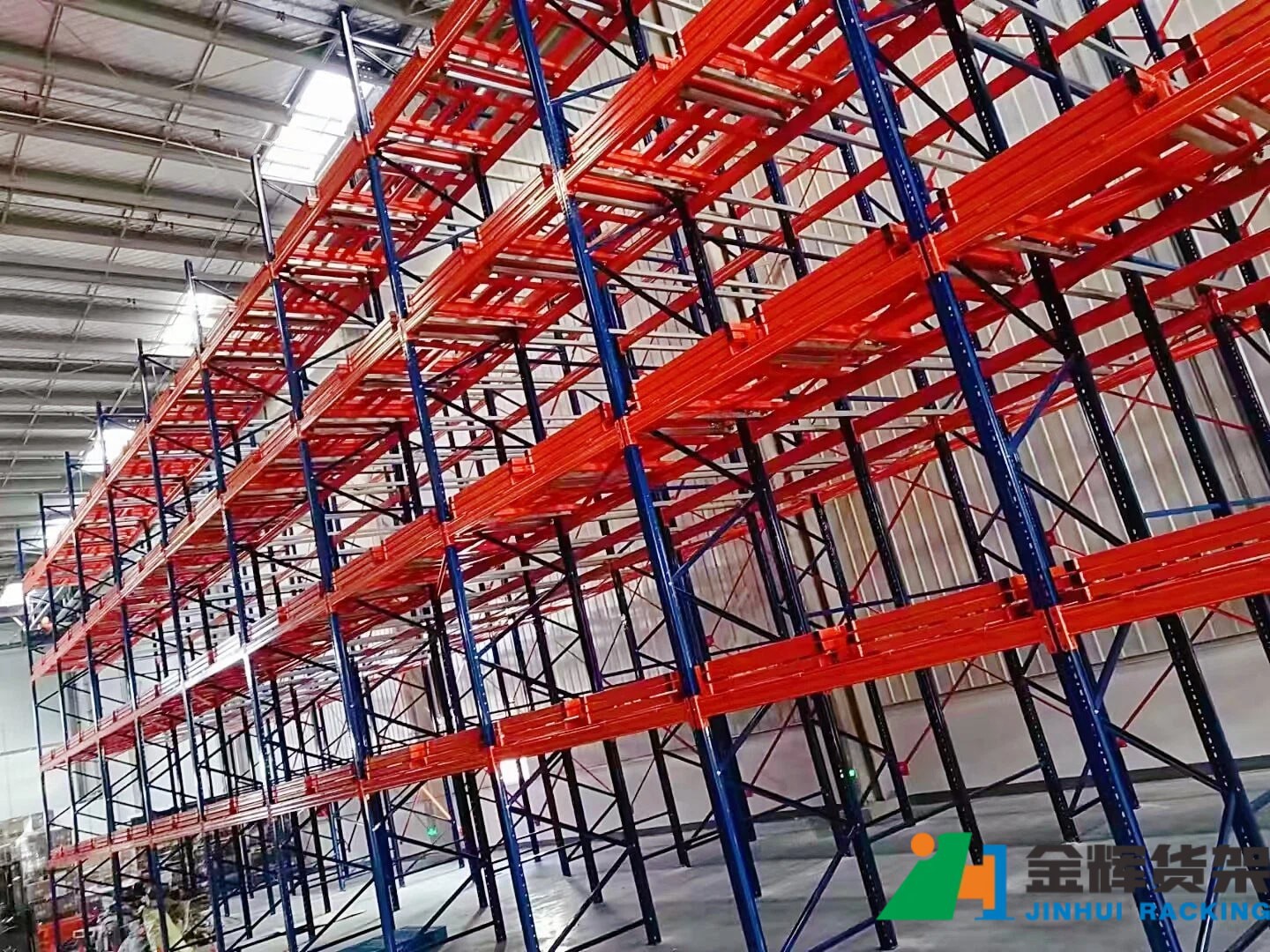
Push back racking is a high-density warehouse storage system designed to increase pallet storage capacity while reducing aisle space. Unlike standard pallet racks, push back systems use gravity-fed rails and nested carts that automatically move pallets forward during unloading.
This storage method helps warehouses improve operational efficiency and maximize vertical storage space without expanding building size.
Businesses exploring what push back racking is often want to understand how the system actually works in real warehouse operations.
You can also explore our customized push back pallet racking systems for industrial warehouse storage applications.
The Basic Working Principle of Push Back Racking
Push back pallet racking operates using a Last-In, First-Out (LIFO) inventory management method.
Each storage lane contains inclined rails equipped with nested carts or rollers. When a pallet is loaded into the lane, it pushes the previous pallet backward along the rails.
As pallets are unloaded, gravity automatically moves the remaining pallets forward toward the picking aisle.
This allows forklifts to load and unload pallets entirely from the front aisle without entering the rack structure.
Main Components of a Push Back Rack System
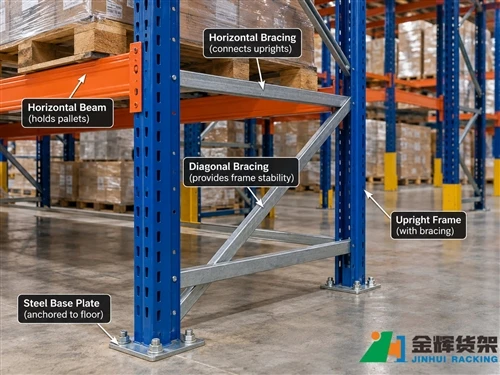
A push back racking system includes several important structural and operational components.
| Component | Function |
|---|---|
| Rack Frames | Main structural support system |
| Inclined Rails | Guide pallet movement through gravity |
| Nested Carts | Carry pallets inside the storage lane |
| Support Beams | Distribute pallet loads safely |
| Pallet Stops | Prevent pallets from rolling out of the rack |
These components work together to create a compact and efficient high-density storage system.
Step-by-Step Push Back Racking Operation
Understanding the loading and unloading process helps explain why push back racking improves warehouse efficiency.
Step 1: Loading the First Pallet
The first pallet is placed onto the front cart or rail position.
Step 2: Loading Additional Pallets
As additional pallets are loaded, each new pallet pushes the previous pallet deeper into the lane.
The nested carts move smoothly along the inclined rails during loading.
Step 3: Pallet Storage
Multiple pallets are stored deep within the same lane, maximizing warehouse storage density.
Step 4: Unloading Pallets
When the front pallet is removed, gravity automatically moves the remaining pallets forward to the picking position.
This process improves forklift efficiency because operators only work from the front aisle.
Why Gravity Is Important in Push Back Racking
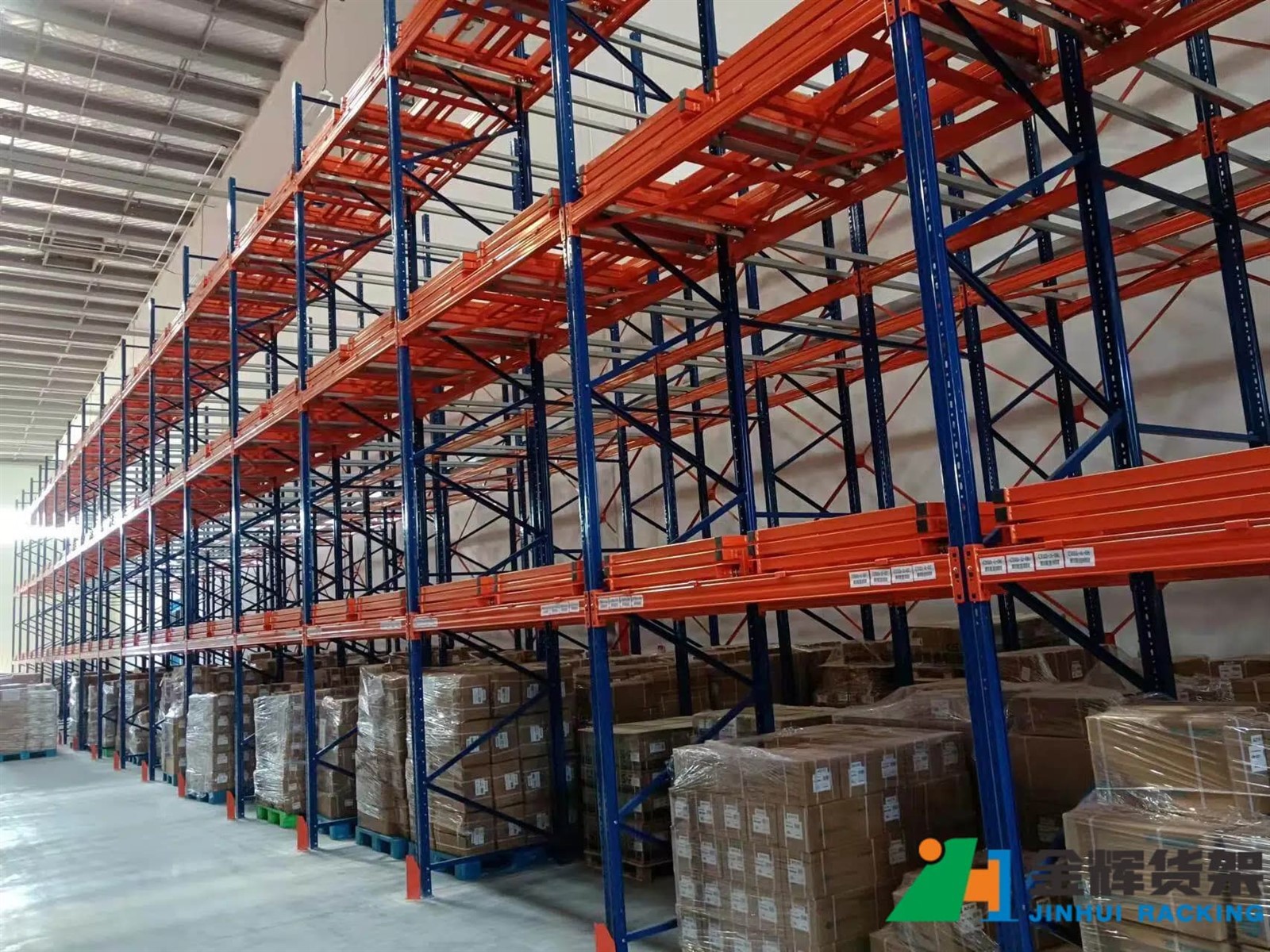
Gravity plays a critical role in push back pallet racking operation.
The rails are installed at a slight incline, allowing pallets and carts to move forward automatically after unloading.
This gravity-fed design provides several operational advantages:
- Reduced forklift travel distance
- Faster pallet retrieval
- Improved warehouse productivity
- Higher storage density
- Reduced aisle requirements
Proper rail angle and engineering calculations are essential for safe pallet movement.
How Many Pallets Deep Can Push Back Racking Be?
Push back pallet racking systems are commonly designed from 2 to 6 pallets deep depending on warehouse requirements.
| Storage Depth | Typical Application |
|---|---|
| 2–3 Deep | Medium-density warehouse storage |
| 4–5 Deep | High-density inventory storage |
| 6 Deep | Maximum warehouse space optimization |
Deeper systems increase storage density but may reduce SKU selectivity.
What Types of Warehouses Use Push Back Racking?
Push back racking is commonly used in warehouses that require high-density pallet storage with moderate SKU variety.
Typical applications include:
- Cold storage facilities
- Food and beverage warehouses
- Retail distribution centers
- E-commerce fulfillment operations
- Industrial manufacturing warehouses
- Automotive parts storage
These operations benefit from efficient pallet handling and improved warehouse space utilization.
Push Back Racking vs Drive-In Racking
Both push back racking and drive-in racking are high-density storage systems, but they operate differently.
| Feature | Push Back Racking | Drive-In Racking |
|---|---|---|
| Forklift Entry | No forklift entry into rack lanes | Forklift enters rack structure |
| Pallet Movement | Gravity-fed carts | Manual forklift placement |
| Rack Damage Risk | Lower | Higher |
| Storage Density | High | Very high |
| Operational Speed | Faster | Moderate |
Push back systems are often preferred for warehouses seeking a balance between storage density and operational efficiency.
Safety Considerations for Push Back Racking
Proper system design and maintenance are essential for safe push back rack operation.
Important safety practices include:
- Using uniform pallet sizes
- Regular cart and rail inspections
- Following load capacity limits
- Ensuring proper forklift operation
- Inspecting rack anchoring systems
Routine inspections help maintain long-term operational safety and warehouse performance.
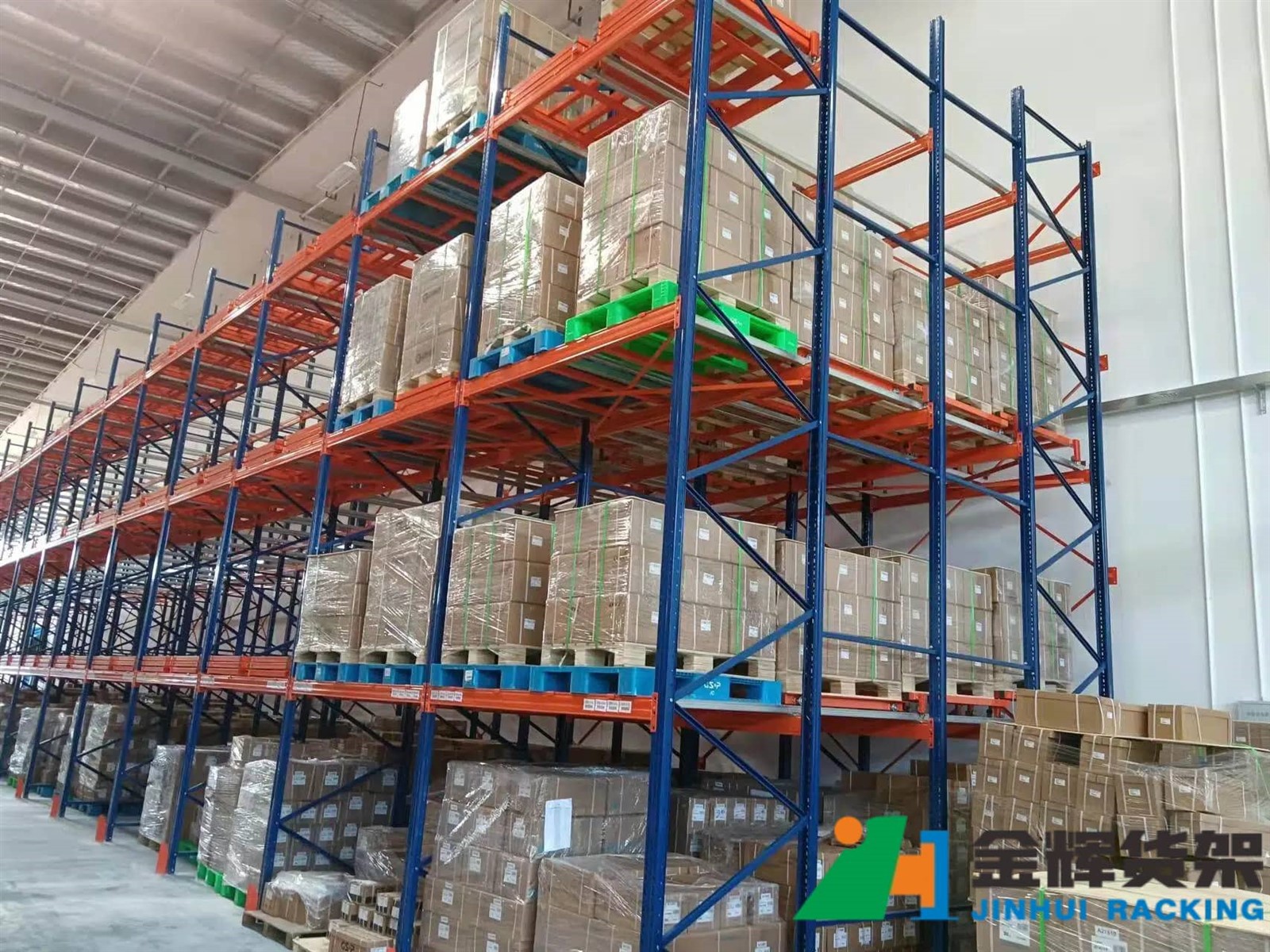
Why Push Back Racking Improves Warehouse Efficiency
Compared to traditional selective pallet racking, push back systems provide several efficiency advantages.
- Higher pallet storage density
- Reduced warehouse aisle space
- Faster loading and unloading
- Improved forklift productivity
- Better warehouse cube utilization
For warehouses handling multiple pallets per SKU, push back racking offers an excellent balance between storage capacity and pallet accessibility.
Why Work with an Experienced Push Back Rack Manufacturer?
Push back rack systems require accurate engineering calculations, quality manufacturing, and professional warehouse planning.
As a direct factory supplier, we provide:
- Customized push back rack systems
- Warehouse layout optimization
- Structural engineering support
- Load capacity calculations
- Industrial storage planning
Our team supports warehouse projects ranging from medium-density pallet storage to fully customized high-density warehouse systems.
Final Thoughts
Push back racking works by combining gravity-fed rails, nested carts, and LIFO pallet management to create an efficient high-density storage system.
By reducing aisle space and improving pallet handling efficiency, push back pallet racking helps warehouses maximize storage capacity while maintaining fast and organized operations.
For businesses seeking efficient warehouse storage optimization, push back racking remains one of the most practical and scalable pallet storage solutions available today.