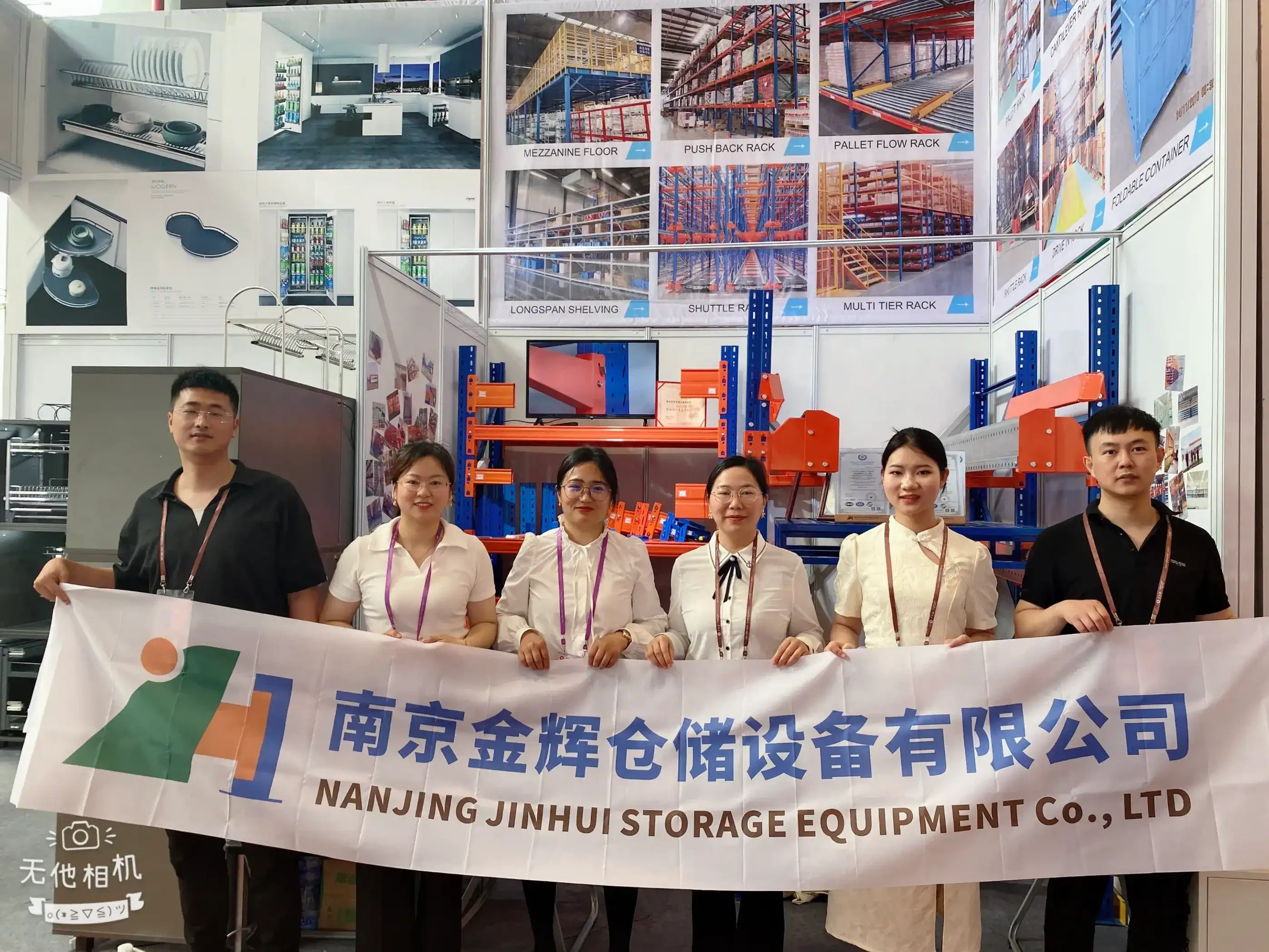
With the continuous upgrading of the national consumption structure and the rapid development of fresh e-commerce, the cold chain logistics and low-temperature industries have entered a period of rapid development. How to meet the demand for large inventory and high shipment frequency in cold chain has become one of the important issues that need to be considered in the development of cold chain today. In this regard, Nanjing Jinhui Warehouse provides one-stop services for research and development, production, and installation of cold chain cold storage enterprises from the most basic storage perspective.

Shuttle Racking
Design an efficient storage solution based on the characteristics of the cold storage using a shuttle style shelf prototype. Cold storage shelves must be able to withstand low temperature and humid environments, which is a relatively harsh environment for steel products. Jinhui's shuttle car shelves strictly control product quality and easily adapt to low temperature and humid environments.

Heavy duty racking/crossbeam racking
Due to the relatively low temperature, cold storage is not suitable for people to work inside for a long time. We usually design heavy-duty shelves or through shelves to use. Both types of cold storage shelves can be loaded and unloaded using forklifts and pallets, with a large storage capacity that can meet the requirements of three-dimensional storage. Both are common choices for cold storage shelves.

Narrow aisle racking
For the food and drug industry, temperature requirements are not the same, and the site often has heavy goods. Heavy shelves are used, and if the weight is not too heavy, space should be fully utilized. Through shelves or narrow aisle shelves can be used, combined with narrow aisle forklifts, to fully utilize cold storage shelves and achieve the best use of goods. Narrow aisle shelves can be applied in various industries, reducing manual labor intensity, reducing errors, improving the level of warehouse automation and management, improving the quality of management and operators, reducing storage and transportation losses, reducing the backlog of logistics funds, improving logistics efficiency, high storage density, and other advantages.